
Picture a two-bedroom Gulf-front condo near Holiday Isle that grosses more in June and July than most long-term rentals collect all year. The calendar is a wall of bookings from Memorial Day through early August, the cleaning crew barely has time to flip the unit between checkouts, and the owner’s statement from the property manager looks spectacular. Then January arrives, the beach empties out, and that same unit might see two bookings all month.
Now imagine handing that owner’s statement to a traditional lender. They see wild swings, self-employment income layered on top of rental income, maybe a Schedule E that got flattened by depreciation and startup costs. The property performs. The tax return says otherwise. That mismatch is the single biggest financing problem for investors on the Emerald Coast, and it is exactly the problem a DSCR loan Destin investors rely on was built to solve.
A DSCR loan qualifies the property instead of your personal income. No tax returns, no W-2s, no explaining why your accountant did such a good job lowering your taxable income. The lender looks at what the property earns against what it costs to carry each month. For a market like Destin, where vacation rental income is the whole point of the purchase, that is a far more sensible way to underwrite.
This guide covers how DSCR loans work for Destin properties specifically, including the condo questions that trip up more Emerald Coast deals than anything else: HOA dues and master insurance inside the ratio, buildings that operate like resorts, and how lenders read a booking year that earns most of its money in ten weeks. We will also rank the lenders worth calling and walk through an illustrative example with real math.
Destin’s Rental Market Through a Lender’s Eyes
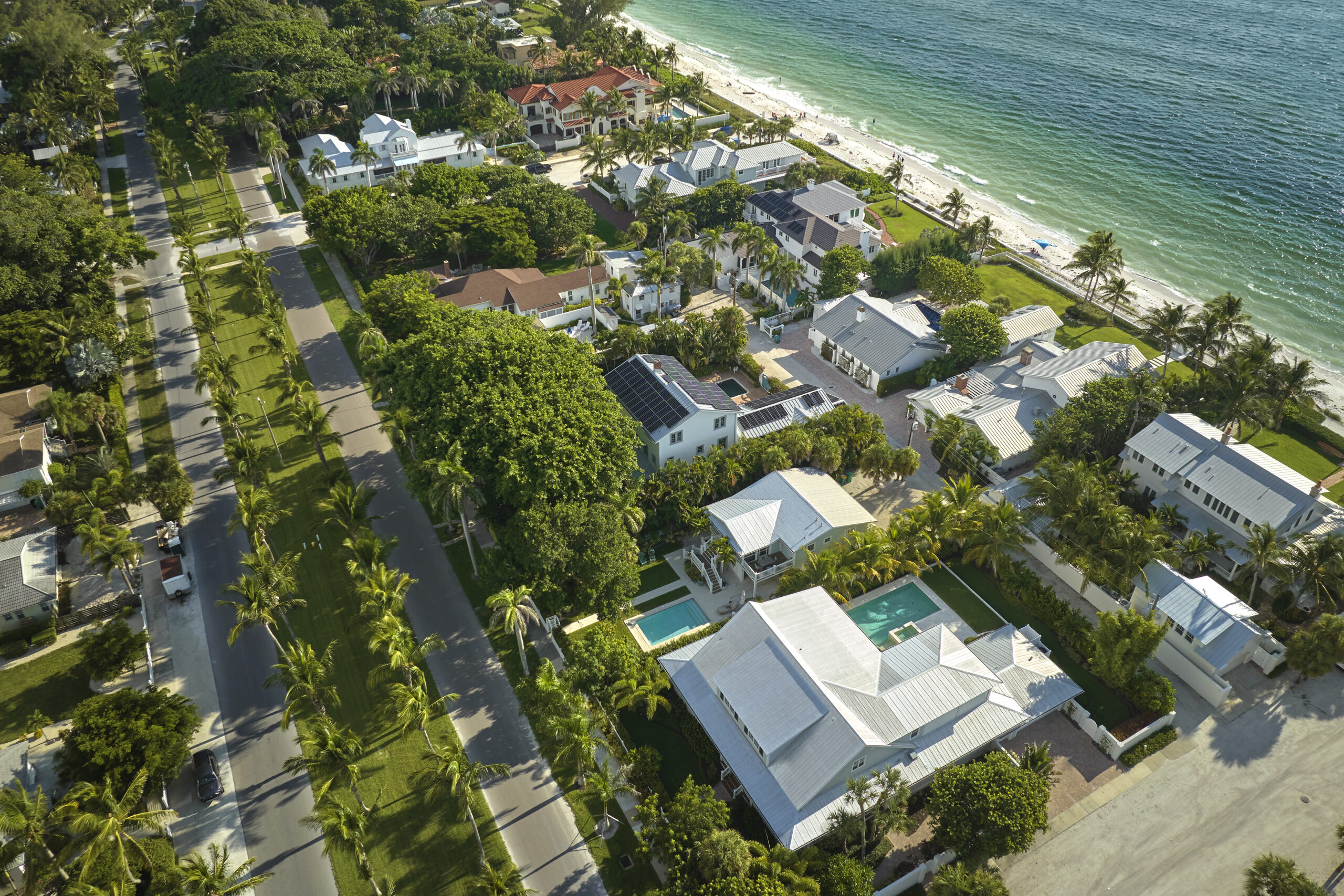
Destin sits on a narrow peninsula between the Gulf of Mexico and Choctawhatchee Bay, and almost every investment thesis here starts with the same fact: people come for the water. The sugar-white sand and emerald water pull families from across the Southeast every summer, and the vacation rental economy that serves them is one of the most developed in the country.
Where the inventory actually is
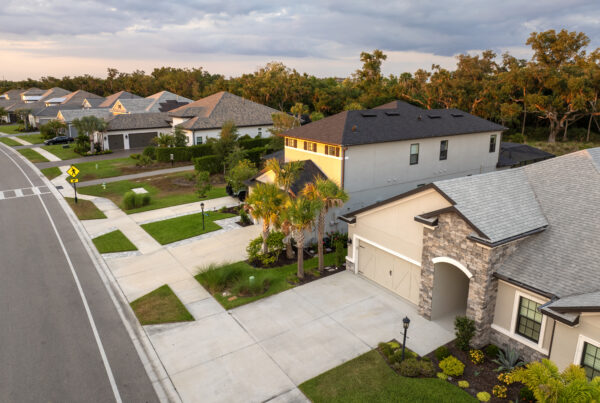
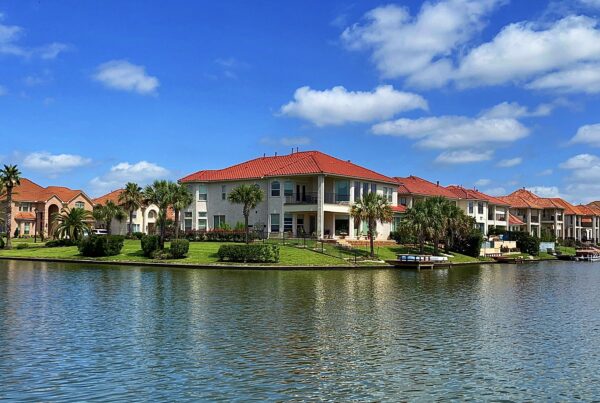
The housing stock splits into two broad camps. The first is condos, and there are a lot of them. Gulf-front towers line Scenic Highway 98, mid-rise and high-rise buildings cluster around the harbor and east toward Miramar Beach, and many of these buildings function as de facto resorts with rental desks, pools, and front-office staff. The second camp is the cottage and single-family neighborhoods, places like Crystal Beach with its pastel beach cottages a short walk from the sand, and the streets around Holiday Isle where homes sit between the Gulf and the harbor entrance. Both camps can produce strong short-term rental income, but they get underwritten differently, and we will spend real time on that below.
What drives the demand
The engine is tourism, full stop. The harbor and HarborWalk Village anchor the charter fishing fleet, the restaurants, and the nightly entertainment that keeps guests spending money once they leave the beach. Destin has long marketed itself as a fishing town, and the charter economy is still a meaningful draw alongside the beach itself. To the east, Miramar Beach and the 30A corridor extend the same vacation economy through Walton County, and to the west, Fort Walton Beach and the military presence around Eglin Air Force Base add a year-round employment base that supports the service economy. For an investor, that mix matters: the demand is seasonal, but the market infrastructure around it, property managers, cleaning companies, maintenance trades, is professional and deep.
The rules layer
Florida short-term rental regulation happens at the state, county, and city level, and the rules change. Destin, Okaloosa County, and neighboring jurisdictions each have their own registration and licensing requirements for vacation rentals, and condo associations layer their own rental policies on top. Some buildings encourage nightly rentals; a few restrict them. Before you write an offer, confirm the current local registration requirements and read the condo documents. A DSCR lender will underwrite the income, but only you can verify the property is allowed to earn it.
How a DSCR Loan Reads a Destin Property
The mechanics are simple to state. The lender divides the property’s monthly rental income by the full monthly payment. That payment is PITIA: principal, interest, taxes, insurance, and association dues. If the income covers the payment, the ratio is at or above 1.0 and the property carries itself on paper. Stronger ratios generally earn better terms; thinner ratios can still be financed under many programs, sometimes with more equity in the deal.
What counts as income is where Destin gets interesting. For a long-term rental, lenders use the lease or an appraiser’s market rent opinion. For a vacation rental, programs vary. Some use the appraiser’s long-term market rent even for a short-term property, which is conservative and often understates what a Gulf-front unit earns. Others accept short-term rental income, documented through a trailing twelve months of actual booking history or through a market projection from a recognized vacation rental data provider. Which approach a program allows can change the entire deal, because in Destin the gap between long-term market rent and short-term earnings is often wide.
The cost side deserves equal attention. Florida insurance is a serious line item, and on the coast it usually means wind coverage and, in many flood zones, flood insurance as well. All of it sits inside PITIA, which means it directly compresses your ratio. Get insurance quotes early, before you fall in love with a unit, because the premium can decide whether the numbers work. On condos, the association dues do the same thing, and in Gulf-front buildings those dues are rarely small.
The Vacation-Condo Problem: Qualifying a Gulf-Front Unit
This is the section that matters most for Destin, because so much of the buyable inventory here is a condo, and condos add layers to DSCR math that a single-family cottage in Crystal Beach never faces.
HOA dues and the master policy live inside your ratio
A Gulf-front building carries expensive obligations: the master insurance policy on the structure, reserves for concrete restoration and roof work, elevators, pools, staff. All of that flows into the monthly dues, and the dues flow into PITIA. Two condos with identical purchase prices and identical booking income can produce very different ratios if one building’s dues run twice the other’s. When you screen listings, treat the dues as part of your mortgage payment, because your lender will. Also ask what the master policy covers versus what your individual HO-6 policy must cover, since you are paying for both and both belong in your monthly math.
Condotel-style buildings are a program question, not a dealbreaker
Plenty of Destin buildings operate like resorts. There is a front desk, an on-site rental program, nightly check-ins, maybe a restaurant in the lobby. Lenders often classify these as condotels, and separately, many coastal buildings fail conventional warrantability tests for reasons like high investor concentration or a single entity owning many units. Conventional financing usually cannot touch these buildings at all. Non-QM and DSCR programs frequently can, but condotel and non-warrantable eligibility is program-dependent, and the list of lenders offering it shifts over time. If the building you want has a rental desk in the lobby, say so on your first call with a lender, and confirm current program availability before you go under contract. This one question kills more Destin condo deals late in escrow than any other.
Projected versus actual booking income
If the unit has an operating history, expect the lender to want the actual numbers, usually a trailing twelve months from the property manager or booking platforms. If it is a new purchase without history in your hands, some programs accept a projection based on comparable vacation rentals in the market. Actual history is generally treated as stronger evidence than a projection, and a projection that looks aggressive against the building’s own track record invites scrutiny. If the current owner will share their statements, get them. They are worth more to your file than any brochure.
Annualizing a Summer-Heavy Year
Destin’s booking curve is steep. The heart of the earning season runs roughly from spring break through early August, with June and July doing the heaviest lifting. Fall brings a softer shoulder season, snowbird demand provides a modest winter floor, and then the curve climbs again in spring.
A DSCR lender does not underwrite July. They annualize. Twelve months of income, whatever the shape of the curve, gets averaged into one monthly figure and measured against one monthly payment. That cuts both ways. Your ratio will look worse than your summer statements suggest and better than your January ones. The practical implication for you as an owner is cash flow management: the loan payment arrives every month, but the income arrives mostly in one season, so you need reserves to carry the property through winter even when the annualized math works. Lenders think the same way, which is why liquid reserves are a standard part of DSCR qualification, with the required amount varying by program.
Gross Bookings Are Not the Number That Matters
The figure a listing agent quotes you is usually gross booking revenue. The figure that pays your mortgage is what remains after the vacation rental machine takes its share: platform or channel fees, property management commissions, cleaning costs you absorb, supplies, repairs from heavy guest turnover, and utilities you cover as the host. In a full-service management arrangement common in Destin, the spread between gross and net can be substantial.
Lender treatment of this varies by program. Some apply an expense adjustment to short-term rental income; others use the documented figures in their own way. Either way, you should run your personal math on the net, because that is what actually services the debt.
An illustrative example
The numbers below are round, made-up figures for illustration only, not market data.
| Line item | Monthly figure |
| Gross booking revenue, annualized | $9,000 |
| Management, platform fees, cleaning, and owner-paid costs | $3,000 |
| Net rental income | $6,000 |
| Principal and interest | $3,300 |
| Property taxes | $700 |
| Insurance (HO-6 plus flood) | $600 |
| HOA dues | $900 |
| Total PITIA | $5,500 |
Against gross revenue, this unit looks like it covers the payment with room to spare. Against net income of $6,000 and a PITIA of $5,500, the cushion is real but modest. A program that qualifies on annualized gross may approve this file comfortably, while your own spreadsheet should be built on the net. Both views matter: one gets you the loan, the other keeps you solvent in February.
Choosing a Lender for an Emerald Coast Deal
Destin punishes lenders who do not understand coastal condos. Screen for these before you commit:
- Accepts short-term rental income, through actual history or projections, rather than long-term market rent only
- Has current condotel or non-warrantable condo options, confirmed for your specific building type
- Comfortable with Florida wind and flood insurance inside the ratio, and closes in coastal flood zones routinely
- Lends to LLCs, since most vacation rental investors here hold title in an entity
- Offers a range of prepayment penalty structures you can choose between
- Communicates clearly on condo document review timelines, which can stretch on resort-style buildings
- Broker access to multiple programs, so one investor’s guideline quirk does not sink your deal
Top DSCR Lenders for Destin Investors
1. Select Home Loans
Select Home Loans is a Florida-based mortgage company with a wide menu of Non-QM and investor programs, including DSCR loans built for short-term rental properties like Destin’s Gulf-front condos and beach cottages. As a broker with access to many investor programs, Select can shop a condotel-style building or a summer-heavy booking history across multiple options instead of forcing it into one rigid box. Loan amounts run from roughly $100,000 into the multi-million range depending on the program, and income treatment for vacation rentals is handled flexibly based on what documentation the deal supports. Alongside DSCR, Select offers bank statement loans, P&L loans, HELOCs, and refinancing for investors restructuring a portfolio. Reach Nick at (888) 550-3296, NMLS #2384002, or visit selecthomeloans.com.
2. Easy Street Capital
Easy Street Capital is a Texas-based investor lender known for embracing short-term rental deals, including properties qualified on vacation rental income projections. Their DSCR product line is aimed squarely at investors rather than owner-occupants, and they have built a reputation in the STR community for speed and deal creativity.
3. Kiavi
Kiavi is one of the larger tech-forward lenders in the residential investment space, with a streamlined online process covering DSCR rental loans and short-term bridge financing. Their platform appeals to investors who value a fast, standardized experience and who are financing more conventional property types.
4. Visio Lending
Visio Lending focuses almost exclusively on rental property finance and was an early mover in lending on vacation rentals, which makes them a familiar name in beach markets. They lend to entities and structure loans around long-term buy-and-hold rental strategies.
5. Angel Oak Mortgage Solutions
Angel Oak is one of the best-known names in Non-QM lending nationally, with a broad product shelf that includes DSCR loans alongside bank statement and other alternative documentation programs. They work through brokers and correspondents, so investors often access their programs indirectly.
For specialty situations such as condotels, non-warrantable buildings, foreign national borrowers, or ITIN borrowers, program availability changes frequently across all lenders, so confirm current options before committing to a building. This list reflects our opinion and is presented in no particular order beyond our own ranking preference.
What Shapes Your Terms and What You Will Document
Pricing and terms on a DSCR loan move with a handful of levers, all program-dependent. Deeper credit history and higher scores generally help. Lower leverage, meaning a larger down payment or more equity on a refinance, helps. A stronger coverage ratio helps. Condos, and condotel-style buildings especially, typically price differently than single-family homes. Prepayment penalty structure is a real lever too: accepting a longer penalty period usually improves pricing, while paying to reduce or remove it costs something. Since you cannot compare any of this in the abstract, request a current quote on your actual scenario.
Documentation is light compared to a conventional loan but not zero. Expect to provide identification, entity documents if closing in an LLC, bank statements showing your down payment and reserves, insurance quotes, the purchase contract, and rental income documentation, whether a lease, booking history, or a market rent analysis. No tax returns and no employment verification is the norm for true DSCR programs.
Six Mistakes Destin Investors Keep Making
- Ignoring HOA dues when screening condos, then discovering the ratio fails once dues join the payment.
- Waiting until underwriting to get wind and flood insurance quotes on a Gulf-front unit.
- Assuming a building with a rental desk can be financed like any condo, instead of confirming condotel eligibility up front.
- Underwriting their own deal on gross booking revenue instead of net income after management and fees.
- Skipping the condo document review and missing an association rule that restricts nightly rentals.
- Carrying thin reserves into winter because the summer statements looked invincible.
DSCR Versus the Conventional Route in Destin
| Factor | DSCR loan | Conventional loan |
| Income proof | Property’s rental income | Personal tax returns and W-2s |
| Condotel-style buildings | Possible, program-dependent | Generally not eligible |
| Short-term rental income | Often usable | Difficult to count |
| Title in an LLC | Commonly allowed | Generally not at closing |
| Property count limits | Flexible by program | Capped financed-property rules |
| Pricing | Typically somewhat higher | Typically lower for those who qualify |
If you are a W-2 borrower buying a warrantable condo for long-term rental and your tax returns are clean, conventional financing may cost less. The moment the deal involves short-term rental income, a resort-style building, an LLC, or self-employed income that deductions have minimized, DSCR becomes the practical path.
Who Should Use a DSCR Loan Here, and Who Should Not
A good fit: self-employed borrowers whose returns understate their income, investors buying specifically for vacation rental performance, buyers targeting buildings conventional lenders decline, out-of-state investors adding an Emerald Coast property to a portfolio, and owners refinancing out of hard money or pulling equity from a unit that has appreciated.
A poor fit: buyers intending to live in the property, since DSCR loans are for investment properties only; deals where the annualized income cannot approach the payment even on paper; and borrowers with no reserves to survive an off-season or a storm-related interruption.
FAQ: DSCR Loans in Destin
Can I get a DSCR loan on a Destin condo that runs an on-site rental program?
Often yes, through programs that accept condotel or non-warrantable projects, but availability is program-dependent and changes. Name the building early so your lender can check eligibility before you spend money on inspections.
Do lenders use my Airbnb and Vrbo history to qualify the loan?
Many programs accept documented short-term rental history, typically a trailing twelve months. Statements from a professional property manager also work. Keep clean records; they are your income documentation.
What if the condo I am buying has never been rented?
Some programs allow a market-based projection for short-term rental income, while others will fall back to the appraiser’s long-term rent figure. Which approach applies can change the deal significantly, so ask before you write the offer.
How does flood zone placement affect my loan?
If the property sits in a mapped flood zone, flood insurance will be required, and the premium joins PITIA and lowers your ratio. Coastal Destin includes plenty of mapped zones, so get an elevation and quote picture early.
Can I close in an LLC?
Most DSCR programs allow, and many investors prefer, closing in an LLC. Expect to provide formation documents and sign a personal guaranty in most cases.
Is a second home loan a better option than DSCR for a beach condo?
Second home financing requires personal income qualification and restricts how the property is used. If the plan is a rental business, DSCR aligns with the actual use. Discuss both paths with a loan expert.
How long does a DSCR loan take to close in Destin?
Timelines vary by lender and by how quickly insurance and condo documents come together. Condo review on resort-style buildings can add time, so start those requests the day you go under contract.
Do DSCR loans have prepayment penalties?
Many include one for an initial period, with the structure varying by program. If you may sell or refinance soon, ask about shorter or reduced penalty options and what they cost.
Can a foreign national buy a Destin vacation rental with a DSCR loan?
Foreign national DSCR programs exist and Destin attracts international buyers, but requirements and availability shift. Confirm current options and expect additional documentation around funds and identity.
What reserves will I need?
Requirements vary by program, commonly expressed as a number of months of the full payment. In a seasonal market, consider holding more than the minimum so winter months never pressure the mortgage.
Does hurricane risk change underwriting?
It shows up mainly through insurance cost inside PITIA and through required coverage. After a named storm, lenders may also require a re-inspection before closing, which can affect timing during hurricane season.
Can I refinance an existing Destin rental with a DSCR loan?
Yes. Rate-and-term and cash-out DSCR refinances are common, and a unit with a documented booking history often qualifies more smoothly than it did as a new purchase.
The Bottom Line on Financing a Destin Rental
Destin rewards investors who respect its rhythms: a booking year that earns its keep in one glorious summer stretch, condo buildings that behave like small resorts, and an insurance and dues picture that belongs at the center of your math rather than the margins. A DSCR loan Destin buyers can actually use is one that reads short-term rental income fairly, handles the building type without flinching, and annualizes the seasonal curve the way the market actually works.
Programs, guidelines, and eligibility rules change over time, and everything described here as program-dependent truly is. Verify current requirements with a loan expert before making decisions.
If you are weighing a Gulf-front condo, a Crystal Beach cottage, or a refinance on a unit you already own, talk it through with someone who works these files daily. Call Nick at Select Home Loans at (888) 550-3296, NMLS #2384002, or visit selecthomeloans.com to compare loan options and request a quote on your specific scenario.