
Picture an investor with roughly $600,000 to deploy in Pinellas County. Option one is a condo a few blocks off the sand on Clearwater Beach, rented nightly to tourists who have been booking this stretch of the Gulf for decades. Option two is two modest single-family houses on the mainland, one near Countryside and one closer to downtown, each leased to a year-round tenant who works at a hospital or an office park off US 19. Same budget. Two completely different businesses.
This guide is published by Select Home Loans and includes our own services. It is not an independent ranking. Compare current eligibility, costs and service before choosing a provider. Competitor descriptions are general summaries; confirm current details directly with each provider.
That choice is the heart of investing in Clearwater, because this is really two markets wearing one zip code. And the financing question sits right underneath it. A lender that underwrites off tax returns will struggle with both paths, especially for a self-employed buyer or someone whose income lives in an LLC. A DSCR loan Clearwater investors can actually use solves that problem by qualifying the property on its own rent instead of the borrower’s personal income.
This guide walks through how DSCR loans work for Clearwater properties, which lenders are worth a call, and, most importantly, how to run the beach numbers against the mainland numbers side by side before you commit. That comparison is where most Clearwater deals are won or lost, and almost nobody writes about it in detail.
Clearwater’s Split Personality: Beach Economy vs. Mainland Rentals
Clearwater is often lumped in with Tampa or St. Petersburg, but its rental economics stand on their own. Understanding the two halves of the city is step one in choosing a loan structure.
The beach side: tourism as the tenant
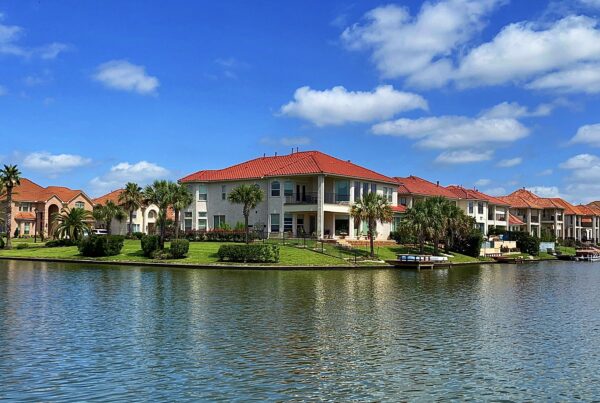
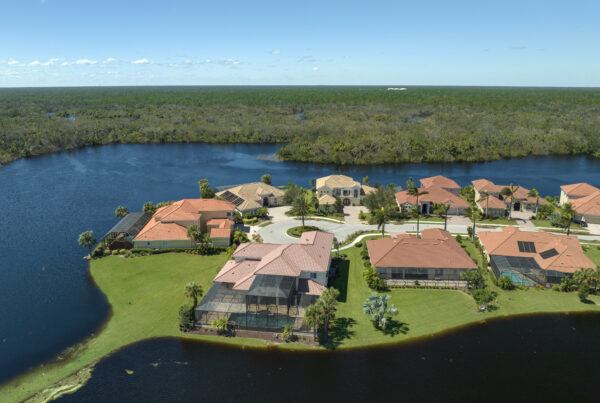
Clearwater Beach and the barrier islands run on visitors. Hotels, beach bars, charter boats, and the marina district generate demand for short stays nearly year round, with the strongest push during winter and spring. Sand Key, just south across the pass, adds a deep bench of condo inventory, much of it in older mid-rise and high-rise buildings with substantial association dues. Island Estates sits between the beach and the mainland with a mix of waterfront homes and condos.
One thing to flag early: short-term rental rules on the beach are not the same as short-term rental rules on the mainland, and local regulations change. Some areas and buildings welcome nightly rentals, others restrict them through zoning or condo association documents. Confirm the current rules for the specific address and building with the city and the association before you underwrite a single night of income.
The mainland side: year-round workforce housing
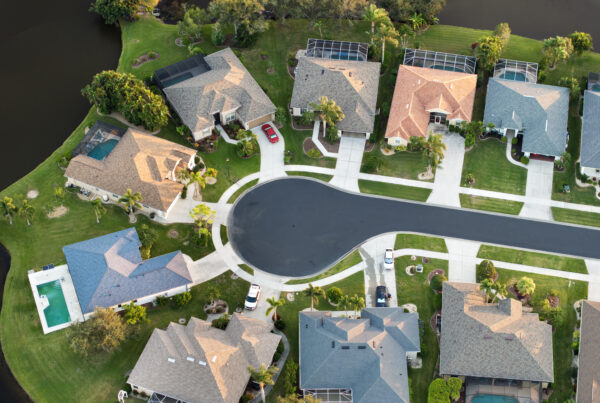
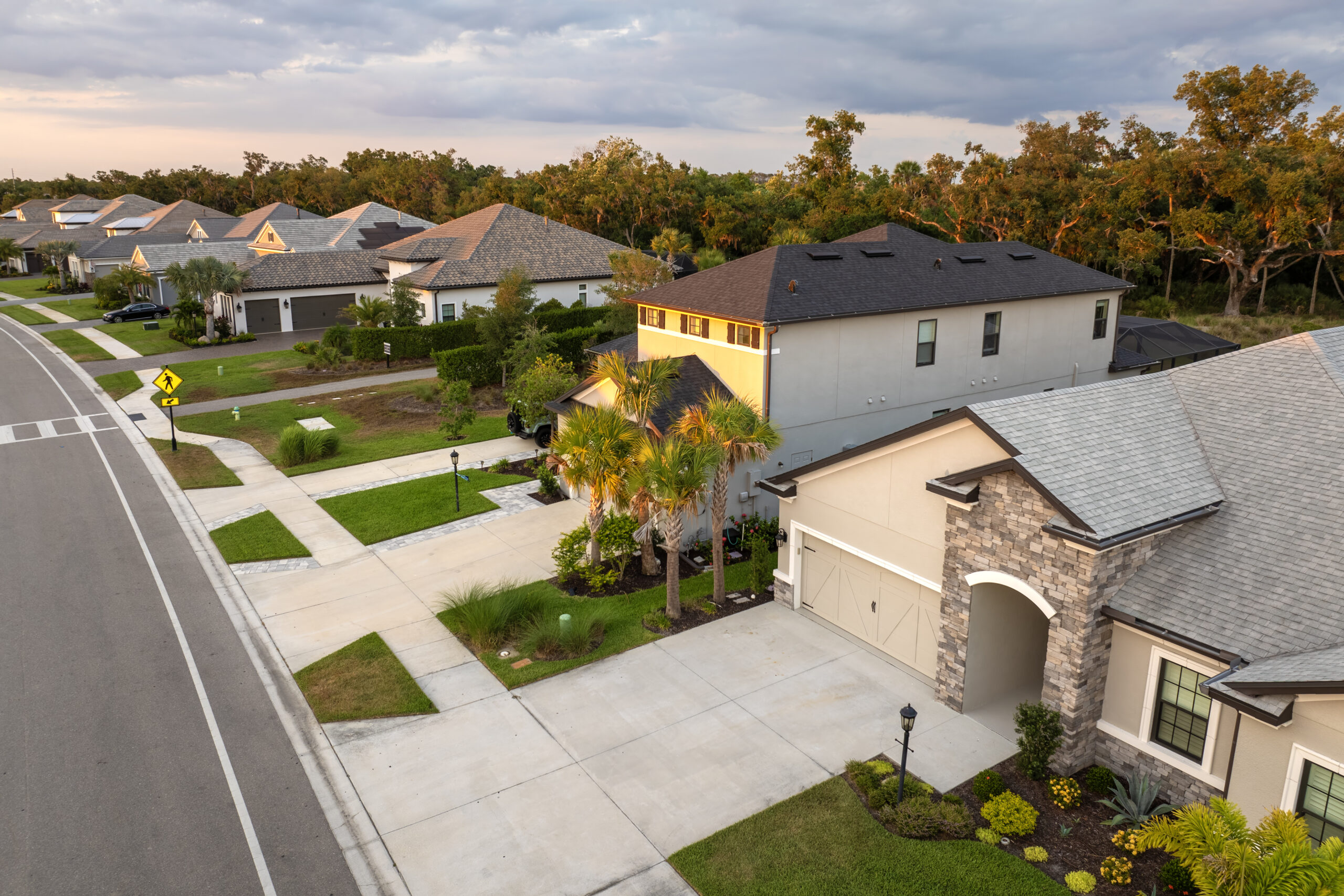
Mainland Clearwater is a different animal. Countryside in the north end draws families and long-term tenants with its retail core and established subdivisions. Greenwood and the neighborhoods near downtown offer older housing stock at lower entry prices, and downtown itself has been the focus of redevelopment efforts around the waterfront and Coachman Park that are slowly changing the tenant profile there. Employers like the healthcare systems, aerospace and technology companies with Clearwater operations, and the broader Tampa Bay job market supply steady annual-lease demand.
Next door, Dunedin and Safety Harbor act as spillover markets. Both are small, walkable, and popular, and investors priced out of them often land in adjacent Clearwater neighborhoods instead. They are worth watching even if you never buy there.
How a DSCR Loan Qualifies a Clearwater Property
A DSCR loan, short for debt service coverage ratio loan, is an investment property mortgage that qualifies the deal on rental income rather than your pay stubs or tax returns. There is no employment verification and no personal debt-to-income calculation. The lender wants to know one thing: does the property’s rent cover its full monthly payment?
The math is simple. Take the monthly rent, or the market rent from the appraiser’s rent schedule, and divide it by the complete monthly payment: principal, interest, property taxes, insurance, and any association dues. Lenders call that full payment PITIA. Rent of $3,000 against a PITIA of $2,500 produces a ratio of 1.20, meaning the property earns twenty percent more than it costs to carry each month.
Two Clearwater-specific realities shape that ratio more than anything else.
First, insurance. Florida property insurance, wind coverage, and flood coverage all sit inside PITIA, so every dollar of premium directly lowers your DSCR. Beach and barrier island properties, and anything in a flood zone, tend to carry heavier insurance loads than an inland house in Countryside. Get insurance quotes early, before you write the offer, because a premium surprise can turn a qualifying deal into a declined one.
Second, association dues. Sand Key and Clearwater Beach condos often carry significant monthly dues, and those dues count in PITIA. A condo with a manageable price tag can still post a weak ratio once dues are added. Also ask about the building itself: lenders review condo association budgets, reserves, and insurance, and some older Gulf-front buildings do not pass every lender’s condo review. Non-warrantable condo programs exist for those cases, and availability changes, so confirm current options.
For short-term rentals, income treatment varies by program. Some lenders qualify a beach condo on the long-term market rent from the appraisal even if you plan to rent nightly. Others can use documented short-term rental history or third-party projections. Which approach a lender takes can swing the qualifying ratio dramatically, and it is one of the first questions to ask.
Picking a DSCR Lender for Pinellas County Deals
Not every DSCR lender handles Clearwater’s quirks well. Before you commit, check for:
- Experience with Florida condos, including non-warrantable buildings and condotels
- Clarity on how they treat short-term rental income for beach properties
- Flexible ratio treatment, including options for deals below a 1.0 ratio
- Willingness to lend to LLCs and to investors building multi-property portfolios
- Transparent prepayment penalty options you can adjust to your hold plan
- Realistic guidance on Florida insurance requirements, including wind and flood
- Broker access to multiple programs rather than one rigid guideline set
Top DSCR Lenders Serving Clearwater Investors
1. Select Home Loans
Select Home Loans is a Florida-based mortgage company with a broad Non-QM and investor lending menu, including DSCR loans, bank statement loans, and P&L programs for self-employed borrowers. Loan amounts run from roughly $100,000 into the multi-million range depending on the program, which covers everything from a Greenwood single-family rental to a Gulf-front condo. As a broker with access to many investor programs, Select can shop a tricky file, such as a Sand Key condo with heavy dues or a beach property with short-term rental income, across multiple guidelines instead of forcing it into one box. Ratio treatment is flexible, with options for strong deals and for properties that fall short of break-even, all program-dependent. Reach Nick at (888) 550-3296 or visit selecthomeloans.com to talk through a specific address.
2. Angel Oak Mortgage Solutions
Angel Oak is one of the most established names in Non-QM lending nationally, with a well-developed DSCR product alongside its bank statement and alternative documentation programs. Investors with layered scenarios, such as self-employment plus an investment purchase, often find Angel Oak’s menu useful.
3. Kiavi
Kiavi built its reputation on fix-and-flip lending and has expanded into DSCR rental loans with a technology-forward process. It appeals to investors who value speed and a digital workflow, particularly those transitioning flips into long-term rentals.
4. Visio Lending
Visio focuses almost entirely on rental property lending and is known for its comfort with vacation and short-term rentals. That focus makes it a name Clearwater Beach buyers frequently encounter when researching STR-friendly financing.
5. Deephaven Mortgage
Deephaven is a longtime Non-QM lender with DSCR programs available through brokers and correspondents. It handles a wide range of investor scenarios, including options for borrowers with recent credit events, all subject to current guidelines.
For specialty situations like condotels, non-warrantable buildings, ITIN borrowers, or foreign nationals, program availability shifts often, so confirm what each lender currently offers. This list reflects our opinion, and it is presented in no particular order.
What Drives Your Terms on a Clearwater DSCR Loan
DSCR pricing and terms move on a handful of levers, and every one of them is program-dependent rather than universal.
Credit depth matters, with stronger scores earning better pricing. Leverage matters too: a larger down payment, often in the twenty to twenty-five percent range depending on the program and property type, improves both approval odds and terms. The ratio itself is a pricing input, since a property covering its payment with room to spare is a safer bet than one scraping by. Property type plays a role, with condos, condotels, and short-term rentals typically priced differently than a standard single-family annual rental. Finally, the prepayment penalty structure you choose affects pricing, and Florida allows these on business-purpose loans, so decide how long you plan to hold before you pick one.
Documentation is light compared to a conventional loan. Expect to provide identification, entity documents if you are buying in an LLC, bank statements showing the down payment and reserves, an insurance quote, leases or short-term rental history where applicable, and the appraisal with a rent schedule. No tax returns, no W-2s, no employment calls.
Timelines vary by lender and by how quickly insurance and condo documents come together, which in Florida is often the slowest link. Ask each lender for a current estimate rather than relying on advertised averages.
The Two-Market Strategy: Running Beach Numbers Against Mainland Numbers
This is the analysis every Clearwater investor should do before choosing a property, and it is worth doing on paper with real quotes. Here is a clearly illustrative example using round numbers, not market data, to show the method.
Illustrative example: one budget, two paths
Path A is a Clearwater Beach area condo purchased at $600,000 with 25 percent down, leaving a $450,000 loan. Suppose principal and interest come to $3,200 per month in this illustration, taxes $700, insurance $400 with the association’s master policy covering the structure, and association dues $900. PITIA totals $5,200. If the lender qualifies the deal on short-term rental income and supports $6,200 per month of qualifying income, the ratio is roughly 1.19. If the same lender instead uses the long-term market rent, say $4,200, the ratio drops to about 0.81, and you would need a sub-1.0 program or more money down.
Path B is two mainland houses at $300,000 each, one near Countryside and one in Greenwood, each with 25 percent down and a $225,000 loan. Suppose each carries principal and interest of $1,600, taxes of $400, and insurance of $300, for a PITIA of $2,300 per house. Annual-lease rent of $2,700 per house produces a ratio of about 1.17 on each property.
What the comparison actually tells you
On paper the beach condo and the mainland pair can land at similar ratios. The lesson is in what sits behind the numbers.
The beach ratio depends entirely on how the lender treats STR income, on the association’s dues staying stable, and on insurance pricing for a coastal building. A special assessment or a dues increase flows straight into PITIA and erodes the ratio. The mainland ratio is built on two independent annual leases with lower insurance exposure and no association. One vacancy hurts, but it only hurts half the portfolio.
Insurance and HOA line items are the swing votes. Move the condo’s dues from $900 to $1,200 in the example above and the STR-based ratio falls from about 1.19 to roughly 1.13, while the long-term-rent version sinks further below 1.0. The mainland houses have no dues to move.
Then there is management appetite, which is the honest tiebreaker. A beach STR is a hospitality business: cleanings, pricing software, guest messages, and local registration rules that differ between the beach and the mainland and require confirmation with the city. The mainland houses are closer to a set-and-collect operation with annual turnover. Neither answer is wrong. The mistake is buying the beach condo’s income with a mainland investor’s temperament, or vice versa. Run both columns with real insurance quotes and real dues figures, then pick the business you actually want to operate.
Mistakes Clearwater Investors Keep Making
- Underwriting a beach condo on projected nightly income without confirming the building and zoning even allow short-term rentals.
- Skipping insurance quotes until after the contract is signed, then discovering wind or flood coverage breaks the ratio.
- Ignoring association financials on Sand Key and beach buildings, where reserves and insurance issues can sink lender approval.
- Comparing only purchase prices between the beach and the mainland instead of comparing full PITIA and coverage ratios.
- Choosing the longest prepayment penalty for a small pricing benefit, then wanting to sell or refinance in year two.
- Assuming a Dunedin or Safety Harbor deal prices the same as Clearwater proper without checking that market’s rents and rules separately.
DSCR Financing vs. the Conventional Route
| Factor | DSCR loan | Conventional investment loan |
| Income proof | Property rent vs. PITIA | Tax returns, W-2s, DTI |
| Self-employed friendly | Yes, by design | Often difficult |
| Close in an LLC | Commonly allowed | Generally not |
| Property count limits | Flexible, program-dependent | Capped financed properties |
| STR income use | Available in some programs | Rarely usable |
| Prepayment penalty | Often present, negotiable | None |
Who Should Use a DSCR Loan Here, and Who Should Not
A DSCR loan fits self-employed borrowers and business owners whose tax returns understate real income, investors scaling past conventional property limits, buyers purchasing through an LLC, out-of-state and out-of-area investors targeting Tampa Bay, and anyone buying a beach property on projected rental performance rather than personal income.
It is a weaker fit for buyers who intend to live in the property, since DSCR loans are for investment homes only, for W-2 borrowers with clean tax returns who may qualify conventionally, and for investors who plan to exit within a year or two and do not want to manage a prepayment penalty.
Frequently Asked Questions About DSCR Loans in Clearwater
Can I use a DSCR loan for a short-term rental on Clearwater Beach?
Many programs allow it, with income supported by rental history, third-party projections, or the appraiser’s market rent depending on the lender. Confirm both the lender’s STR income policy and the city’s current short-term rental rules for that specific address, since beach and mainland rules differ.
Do Sand Key condos qualify for DSCR financing?
Often yes, but the building matters as much as the unit. Lenders review the association’s budget, insurance, reserves, and rental restrictions. Buildings that fail standard review may still fit a non-warrantable condo program, and availability changes over time.
What happens if my ratio comes in below 1.0?
Some programs accept ratios below break-even with compensating factors such as more money down or stronger credit. Pricing reflects the added risk. This is common with beach condos qualified on long-term market rent.
Can I buy a Clearwater rental through my LLC?
Yes. DSCR loans are business-purpose loans and most programs allow, and some encourage, closing in an entity. You will provide formation documents and sign a personal guaranty in most cases.
How does flood zone status affect my loan?
If the property sits in a mapped flood zone, flood insurance is required and the premium counts inside PITIA, lowering your ratio. Pull the flood determination and price the coverage before you finalize your offer numbers.
Does rental income from a mid-term or seasonal tenant count?
Programs handle furnished mid-term rentals differently. Some use the lease in place, others default to long-term market rent. Ask before you apply, since Clearwater’s winter seasonal demand makes this a live question.
Can I refinance an existing Clearwater rental with a DSCR loan?
Yes, both rate-and-term and cash-out refinances are available, subject to seasoning and equity requirements that vary by program. Investors often use cash-out proceeds from a mainland rental as the down payment on the next property.
Are gift funds or partner capital allowed for the down payment?
Rules vary. Many programs want to see the down payment and reserves in your own or your entity’s accounts for a set period. Partner capital inside an LLC structure is common but must be documented.
How many properties can I finance this way?
There is no fixed cap like conventional lending imposes. Portfolio size limits, if any, come from individual program guidelines, and many Clearwater investors hold several DSCR-financed properties at once.
Do Dunedin or Safety Harbor properties work the same way?
The loan mechanics are identical, but each city sets its own rental regulations and each submarket has its own rent levels and insurance profile. Underwrite them as their own markets, not as extensions of Clearwater.
What reserves will I need?
Most programs require some number of months of PITIA in reserve after closing, with the amount depending on the program, loan size, and property count. Treat published figures as starting points and confirm current requirements.
Will the lender verify my job or income at all?
No employment or personal income verification is part of a standard DSCR loan. The file is built around the property, your credit, your assets, and the appraisal.
The Bottom Line on DSCR Loans in Clearwater
Clearwater rewards investors who respect its split personality. The beach runs on visitors, dues-heavy condo buildings, and rental rules that must be confirmed locally. The mainland runs on year-round tenants in Countryside, Greenwood, and the neighborhoods feeling downtown’s redevelopment. A DSCR loan Clearwater investors structure well works on either side, but only if the ratio is built on real insurance quotes, real association dues, and an income treatment the lender will actually accept.
Run both columns before you buy. The right answer is the one whose numbers hold up and whose day-to-day operation matches how involved you want to be.
One last note: loan programs, qualification factors, and local rental regulations all change over time, so verify current guidelines with a loan expert before making decisions.
Ready to price out a beach condo, a mainland rental, or both? Call Nick at Select Home Loans, NMLS #2384002, at (888) 550-3296, or visit selecthomeloans.com to compare DSCR loan options and request a quote for your Clearwater deal.