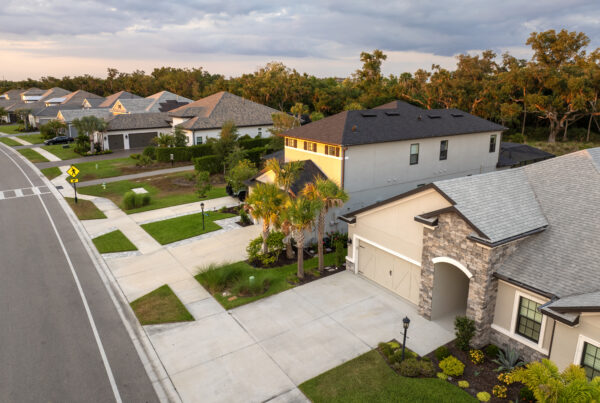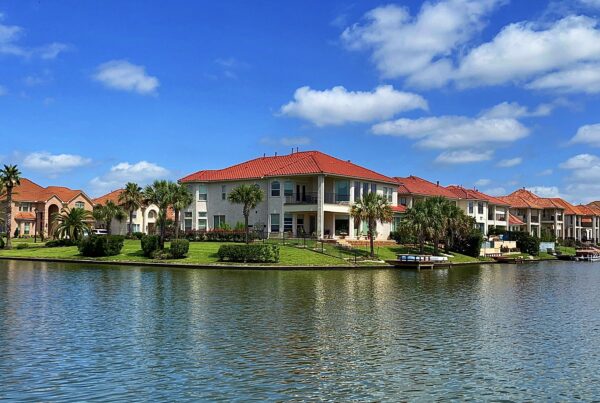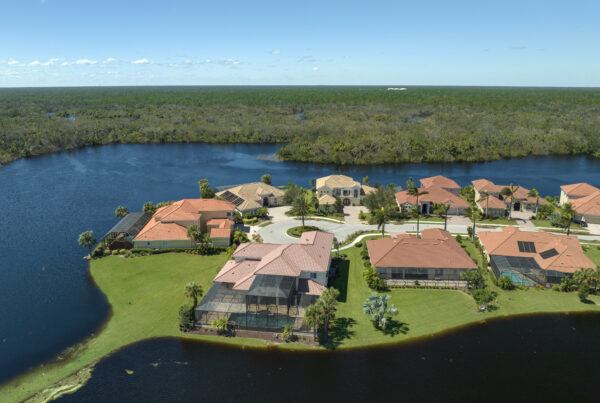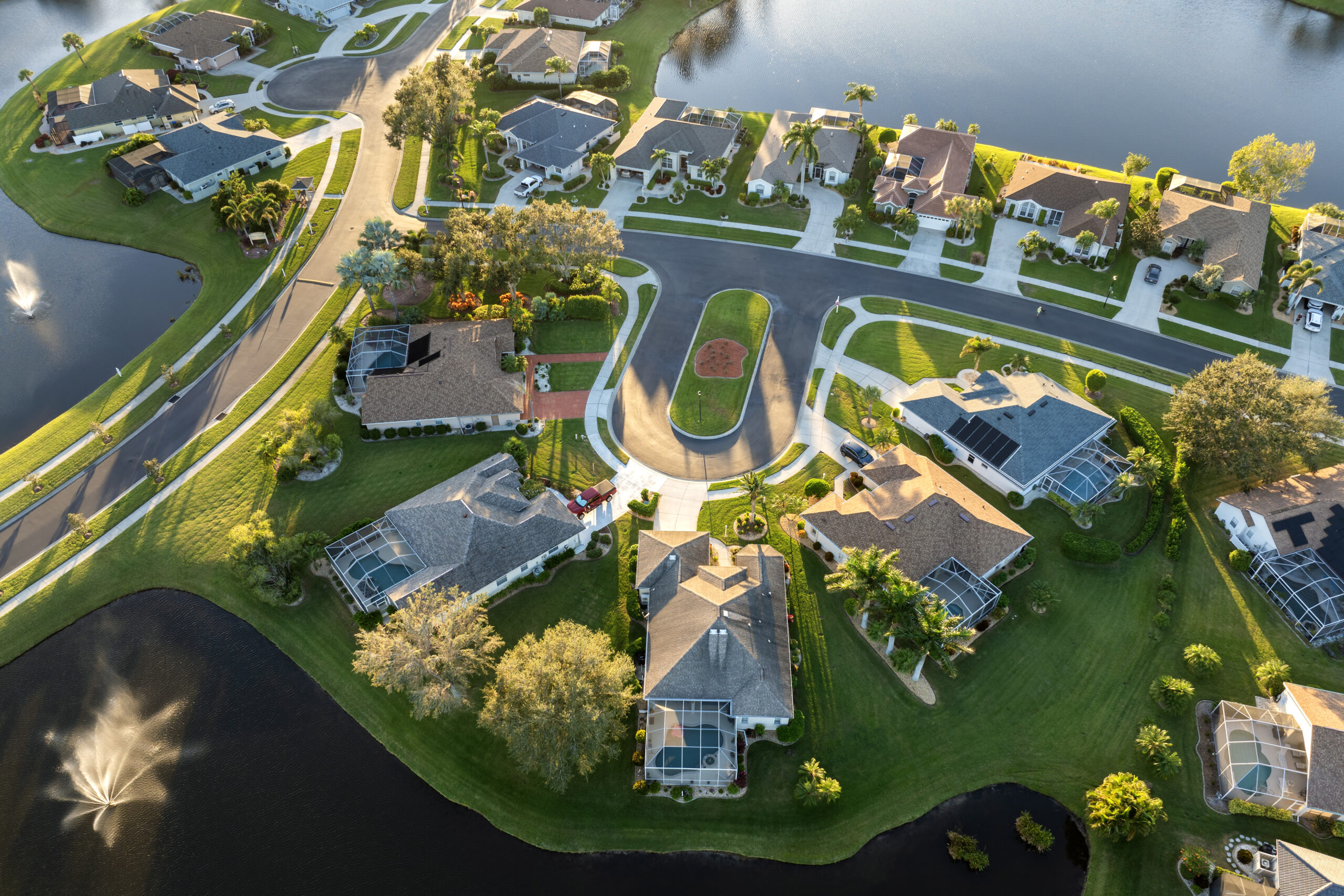

Picture two three-bedroom pool homes in southwest Cape Coral. Same square footage, same year built, similar rents, listed within a few thousand dollars of each other. An investor runs the numbers on both and gets a surprise: one qualifies comfortably for a DSCR loan and the other misses the ratio entirely. The difference is not the rent, the price, or the taxes. It is the insurance line. One home sits in a mapped flood zone on a gulf-access canal with an older roof. The other sits a few blocks inland on higher ground with a newer roof and impact windows. The premiums are far enough apart that the second home cash flows on paper and the first one does not.
This guide is published by Select Home Loans and includes our own services. It is not an independent ranking. Compare current eligibility, costs and service before choosing a provider. Competitor descriptions are general summaries; confirm current details directly with each provider.
That is Cape Coral DSCR lending in a single snapshot. A DSCR loan Cape Coral investors can actually close on depends less on the headline rent and more on what wind and flood coverage do to the monthly payment. Lenders here qualify the property, not your tax returns, which is exactly why self-employed buyers and out-of-state investors love the product. But because the property carries the loan, every dollar of premium counts against the ratio.
This guide covers how DSCR loans work for Cape Coral rentals, which lenders are worth your time, how canal position and construction age change your math, and the specific insurance homework that separates investors who close from investors who get repriced at the eleventh hour. If you are buying your first Cape rental or refinancing a portfolio of them, the details below will save you real money and real frustration.
The Cape Coral Rental Market, Canal by Canal
A city built on water
Cape Coral was carved out of the peninsula in the mid-twentieth century with hundreds of miles of canals threaded through its street grid, more canal frontage than almost any city in the world. That design still defines the rental market today. Homes on gulf-access canals, where a boat can reach the Caloosahatchee River and open water, command stronger rents and stronger resale interest than comparable homes on freshwater canals or dry lots. Freshwater canal homes still rent well, especially to families and year-round tenants who want the view without paying the gulf-access premium. For a DSCR lender, that distinction matters because the appraiser’s rent opinion will reflect it, and your ratio is built on that opinion.
Who rents here and why
The tenant pool splits into two broad groups. Seasonal renters, many of them from the Midwest and Canada, arrive in the cooler months and pay premium rates for furnished homes, especially anything with a pool and a dock. Annual tenants include healthcare workers tied to the Lee Health system, construction and trades workers who have been busy for years with the region’s rebuilding, remote professionals, and retirees who want to try the area before buying. Neighborhoods like Pelican and the Yacht Club district draw the boating crowd, Sandoval and the newer developments in the north Cape attract families, and the Burnt Store corridor keeps adding rooftops on the city’s western edge.
The post-storm inventory shift
Hurricane damage in the region reshaped the housing stock. A meaningful share of older homes were repaired, elevated, re-roofed, or torn down and replaced, and builders have added a wave of new construction across the north Cape. For investors this created a real split in the market: pre-2000 homes at lower price points with older roofs and lower elevation, versus newer builds at current code with better insurability. As you will see below, that split shows up directly in DSCR qualifying, because insurers price the difference and lenders count the premium inside your payment.
How a DSCR Loan Qualifies a Cape Coral Rental
A DSCR loan skips your personal income entirely. No tax returns, no W-2s, no pay stubs, no employment verification. The lender instead asks one question: does the property’s rent cover its own monthly payment?
The math is simple. Take the monthly rent, or the market rent from the appraiser’s rent schedule, and divide it by the full monthly payment: principal, interest, property taxes, insurance, and any association dues. Lenders call that payment PITIA. Rent of $3,000 against a PITIA of $2,500 produces a ratio of 1.20. Rent of $3,000 against a PITIA of $3,200 produces 0.94, and now you are below break-even.
Most programs want the ratio at or above a threshold that varies by lender, commonly around break-even or a bit above, though some programs allow ratios below 1.0 with stronger compensating factors like a larger down payment. All of these cutoffs are program-dependent, so treat any specific number you read online as a starting point rather than a rule.
Here is the part that trips up investors coming from other states. In much of the country, the insurance slice of PITIA is small enough to ignore. In Cape Coral it can be the largest line after principal and interest. Wind coverage, flood coverage where required, and the roof’s age all feed into a premium that swings widely from one house to the next. Two homes with identical rents can land on opposite sides of the qualifying line purely because of insurance, which is exactly what happened to the two pool homes in the introduction.
Picking a DSCR Lender for Southwest Florida
Not every DSCR lender handles coastal Florida well. Before you commit, check for:
- Comfort with flood-zone properties and experience reading elevation certificates
- Willingness to lend on canal-front homes, including gulf-access properties
- Sensible treatment of seasonal and short-term rental income, not just annual leases
- Competitive terms when the ratio is tight, including options below 1.0 where available
- Speed, since well-priced Cape inventory does not sit long
- Broker access to many programs rather than a single rigid box
- Clear communication about insurance requirements early in the process, not at the closing table
Top DSCR Lenders Serving Cape Coral Investors
1. Select Home Loans
Select Home Loans is a Florida-based mortgage company with a deep menu of Non-QM and investor programs, and DSCR lending is a core part of what the team does every day. Because Select works as a broker across many wholesale investors, a Cape Coral file that misses one program’s ratio requirement can often be moved to another program instead of dying, which matters in a market where insurance can push a deal from 1.15 to 0.95 overnight. Loan amounts run from roughly $100,000 into the multi-million range depending on the program, covering everything from a freshwater canal starter rental to a gulf-access estate near Cape Harbour. Select also handles bank statement loans, P&L loans, and other flexible-documentation products, useful for investors whose next purchase may not be a DSCR fit. Reach Nick at (888) 550-3296, NMLS #2384002, or start at selecthomeloans.com.
2. Visio Lending
Visio Lending is a national DSCR specialist focused entirely on residential rental properties, with long experience in vacation and seasonal rental markets. That short-term rental background is relevant in a market like Cape Coral where many investors run furnished seasonal homes. Visio is a direct lender with a single product focus, which keeps its process consistent.
3. Kiavi
Kiavi is a technology-forward lender known for fix-and-flip credit lines and DSCR rental loans, with a streamlined online process that appeals to investors who value speed. For Cape investors buying storm-dated homes to renovate and hold, the ability to move from a bridge product into a rental loan with one lender is convenient.
4. LendSure Mortgage Corp
LendSure is a wholesale Non-QM lender offering DSCR programs alongside bank statement and other alternative documentation products, accessed through brokers. Its programs include options for lower ratios with compensating factors, which can help on tight Cape Coral deals where insurance pressures the payment.
5. RCN Capital
RCN Capital is a national private lender offering long-term rental loans and short-term bridge financing for investors. RCN works with both new and experienced investors and lends on single-family and small multifamily rentals, a fit for investors assembling a portfolio across Lee County.
Program availability, ratio requirements, and property eligibility change over time with every lender listed here, so confirm current options before you write an offer. This list reflects our opinion, and the lenders appear in no particular order.
Insurance Is the Whole Ballgame: The Line Item That Approves or Kills Cape Coral Deals
Every market has a make-or-break variable. In Cape Coral, it is the insurance line inside PITIA. This section is longer than the others on purpose, because more DSCR deals fail here than anywhere else.
Why wind and flood sit inside your qualifying payment
Lenders require hazard coverage on every financed property, wind coverage in practice everywhere in coastal Florida, and flood coverage whenever the home sits in a mapped special flood hazard zone. Large parts of Cape Coral, particularly canal-front streets in the southwest and southeast Cape, fall in those zones. All of those premiums, divided by twelve, sit inside the monthly PITIA figure your ratio is computed against. A strong rent does not protect you from a weak ratio if the premium stack is heavy enough. A home renting for $3,400 a month can fail qualifying while a home renting for $2,900 passes, simply because the second home’s combined premiums are a few hundred dollars a month lighter.
Quote insurance before you write the offer
The single best habit a Cape Coral DSCR investor can build is quoting insurance during due diligence, not after going under contract. Call an independent agent with the address, the roof age, the construction type, and the flood zone, and get a real number for hazard, wind, and flood together. Run your DSCR with that number. If the ratio only works with an optimistic guess at insurance, it does not work. Investors who skip this step find out at underwriting that the actual quote is far above their estimate, and by then the choices are ugly: bring a bigger down payment, renegotiate, or walk away and eat the inspection costs.
Elevation certificates and the details insurers reward
For homes in flood zones, an elevation certificate documents how high the structure sits relative to the base flood elevation. A favorable certificate can meaningfully reduce a flood premium; an unfavorable one, common with older slab homes built before modern elevation standards, does the opposite. Ask the seller whether a certificate exists. Beyond elevation, insurers in this market reward newer roofs, impact-rated windows and doors, hurricane straps and clips documented through a wind mitigation inspection, and newer construction generally. A 2022-built home in the north Cape and a 1985-built home near the Yacht Club can carry wildly different premiums even at similar prices, and the DSCR reflects every bit of that difference.
When premiums spike mid-deal, here are the levers
Say your target ratio needs a PITIA of $2,800 and the insurance quotes push you to $3,050. You have options, and a good broker will walk you through all of them:
- Increase the down payment. A smaller loan means lower principal and interest, which can pull the ratio back over the line. This is the most common fix.
- Shop the coverage. Premiums for the same house vary between carriers, and a second or third quote through an independent agent sometimes rescues the deal on its own.
- Complete a wind mitigation inspection. Documented mitigation features can lower the wind premium, and the inspection is inexpensive relative to what it can save.
- Choose a different property. Buying outside the mapped flood zones, often a few blocks off the canals or in higher-elevation sections of the north Cape, removes the flood premium from PITIA entirely.
- Target newer construction. Current-code builds carry better insurability, and in Cape Coral there is more new inventory to choose from than there was before the rebuilding wave.
- Move the file. Because ratio thresholds are program-dependent, a broker can sometimes place the same deal with a program that accepts a lower ratio with compensating factors.
None of these levers are exotic. The investors who close in this market are simply the ones who model insurance first instead of last.
Seasonal or Annual: Lease Strategy and the Appraiser’s Rent Number
Cape Coral supports two rental strategies, and your DSCR treats them differently. With an annual lease, most lenders use the lower of your actual lease or the market rent from the appraiser’s Form 1007 rent schedule. That 1007 number is the quiet hinge of the whole deal: the appraiser selects rental comparables, and in Cape Coral the comps they choose will reflect canal position, gulf access, pool, and dock. If you are buying a gulf-access home, it is fair to expect the rent opinion to sit above a comparable dry-lot home, but you will not know the exact figure until the appraisal lands, so build cushion into your numbers.
Seasonal and short-term strategies can produce more gross income across the year, and some DSCR programs will underwrite using short-term rental income, often documented through booking history on a refinance or a market data report on a purchase. Other programs will only credit the long-term market rent even if you plan to run the home seasonally. Which approach a lender takes is program-dependent, and it changes your qualifying math substantially, so raise it in the first conversation. Also confirm current local registration and licensing rules for short-term rentals directly with the city and county before you commit to that strategy, because those rules change.
Qualifying: What Lenders Look At Besides the Ratio
Credit depth, leverage, and property type round out the file. Stronger credit scores earn better pricing and higher allowed leverage; minimums vary by program. Down payments for investor DSCR purchases typically start around the low-to-mid twenty percent range and shift with credit and ratio strength, all program-dependent. Lenders will also look at your reserves, meaning liquid funds after closing, and at any prepayment penalty structure you select, since accepting a longer prepay period generally improves pricing. Documentation is light compared to conventional lending: entity documents if you are vesting in an LLC, bank statements to source the down payment and reserves, the purchase contract, insurance quotes, and the appraisal with its rent schedule. No tax returns and no employment file.
An illustrative example
These are round numbers for illustration only, not market data. An investor buys a freshwater canal home in the southeast Cape for $400,000 with 25 percent down, borrowing $300,000. Principal and interest come to $2,100, taxes $500, insurance $400 after shopping three carriers, no HOA. PITIA is $3,000. The 1007 supports $3,300 in market rent, so the DSCR is 1.10 and the file qualifies. Had the insurance quote come back at $700 instead, PITIA would be $3,300 and the ratio exactly 1.0, right at many programs’ edge. That $300 monthly swing is the Cape Coral story in miniature.
Mistakes Cape Coral Investors Keep Making
- Writing offers before getting real insurance quotes, then discovering the ratio fails at underwriting.
- Assuming a gulf-access rent premium will show up in the 1007 at the exact number their agent quoted, with no cushion if the appraisal comes in conservative.
- Ignoring roof age. An aging roof can drive the premium up or make the home hard to insure at all until it is replaced.
- Planning a seasonal rental strategy with a lender whose program only credits annual market rent, then wondering why the ratio looks thin.
- Skipping the wind mitigation inspection and paying a higher wind premium than the house deserves.
- Comparing lenders on the quoted rate alone while ignoring prepayment penalty terms, ratio flexibility, and whether the program actually fits coastal flood-zone property.
DSCR Versus a Conventional Investment Loan in the Cape
| Factor | DSCR loan | Conventional investor loan |
| Income documentation | None; property rent qualifies | Tax returns, W-2s, full income file |
| Self-employed friendliness | High | Often difficult after write-offs |
| Property limit per borrower | Effectively unlimited by program | Capped number of financed properties |
| Vesting in an LLC | Usually allowed | Generally not allowed |
| Qualifying pressure point | Rent versus PITIA, driven by insurance here | Personal debt-to-income ratio |
| Pricing | Somewhat higher for the flexibility | Lower when you fully qualify |
If you have clean W-2 income, few properties, and time to document everything, conventional financing may price better. Most Cape Coral investors we talk to are self-employed, scaling past conventional property caps, or unwilling to hand over two years of returns, and DSCR fits them.
Who Should Use a DSCR Loan Here, and Who Should Not
Good fit:
- Self-employed buyers whose tax returns understate real income
- Out-of-state and foreign investors buying Cape rentals from a distance
- Investors vesting in an LLC or scaling beyond conventional limits
- Buyers of seasonal or furnished rentals with strong projected income
- Portfolio owners refinancing to pull equity without a full income file
Poor fit:
- Buyers intending to occupy the home, since DSCR loans are for investment property only
- Deals with thin rent and heavy insurance where no lever fixes the ratio
- Borrowers who qualify conventionally and plan to hold one or two properties long term
- Anyone unwilling to keep the property as a documented rental
Frequently Asked Questions
Do all Cape Coral homes require flood insurance for a DSCR loan?
No. Flood coverage is required when the home sits in a mapped special flood hazard area. Many canal-front streets are in those zones, but plenty of Cape Coral, especially higher-elevation inland sections, is not. The flood zone determination happens during the loan process, but you can check the address yourself before offering.
Can I use projected seasonal income to qualify?
Some programs underwrite short-term or seasonal rental income using booking history or market data reports; others only credit long-term market rent. It is program-dependent, so tell your broker your strategy up front so the file goes to a lender that supports it.
Will a lender finance a home with an older roof?
Often the bigger obstacle is the insurer, not the lender. If carriers will not write the roof, the insurance requirement cannot be met and the loan cannot close. Some investors negotiate a roof replacement or credit with the seller to solve this.
Does gulf access change my loan terms?
Not directly. Lenders do not price by canal type. It matters indirectly through the appraised value and the 1007 rent opinion, both of which typically reflect the gulf-access premium.
Can I close in an LLC?
Most DSCR programs allow vesting in an LLC, and many investors prefer it. You will provide entity documents, and a personal guarantee is commonly required.
What if my DSCR comes in just below 1.0?
Some programs accept ratios below break-even with compensating factors such as lower leverage or stronger credit. A broker with access to multiple programs can often place a sub-1.0 Cape Coral file rather than declining it.
How fast can a DSCR loan close in Lee County?
Generally faster than a full-documentation loan because there is no income file to verify. The appraisal with the rent schedule and the insurance binder are usually the pacing items, which is another reason to quote coverage early.
Do condo and canal-front townhome purchases work with DSCR?
Yes, though association dues join PITIA and pull the ratio down, and some coastal condo projects face extra review. Non-warrantable condo options exist through Non-QM programs; availability changes, so confirm current options.
Is a wind mitigation inspection worth it on every purchase?
For any home that is not brand new, usually yes. The inspection cost is small, and documented mitigation features can reduce the wind premium that sits inside your qualifying payment every month.
Can I refinance an existing Cape Coral rental with a DSCR loan?
Yes. Rate-and-term and cash-out DSCR refinances are common, and lenders use the current lease or market rent against the new payment. Investors often use cash-out proceeds on an appreciated Cape property to fund the next down payment.
Do DSCR loans carry prepayment penalties?
Most include one for an initial period, with the length affecting pricing. If you plan to sell or refinance quickly, ask about shorter or no-prepay options and weigh the tradeoff.
Can a foreign national buy a Cape Coral rental with DSCR financing?
Foreign national DSCR programs exist and are popular in southwest Florida. Requirements differ from standard programs and availability changes, so confirm current options before committing to a purchase timeline.
The Bottom Line on DSCR Loans in Cape Coral
Cape Coral rewards investors who respect the water twice: once for the rents it commands and once for the insurance it demands. A DSCR loan Cape Coral investors can rely on starts with the same discipline every time. Quote wind and flood coverage before the offer, understand what the appraiser’s rent schedule will and will not support, and know which levers, from a larger down payment to a wind mitigation inspection to simply buying outside the flood zone, can rescue a ratio that drifts below the line. Get those pieces right and the product itself is refreshingly simple: the rent carries the loan and your tax returns stay in the drawer.
Programs, ratio requirements, leverage limits, and insurance rules all change over time, so verify current guidelines with a loan expert before you rely on any of them.
If you are weighing a Cape Coral purchase or a refinance, talk it through with someone who prices these files daily. Call Nick at Select Home Loans, NMLS #2384002, at (888) 550-3296, or request a quote at selecthomeloans.com. Bring the address and we will help you run the ratio, insurance line included, before you ever write the offer.