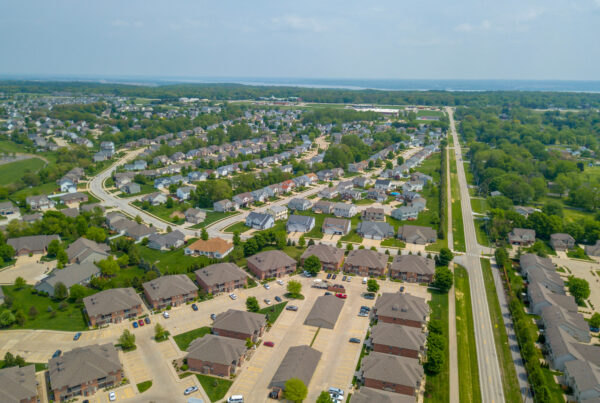
An investor finds a two-family in Jersey City Heights. The numbers look great at first glance. Both units rent strong thanks to the PATH train and the steady stream of tenants priced out of Manhattan and Brooklyn. The purchase price is high but the combined rent covers it. Then the tax bill lands on the desk. In New Jersey, that single line item can turn a deal that looked like a winner into one that barely breaks even, or it can be the thing a smart investor prices in from day one while everyone else walks away confused.
That is the New Jersey story in one paragraph. This is a high-cost state with some of the heaviest property taxes in the country, and it is also a high-rent state where a well-located duplex or triplex can carry a loan size that would sound absurd almost anywhere else. The investors who win here are the ones who make the numbers work with both of those facts on the table at the same time.
Asset-based loans are built for exactly that job. Instead of qualifying you off tax returns and W-2s, these programs qualify the deal off the property’s rent or qualify you off your assets. For a state full of self-employed borrowers, NYC commuters with serious portfolios, and landlords who write off everything they legally can, that shift changes what is possible.
This guide ranks the best asset-based loan programs for New Jersey investors, walks through the rent and tax math that decides deals from Newark to Cape May, lists the lenders worth calling, and answers the questions Garden State investors actually ask.
What Asset-Based Lending Means for a New Jersey Investor
An asset-based loan looks at what you own and what the property earns rather than what your tax return says you make. For rental purchases, that usually means a DSCR loan, where the property’s rent is measured against its full monthly payment. For wealthy borrowers, it can mean an asset depletion loan, where liquid assets stand in for income. For self-employed investors, bank statement and P&L programs read real cash flow instead of a tax return that has been optimized down to nothing.
These are non-QM products, which means they live outside the standard conforming box. That is not a downgrade. It is the reason a Hoboken consultant with three LLCs, a Paterson landlord with eleven units, and a Philadelphia-area contractor buying a shore rental in Wildwood can all get financed without explaining every deduction on a Schedule C.
In New Jersey specifically, asset-based lending matters more than in most states for one simple reason: the deals are expensive, the rents are high, and the tax line is enormous. Programs that focus on the property’s actual cash flow, calculated correctly with taxes inside the payment, are the only honest way to underwrite here.
The Best Asset-Based Loan Programs for New Jersey Investors, Ranked
The ranking below reflects how deals actually get done in this state. High cost, high rent, make the numbers work. That is the theme, and DSCR is where it plays out most clearly.
1. DSCR Loans: Where New Jersey’s Tax Bill Meets Its Rent Roll
A DSCR loan qualifies the property, not the person. The lender takes the monthly rent and divides it by the full monthly payment, meaning principal, interest, property taxes, insurance, and any association dues. That full payment is called PITIA. Rent of $5,500 against a PITIA of $5,000 gives you a DSCR of 1.10, and the property is carrying itself with room to spare. No tax returns, no employment verification, no debt-to-income calculation on your personal finances.
Now here is why New Jersey DSCR math is its own animal, and why investors who learned the product in Texas or Georgia get surprised here.
Taxes Inside the Ratio: The Line Item That Decides New Jersey Deals
In most states, property taxes are a modest slice of PITIA. In New Jersey, they are often the second largest piece of the payment after principal and interest, and in some municipalities they rival it. New Jersey’s property taxes are widely regarded as among the heaviest in the nation, and they vary sharply from town to town. Two similar duplexes, one in Elizabeth and one two towns over, can carry very different tax bills and therefore very different DSCRs on the same rent.
This reshapes the whole underwrite. A property that would clear a 1.20 ratio easily in a low-tax state might land at 1.02 here on identical rent and price, purely because of the tax escrow sitting inside the denominator. Smart New Jersey investors do three things about it.
First, they pull the actual current tax bill before they run numbers, and they ask whether a sale will trigger a reassessment or whether a recent revaluation is coming, because underwriting off last year’s bill can flatter the ratio. Second, they shop municipalities the way other investors shop neighborhoods, since the tax rate is effectively part of the cap rate. Third, they use leverage as a lever. Because taxes and insurance do not shrink when you put more money down, but principal and interest do, a larger down payment moves the DSCR more slowly in New Jersey than elsewhere. Sometimes the better fix is buying rate down, negotiating price, or simply picking the deal in the lower-tax town.
The Multifamily Rent Math: Why 2-4 Units Are New Jersey’s Signature Play
The other half of the New Jersey equation is the housing stock itself. This state is packed with two-family, three-family, and four-family properties, especially across the NYC commuter belt: Jersey City, Newark, Paterson, Elizabeth, Bayonne, and the towns strung along the rail lines. South Jersey has its own version of the same story, with duplexes and small multifamily serving Philadelphia commuters around Camden County and Cherry Hill.
For DSCR purposes, 2-4 unit properties are still residential. Same loan, same appraisal framework, no commercial underwriting. But the math works differently, and in New Jersey it works in your favor. On a two-family, both rents stack into the numerator while there is still only one tax bill, one insurance policy, and one loan payment in the denominator. That is how heavy taxes get absorbed. A single-family rental in a high-tax town might drown under its tax escrow. A three-family on the same block, with three rents feeding one PITIA, can post a comfortable ratio.
Here is a clearly labeled example with round illustrative numbers, not market data. Say a three-family in Newark rents for $2,100, $2,000, and $1,900 a month, for $6,000 total. Suppose the full PITIA, including a heavy tax escrow, comes to $5,200. That is a DSCR of about 1.15, a ratio most programs like, on a property whose tax bill alone would sink a single-family deal at the same price. That is the New Jersey playbook: let the rent stack outwork the tax bill.
One more advantage. Because rents in North Jersey’s commuter markets run high, the rent side of the ratio supports larger loan amounts than investors from cheaper states expect. DSCR programs generally have generous loan size ceilings, and New Jersey deals actually use them.
Shore STRs: Asbury Park to Cape May
DSCR also covers the Jersey Shore short-term rental trade, from Asbury Park and Belmar down through Long Beach Island, Ocean City, the Wildwoods, and Cape May. Some DSCR programs qualify short-term rentals using documented booking history or a short-term rent analysis, while others underwrite to the long-term market rent even if you plan to run it as an STR. Which approach applies is program-dependent, and it matters enormously for a house that earns most of its income between Memorial Day and Labor Day.
Two shore-specific cautions. Flood insurance is real money in many shore zones, and it sits inside PITIA just like taxes do, so get a flood determination and an insurance quote before you fall in love with a ratio. And town-by-town rental rules on the shore vary, with some municipalities restricting or licensing short-term rentals, so confirm the local ordinance before you underwrite STR income at all.
2. Asset Depletion Loans: Turning NYC-Metro Wealth into Qualifying Income
New Jersey’s commuter counties hold an unusual concentration of wealth: finance professionals, retired executives, business sellers, and households with large brokerage and retirement accounts but income that looks lumpy or modest on paper. Asset depletion, sometimes called asset utilization, is built for them.
The mechanics are simple in concept. The lender takes your eligible liquid assets, applies a program-specific formula that divides them over a set number of months, and treats the result as monthly qualifying income. No employment needed. Someone who sold a business in Montclair, or a retiree in Princeton drawing lightly from a large portfolio, can qualify off the balance sheet alone.
For investors, asset depletion pairs well with deals where DSCR is tight. A shore property with brutal flood insurance, or a single-family in a punishing tax town, might miss the ratio a DSCR program wants. If the borrower’s assets are strong, an asset depletion loan can carry the same purchase on the strength of the person rather than the property. The formulas, eligible asset types, and haircuts applied to retirement accounts all vary by lender, so this is a product where shopping multiple programs pays off.
3. Bank Statement Loans: For New Jersey’s Self-Employed Backbone
Between the contractors rebuilding shore towns, the small logistics and trucking operators around the ports of Newark and Elizabeth, the restaurant owners, and the enormous population of consultants and 1099 professionals working remotely for New York firms, New Jersey runs on self-employment. Tax returns rarely tell that story well, because a good accountant’s job is to shrink taxable income.
Bank statement loans fix the mismatch. The lender reviews 12 or 24 months of personal or business bank statements, applies an expense factor to business deposits, and derives a qualifying income from actual cash flow. For an investor whose returns show $60,000 but whose accounts show $25,000 a month in deposits, the difference is the difference between qualifying and not.
For property purchases, many New Jersey investors use bank statement loans for a primary or second home and DSCR for the rentals, keeping the rental qualification tied to the asset. But a bank statement loan can also finance an investment property directly when the deal’s ratio is thin and the borrower’s cash flow is strong.
4. P&L, 1099, and Bridge Options: The Short List
Three more tools deserve a brief mention. P&L statement loans qualify a self-employed borrower off a profit and loss statement, often prepared or reviewed by a tax professional, with less paperwork than a full bank statement review. 1099 loans serve contractors and gig-economy earners who receive 1099s and want their gross earnings, not their heavily deducted net, to do the qualifying. Both are useful for New Jersey’s independent workforce when a bank statement file is messy.
Bridge and short-term financing rounds out the kit. New Jersey’s older two-family and three-family stock, especially in Paterson, Newark, and Camden, is full of value-add opportunity: properties that need work before they rent at market. A bridge loan funds the purchase and often the renovation, then the investor refinances into a long-term DSCR loan once the units are stabilized and the rent roll supports the ratio. Buy, renovate, rent, refinance. In a state where the exit rents are high, that sequence works well.
How to Choose the Right Program for a New Jersey Deal
Start with the property. If it is a rental with a healthy rent-to-PITIA ratio after real taxes and real insurance, DSCR is usually the cleanest path, and on 2-4 units it is often the obvious one. If the ratio is tight because of the tax bill or flood insurance, look at whether your personal financial picture can carry the deal instead: asset depletion if your wealth is in accounts, bank statement or P&L if it is in business cash flow.
Then think about scale. Investors building a portfolio across several North Jersey towns tend to standardize on DSCR because each new property qualifies on its own rent without stacking debt onto a personal debt-to-income calculation. Investors making one big move, such as a shore STR in Cape May or a premium duplex in downtown Jersey City, have more freedom to pick whichever program prices the specific deal best.
Finally, price the whole structure, not just the rate quote. Prepayment penalty terms, interest-only options, and how a program treats short-term rental income can matter more over five years than a small pricing difference at closing.
Best Asset-Based Lenders Serving New Jersey Investors
1. Select Home Loans
Select Home Loans is a nationwide investor-loan broker specializing in non-QM and asset-based financing: DSCR loans, bank statement loans, asset depletion, P&L programs, and bridge options. As a broker, Select shops one application across a network of wholesale lenders and investors, which matters in New Jersey more than most places. When the tax bill in one town pushes a ratio below one program’s threshold, another program on the shelf may price the same deal comfortably, and a broker can move the file without starting over. For 2-4 unit purchases, shore STRs, and portfolio investors comparing structures, that breadth is the practical advantage. Reach Nick at (888) 550-3296 or visit selecthomeloans.com.
2. A&D Mortgage
A&D Mortgage is a national lender known for a wide non-QM menu, including DSCR, bank statement, and asset-based products. Investors and brokers often turn to A&D when a file has a wrinkle that a narrower program cannot absorb, and its product range covers most of the scenarios New Jersey’s self-employed and investor borrowers present.
3. Angel Oak Mortgage Solutions
Angel Oak is one of the most established names in non-QM lending, with a long-running lineup of bank statement, investor cash flow, and asset qualification products. It is a common benchmark lender for self-employed borrowers who need income flexibility alongside an investment purchase.
4. Kiavi
Kiavi is a technology-driven lender focused on real estate investors, best known for fix-and-flip bridge loans and DSCR rental financing. Its process appeals to investors running the buy-renovate-refinance sequence common in New Jersey’s older multifamily stock.
5. RCN Capital
RCN Capital is a national private lender serving real estate investors with short-term bridge, fix-and-flip, and long-term rental loan products. It is a frequent choice for investors who want one shop for both the renovation phase and the stabilized takeout.
6. CoreVest
CoreVest specializes in financing for residential real estate investors at scale, including rental portfolio loans and bridge products. Investors holding multiple New Jersey properties sometimes look to CoreVest when it is time to consolidate scattered loans into a single portfolio facility.
This list reflects the author’s opinion, and beyond the author’s preference the lenders are presented in no particular order. Every investor’s situation is different, so compare programs, pricing, and terms for your own deal before choosing.
Qualifying and Closing: What the Process Looks Like
Asset-based qualification centers on the deal and the documentation that supports it. For a DSCR loan, expect the lender to order an appraisal with a rent schedule, verify your credit, confirm your down payment and reserves, and review the entity documents if you are vesting in an LLC. Minimum credit scores, maximum LTVs, DSCR thresholds, reserve requirements, and prepayment penalty structures are all program-dependent and subject to investor guidelines, so treat any specific number you read online as a starting point rather than a rule. Directionally, stronger credit and lower leverage unlock better pricing and more program choices, and higher ratios earn better terms than break-even ones.
Down payments on investment properties run larger than owner-occupied loans, and New Jersey’s high prices make the reserve requirement worth planning for, since reserves are usually measured in months of PITIA and PITIA here is big. Closing costs include the usual lender, title, and escrow items plus New Jersey’s transfer-related fees, and setting up a tax escrow on a heavy bill means real money at the table. The process itself moves through application, appraisal, underwriting, and closing, and timelines vary by transaction, with DSCR files often moving faster than full-documentation loans because there is less income paperwork to verify.
Frequently Asked Questions
How do New Jersey’s property taxes actually change my DSCR?
Taxes sit inside PITIA, the denominator of the ratio. A heavier tax bill raises the monthly payment, which lowers the DSCR on the same rent. Two identical properties in different towns can post different ratios purely because of municipal tax differences, which is why experienced New Jersey investors pull the actual tax bill before running any numbers.
Can I use projected rents after a reassessment or tax appeal?
Lenders underwrite to documented figures, usually the current tax bill and the appraiser’s rent schedule. If you believe a tax appeal will lower the bill, that is an upside you capture after closing, not something most programs will credit in advance. Ask your loan expert how a pending revaluation in the town is handled.
Do lenders treat 2-4 unit properties differently from single-family rentals?
The loan is still residential, but the appraisal includes a rent schedule for each unit, and the appraiser needs comparable small multifamily sales, which are plentiful in markets like Jersey City, Newark, and Paterson. Some programs adjust leverage or pricing slightly for 3-4 units, which varies by lender.
How is rent counted on a 2-4 unit if one unit is vacant at purchase?
Most DSCR programs use the appraiser’s market rent estimate for vacant units rather than requiring a signed lease, though the treatment of vacant versus leased units differs by program. On a property being bought for renovation, a bridge-to-DSCR structure may fit better than forcing a ratio on day one.
Can I finance a Jersey Shore short-term rental with a DSCR loan?
Often yes, but programs differ on how they credit STR income. Some use booking history or a short-term rent analysis, others underwrite to long-term market rent. Also confirm the town’s rental licensing rules first, since shore municipalities from Asbury Park to Cape May regulate short-term rentals differently.
How does shore seasonality affect underwriting?
A shore house can earn most of its annual income in a few summer months. Lenders address this by annualizing documented income or by defaulting to long-term market rent, which is usually lower. Budget your ratio conservatively and keep reserves for the off-season, when the mortgage, taxes, and flood insurance are still due.
What about flood insurance on shore properties?
If the property sits in a mapped flood zone, flood coverage is required and its premium counts inside PITIA, directly lowering your DSCR. Get a flood zone determination and an actual insurance quote early, because on barrier island properties the premium can decide whether the deal works.
Should I buy in an LLC in New Jersey?
Many investors do, and DSCR lenders commonly allow or even prefer LLC vesting with a personal guarantee. New Jersey is a litigious environment by reputation, and landlords here often value the liability separation an entity provides. Whether an LLC fits your situation is a question for your attorney and tax advisor, but the financing itself accommodates it.
Does closing in an LLC change my loan terms?
Usually the loan remains a business-purpose investor loan either way, and the guarantee keeps your credit in the picture. Entity documentation adds a small amount of paperwork. Specific treatment varies by program, so confirm with your loan expert before setting up the entity.
Are asset-based loan amounts high enough for North Jersey prices?
Generally yes. Non-QM investor programs tend to offer loan ceilings well above conforming limits, and because North Jersey rents are strong, the DSCR math can support those larger loans. Maximums vary by lender and property type, so confirm the ceiling for your specific program.
Do I need landlord experience to qualify?
Many DSCR programs welcome first-time investors, though some price or restrict short-term rental deals for borrowers without a track record. Experience requirements are program-dependent, and a broker can point a first-timer toward programs that fit.
Can I refinance an existing New Jersey rental into a DSCR loan?
Yes. Rate-and-term and cash-out DSCR refinances are common, and investors often use cash-out proceeds from an appreciated North Jersey property as the down payment on the next one. Cash-out leverage limits and seasoning rules vary by program.
The Bottom Line for New Jersey Investors
New Jersey punishes lazy math and rewards careful math. The taxes are heavy, the insurance on the shore is real, and the prices are high. But the rents are high too, the 2-4 unit stock lets multiple incomes carry one payment, and the tenant demand from two of the biggest job markets in the country is not going anywhere. Asset-based loans for investors in New Jersey exist to finance exactly this kind of market: qualify the deal on its actual cash flow, or qualify the borrower on real assets, and let the numbers speak.
Keep in mind that programs, guidelines, leverage limits, and requirements change over time and vary by lender. Verify current guidelines with a loan expert before making decisions on a specific property.
If you are weighing a two-family in Jersey City, a portfolio spread across Newark and Elizabeth, or a summer rental in Cape May, talk through the numbers with someone who can shop the scenario across multiple programs at once. Call Nick at Select Home Loans, NMLS #2384002, at (888) 550-3296, or visit selecthomeloans.com to compare loan options and request a quote tailored to your deal.