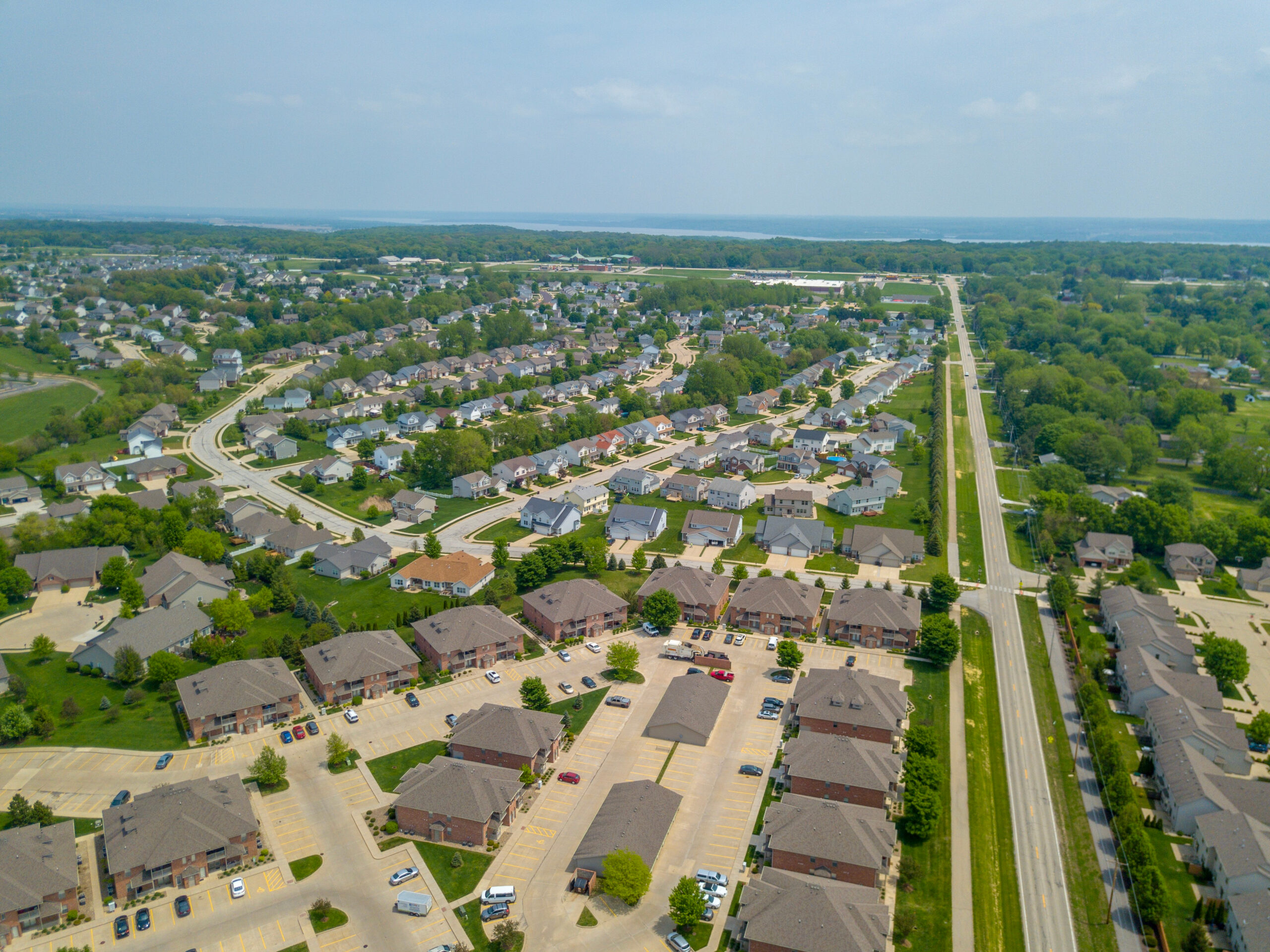

Here is a math problem that stops a lot of Arkansas investors cold. You earn a solid W-2 salary, you buy two rental houses in Little Rock or Jonesboro at prices that would barely cover a down payment in most coastal markets, and both properties cash flow from day one. Then you apply for a third loan and the lender says no. Your debt-to-income ratio is maxed out.
It feels backwards. The rentals pay for themselves, yet the underwriter counts every mortgage payment against your personal income while giving you only partial credit for the rent. In a state where entry prices are low enough to buy several doors in the time it takes to buy one elsewhere, conventional DTI rules become the ceiling on your portfolio long before your capital or your deals run out.
Asset-based loans solve that problem. Instead of qualifying you on pay stubs and tax returns, these programs qualify the property on its own rent, or qualify you on the assets and business income you actually have. For investors working the Northwest Arkansas boom or the cash-flow markets in central and eastern Arkansas, that changes what is possible.
This guide ranks the best asset-based loan programs for Arkansas investors, explains who each one fits, walks through a realistic example, and lists the lenders worth comparing. By the end you should know exactly which program matches your situation and what to do next.
What Asset-Based Lending Means for an Arkansas Investor
Asset-based lending, often grouped under the non-QM umbrella, flips the usual underwriting question. Rather than asking “does this person’s salary support another payment,” the lender asks “does this property or this borrower’s asset base support the loan on its own terms.”
That shift matters more in Arkansas than in most states. Because purchase prices across much of the state are modest, an active investor can accumulate properties quickly. The constraint is rarely finding deals. It is financing the fifth, sixth, and tenth deal after conventional lenders have counted you out. Programs like DSCR loans, asset depletion loans, and bank statement loans are built for exactly that stage.
Select Home Loans arranges these programs as a mortgage broker, shopping one application across a network of wholesale investor lenders rather than boxing you into a single guideline set. More on that in the lender section below.
The Best Asset-Based Loan Programs for Arkansas Investors, Ranked
The right ranking depends on the market you are working. Here is how the programs stack up for Arkansas specifically.
1. DSCR Loans: The Portfolio Builder for a Low-Price Market
DSCR stands for debt service coverage ratio. In residential non-QM lending it is a simple calculation: the property’s monthly rent divided by the full monthly payment, meaning principal, interest, taxes, insurance, and any association dues (PITIA together). If the rent covers the payment, the property qualifies. Your personal income, your employment, and your tax returns generally never enter the file. No DTI calculation at all.
That is why DSCR sits at the top of this list for Arkansas. When single-family rentals in Little Rock, Jonesboro, Pine Bluff, or Fort Smith can be picked up at entry prices well below the national norm, the natural strategy is volume: several doors instead of one expensive one. DSCR financing scales with that strategy. Each new property qualifies on its own rent, so property number eight underwrites the same way property number one did. Many investors close on more than one property at a time this way, something a DTI-based loan almost never allows.
DSCR loans work for long-term rentals, and many programs also accept short-term rental income for markets like Eureka Springs or Hot Springs, subject to investor guidelines. Ratio thresholds, credit minimums, and maximum leverage are program-dependent and vary by lender, but the directional rules are consistent: stronger coverage ratios and stronger credit unlock better pricing and higher loan-to-value. Most DSCR loans carry prepayment penalty options that trade a lower rate for a commitment period, and the structure you choose affects pricing, so ask about it up front.
Trade-offs: DSCR loans are for investment properties only, never a primary residence, and they typically require a meaningful down payment. On very cheap houses, minimum loan amounts can also come into play, which the FAQ below covers.
Example: Scaling in Jonesboro
Say an investor finds two rental houses in Jonesboro at 110,000 dollars each. This is an illustration with round numbers, not market data. Each rents for 1,150 dollars a month, and the full PITIA payment on each, after a 20 to 25 percent down payment, works out to about 950 dollars. That is a DSCR of roughly 1.21 on each property. Both loans qualify on the rent alone. The investor’s day job, and the mortgages already on four other rentals, never enter the underwrite. Under conventional DTI rules, this same buyer might not have qualified for either house.
2. Asset Depletion Loans: For Relocating Executives and Retirees
Northwest Arkansas keeps attracting people with significant assets and complicated income. Corporate transferees moving to Bentonville for major-employer roles, vendor-team professionals settling in Rogers, and retirees drawn by the region’s cost of living often arrive with large brokerage accounts, retirement funds, or sale proceeds from a more expensive market, but without the tidy two-year W-2 history underwriters like to see.
Asset depletion, sometimes called asset utilization, converts liquid assets into qualifying income. The lender takes eligible assets, applies a program-specific formula that spreads them over a set number of months, and treats the result as monthly income. Someone with 1.5 million dollars in eligible accounts can qualify for a substantial loan without showing a single pay stub.
For investors, this program shines in two situations. First, the newly relocated buyer who wants to purchase both a home and an investment property before new employment income seasons on paper. Second, the retiree building a small rental portfolio in Fayetteville or Hot Springs whose tax returns show little income even though the balance sheet is strong.
Trade-offs: which assets count, and at what percentage, varies by program. Retirement accounts are often discounted, and recent large deposits usually need sourcing. Expect more documentation on the asset side even though income documentation disappears.
3. Bank Statement Loans: For Arkansas’s Self-Employed Investors
Plenty of Arkansas investors run their own show: trucking and logistics operators around the northwest corridor, contractors, poultry-industry service businesses, ag-adjacent companies, and independent professionals in Little Rock and Conway. Their tax returns are optimized to reduce taxable income, which is smart at tax time and painful at the mortgage desk.
A bank statement loan qualifies you on 12 or 24 months of business or personal bank statement deposits instead of tax returns. The lender applies an expense factor to business deposits to estimate usable income, with the factor varying by program and business type. If your bank activity shows healthy revenue that your Schedule C hides, this program reflects your real capacity.
Bank statement loans can finance investment property, and they are also the go-to for a self-employed investor’s own home purchase or cash-out refinance, which frees capital for the next rental. The trade-off is a heavier documentation lift than DSCR: full statements, deposit review, and questions about large or irregular deposits.
4. P&L Statement Loans: The Lighter-Documentation Cousin
A P&L loan qualifies a self-employed borrower on a profit and loss statement, typically prepared or reviewed by a CPA or licensed tax preparer, sometimes paired with a few months of bank statements for support. It suits established business owners whose banking is spread across multiple accounts or whose deposits do not tell a clean story, common with cash-heavy or seasonal Arkansas businesses.
Guidelines differ meaningfully from lender to lender on who may prepare the P&L and what backup is required, so treat this one as program-dependent and compare offers.
5. 1099 Loans and Bridge Financing: Two Quick Mentions
1099 loans qualify contractors and commission earners on 1099 income alone, without full tax returns. For the independent sales reps, drivers, and consultants common across the state, this is a clean middle path when bank statements are messy.
Bridge and short-term loans matter for the value-add crowd. Arkansas’s older housing stock in Little Rock’s midtown neighborhoods and in smaller cities offers real renovation upside, and a bridge loan funds the purchase and rehab, then refinances into a long-term DSCR loan once the property is rented. Investors holding several properties can also look at portfolio-style options that group multiple doors under one arrangement, worth a conversation once you own five or more.
Matching the Program to the Arkansas Market You Work
Northwest Arkansas is a growth story. Bentonville, Rogers, Springdale, and Fayetteville keep adding jobs through major employers, their vendor ecosystems, and the university, and housing demand has followed. Investors here often prioritize appreciation and strong tenant quality, and competition for good properties is real. DSCR loans keep you able to move quickly, while asset depletion serves the well-capitalized newcomers this region attracts.
Central Arkansas and the Delta side run on cash flow. Little Rock, North Little Rock, Jacksonville, and Jonesboro offer rent-to-price ratios that make DSCR math work comfortably, and Jonesboro adds steady tenant demand from its university and regional medical employment. Here the play is volume, and DSCR is the volume tool.
If you are self-employed, layer that reality on top: bank statement or P&L programs for owner-occupied and flexible purchases, DSCR for the rentals themselves. Many investors end up using two or three of these programs across a portfolio, which is a strong argument for working with a broker who can place each loan where it fits best.
Best Asset-Based Lenders Serving Arkansas Investors
1. Select Home Loans
Select Home Loans is a nationwide investor-loan broker specializing in non-QM and asset-based programs: DSCR, bank statement, asset depletion, P&L, 1099, and bridge options. Because Select shops one application across a network of wholesale lenders and investors, an Arkansas borrower gets multiple program options compared side by side rather than a single lender’s yes or no. That matters most in exactly the situations this article covers: low loan amounts, multiple simultaneous purchases, and layered income situations where one lender’s overlay kills a deal another lender welcomes. Nick and the team can be reached at (888) 550-3296, NMLS #2384002.
2. Kiavi
Kiavi is a well-known national lender focused on real estate investors, with a technology-forward process. It is best recognized for fix-and-flip bridge lending and also offers DSCR rental loans, making it a common name among investors doing renovation projects.
3. RCN Capital
RCN Capital is a national private lender serving investors with short-term bridge and fix-and-flip financing along with long-term rental loans. It works heavily through broker channels and is known for handling a range of investor property types.
4. Deephaven Mortgage
Deephaven is one of the longer-standing names in the non-QM space, offering a broad menu that includes DSCR, bank statement, and asset utilization programs. Its breadth makes it a frequent match for borrowers with less common income profiles.
5. Griffin Funding
Griffin Funding is a national lender known for non-QM offerings including DSCR loans, bank statement loans, and asset-based programs, along with VA lending. It markets directly to self-employed borrowers and investors.
6. LendSure
LendSure is a wholesale non-QM lender that works through mortgage brokers, with programs covering DSCR, bank statement, asset depletion, and other flexible-documentation loans. Investors typically access LendSure through a broker rather than directly.
This list reflects the author’s opinion and is presented in no particular order beyond the author’s preference. Every investor’s situation is different, so compare programs, pricing, and terms for your own scenario before choosing a lender.
Qualifying and Closing: What the Process Looks Like
Every program above is program-dependent, meaning credit minimums, down payment requirements, reserve expectations, and DSCR thresholds vary by lender and are subject to investor guidelines. Directionally, expect investment-property programs to want a larger down payment than owner-occupied loans, and expect stronger credit to open up higher leverage and better pricing. Reserves, meaning liquid funds left after closing, are commonly required and scale with portfolio size.
The process itself runs in familiar stages: an initial scenario conversation, a soft look at credit and assets, program selection, appraisal with a rent analysis for DSCR files, underwriting, and closing. Timelines vary by transaction, appraisal turn times, and how quickly documents come in, so build a realistic window into any purchase contract, especially in competitive Northwest Arkansas situations where sellers weigh certainty of closing.
Pricing on these loans is driven by credit score, loan-to-value, the property’s coverage ratio on DSCR files, property type, and the prepayment structure you select. Nobody can quote you a real number without those inputs, so treat any advertised rate skeptically and request a quote based on your actual scenario.
Frequently Asked Questions
Can I finance several cheap Arkansas rentals under one loan?
Some lenders offer portfolio or blanket-style arrangements that group multiple properties together, which can help when individual homes are priced below a program’s minimum loan amount. Availability and structure vary widely, so this is a scenario to run past a broker who can check multiple programs.
Do low-priced Arkansas homes run into minimum loan amounts?
They can. Most non-QM programs set a minimum loan size, and the figure differs from lender to lender. A 60,000 dollar house in a smaller market may fall below some minimums while clearing others. This is one of the strongest reasons to shop through a broker: the fix is usually finding the right program, buying slightly higher-priced properties, or grouping properties.
How do DSCR lenders treat rent in a competitive market like Northwest Arkansas?
The appraiser completes a rent analysis estimating market rent, and the lender generally uses the lower of market rent or the actual lease, depending on program rules. In fast-moving Bentonville and Fayetteville submarkets, a fresh lease at a strong rent helps, but do not count on above-market rent carrying the ratio.
Are properties on the rural edges of Arkansas metros eligible?
Often yes, but guidelines tighten as properties get more rural. Acreage limits, comparable-sale availability, and property condition all matter. A house just outside Springdale or Conway usually works; a remote property with significant land may need a specific program. Ask before you write the offer.
Can I close on more than one property at the same time?
Yes, and this is where DSCR shines. Because each property qualifies on its own rent, simultaneous closings do not stack against a personal DTI. Lenders will look at total exposure and reserves, so plan liquidity accordingly.
Do these loans require an LLC?
Many investors close DSCR loans in an LLC, and many programs allow or even prefer it. Vesting rules vary by lender. Talk with your loan expert and your attorney or tax advisor about what fits your situation.
Will a short-term rental in Eureka Springs or Hot Springs qualify for a DSCR loan?
Some DSCR programs accept short-term rental income, using either market rent or documented booking history depending on guidelines. Others only credit long-term market rent. Program selection is the whole game here.
Does the rent need to cover the payment by a specific ratio?
Thresholds are program-dependent. Some programs want the ratio comfortably above break-even, others accept ratios at or even below 1.0 with compensating factors like lower leverage. A stronger ratio generally improves pricing either way.
I just moved to Bentonville for a corporate role. Can I buy an investment property before I have two years of history here?
Possibly. Asset depletion can qualify you on liquid assets alone, and DSCR ignores employment entirely for a rental purchase. Both routes come up regularly for relocating professionals in Northwest Arkansas.
Do asset-based loans show up differently on my credit?
The loans typically report like other mortgages when closed personally; loans closed in an entity may report differently depending on the lender. What matters more for scaling is that DSCR programs do not underwrite your personal DTI, so existing rentals do not block the next approval.
What down payment should I plan for?
Requirements vary by program, property type, and credit profile, and they change over time. Plan for a meaningful investment-property down payment and confirm the current figure for your specific scenario rather than relying on a number from an article.
Can I refinance existing Arkansas rentals into DSCR loans to free up my DTI?
Yes, and it is a common move. Refinancing conventionally financed rentals into DSCR loans removes those payments from the DTI conversation on your personal credit profile in future conventional applications, and a cash-out version can also pull equity for the next purchase, subject to program limits and seasoning rules.
The Bottom Line on Asset-Based Loans in Arkansas
Arkansas gives investors something rare: a growth market and a cash-flow market inside one state, both at entry prices that let capital go further. The only thing standard financing does with that advantage is waste it, because DTI-based underwriting caps you at a handful of properties no matter how well they perform.
The best asset-based loans for investors in Arkansas fix the bottleneck. DSCR loans let each rental qualify on its own rent so the portfolio can keep growing. Asset depletion serves the relocating executives and retirees arriving with assets instead of pay stubs. Bank statement, P&L, and 1099 programs put self-employed Arkansans on equal footing, and bridge financing covers the value-add deals in between.
One caution before you act on anything here: programs, qualification requirements, loan minimums, and guidelines change over time and differ by lender. Verify current requirements with a loan expert before making decisions.
Talk Through Your Arkansas Scenario
The fastest way to know which program fits is a short conversation about your properties, your income situation, and your goals. Select Home Loans shops your scenario across multiple wholesale investor programs and comes back with real options, not a single take-it-or-leave-it answer.
Call Nick at (888) 550-3296, NMLS #2384002, or visit selecthomeloans.com to compare loan options, request a rate quote, or get pre-qualified for your next Arkansas investment.