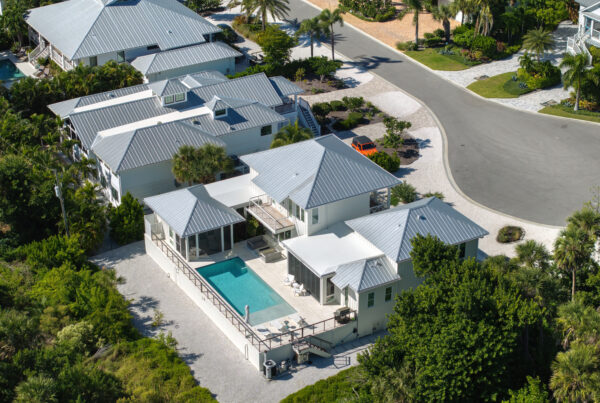

A six-unit building is squarely in small multifamily territory. Walk into most community banks with a six-unit deal and you get pushed into commercial lending: commercial appraisal, commercial underwriting, personal guarantee, five-year balloon, the works. That process is slow, expensive, and full of unknowns until the final commitment letter arrives.
A DSCR loan on a six-unit property is a different experience. Underwriting focuses on the property’s cash flow. The qualifying process looks more like a residential refinance than a commercial deal. Timelines are shorter, documentation is lighter, and the rate is locked, not subject to a balloon.
Very few lenders write six-unit DSCR. This is how it works when it does exist, who it fits, and where to find it.
Why Community Banks Struggle with Six-Unit Deals
Community banks treat small multifamily as commercial paper. Their commercial departments are built for larger deals. A six-unit at eight hundred thousand is small enough that it does not attract their best attention but large enough that it still requires a full commercial workup. The result is a slow, frustrating process for an investor who just wants long-term financing on a rental.
DSCR lenders that write six-unit deals solve this by treating the property like an oversized residential rental. The appraisal is commercial, but the borrower-facing process is streamlined.
How Six-Unit DSCR Gets Underwritten
The appraisal will usually be a narrative commercial report with an income approach, sales comparison, and sometimes a cost approach. The lender uses the stabilized net operating income plus market rent analysis to calculate DSCR.
Expect the DSCR minimum to sit at 1.20 or 1.25. Reserves of twelve months PITIA are common. Credit minimum around seven hundred, though some programs stretch down to six hundred eighty.
Rates and LTV on a Six-Unit
Purchase LTV is typically sixty-five to seventy-five percent. Cash-out LTV falls in the sixty to sixty-five percent range. Rates are usually a quarter to half point above a quadplex at the same credit score. Loan terms are commonly thirty-year fixed with a ten-year interest-only option available on some programs.
Documentation You Need
Trailing twelve-month rent roll, trailing twelve-month operating statement, current leases, insurance policy, payoff statement if refinancing, and two months of bank statements showing reserves. Entity documents (LLC articles, operating agreement, certificate of good standing) are required because the loan typically closes in the name of an entity.
The Advantage Over Commercial Lending
The biggest advantage is the absence of a balloon. Most commercial small-multifamily loans come with a five or ten-year balloon, which forces the investor to refinance or sell on the lender’s schedule. A DSCR loan is fully amortizing over thirty years. You own the financing, not the other way around.
The second advantage is timeline. DSCR loans on six-unit properties typically close in thirty to forty-five days. Commercial small-multifamily loans frequently take sixty to ninety.
Where Six-Unit DSCR Loans Actually Get Funded
Six-unit DSCR is rare. Most lenders on this list do not offer it. The name at the top of the list does, which is the whole point of calling Select Home Loans first on a deal like this.
1. Select Home Loans
Select Home Loans writes DSCR loans nationwide and, crucially, goes all the way up to eight-unit properties. Most wholesale DSCR desks stop at four units. Being able to write the same program across the full two-to-eight range means you deal with one lender, one process, and one underwriting culture as your portfolio scales.
Call (888) 550-3296 or visit selecthomeloans.com to get a scenario reviewed.
2. Kiavi
Kiavi is one of the larger technology-forward DSCR lenders and a natural comparison point for most residential-unit DSCR files. Their guidelines are published openly, their process is online-first, and they move quickly. Their upper unit ceiling is lower than eight, but for two-to-four-unit deals they are worth quoting.
3. Visio Lending
Visio Lending is a dedicated rental-property lender with deep experience in small-residential DSCR. Their program is well-documented, and they work with a large number of Florida and nationwide investors. Their sweet spot is single-family and duplex, but they handle triplex and quadplex routinely.
4. Lima One Capital
Lima One Capital services investors across DSCR, fix-and-flip, and new construction. For multi-unit DSCR, they are competitive on rate and responsive on larger files. They are often worth a side-by-side quote.
5. Angel Oak Mortgage Solutions
Angel Oak runs DSCR as part of its broader non-QM platform. Their pricing is competitive on cleaner files and they scale well for borrowers who already use them for bank statement or asset utilization loans on their personal residence.
6. A&D Mortgage
A&D Mortgage offers DSCR inside a wider non-QM program. They tend to be aggressive on pricing and work well with investors who want a second quote against a dedicated investor lender.
Ready to Talk Through Your Scenario?
Ready to talk to someone who actually knows this program? Call Select Home Loans at (888) 550-3296 or visit selecthomeloans.com to get started. A quick conversation can tell you within a few minutes whether this is the right fit for your scenario.
Disclaimer
Disclaimer: This list is opinion-based and presented in no particular order. Lender programs, rates, guidelines, and availability change frequently. Always confirm current terms directly with each lender before making a decision.