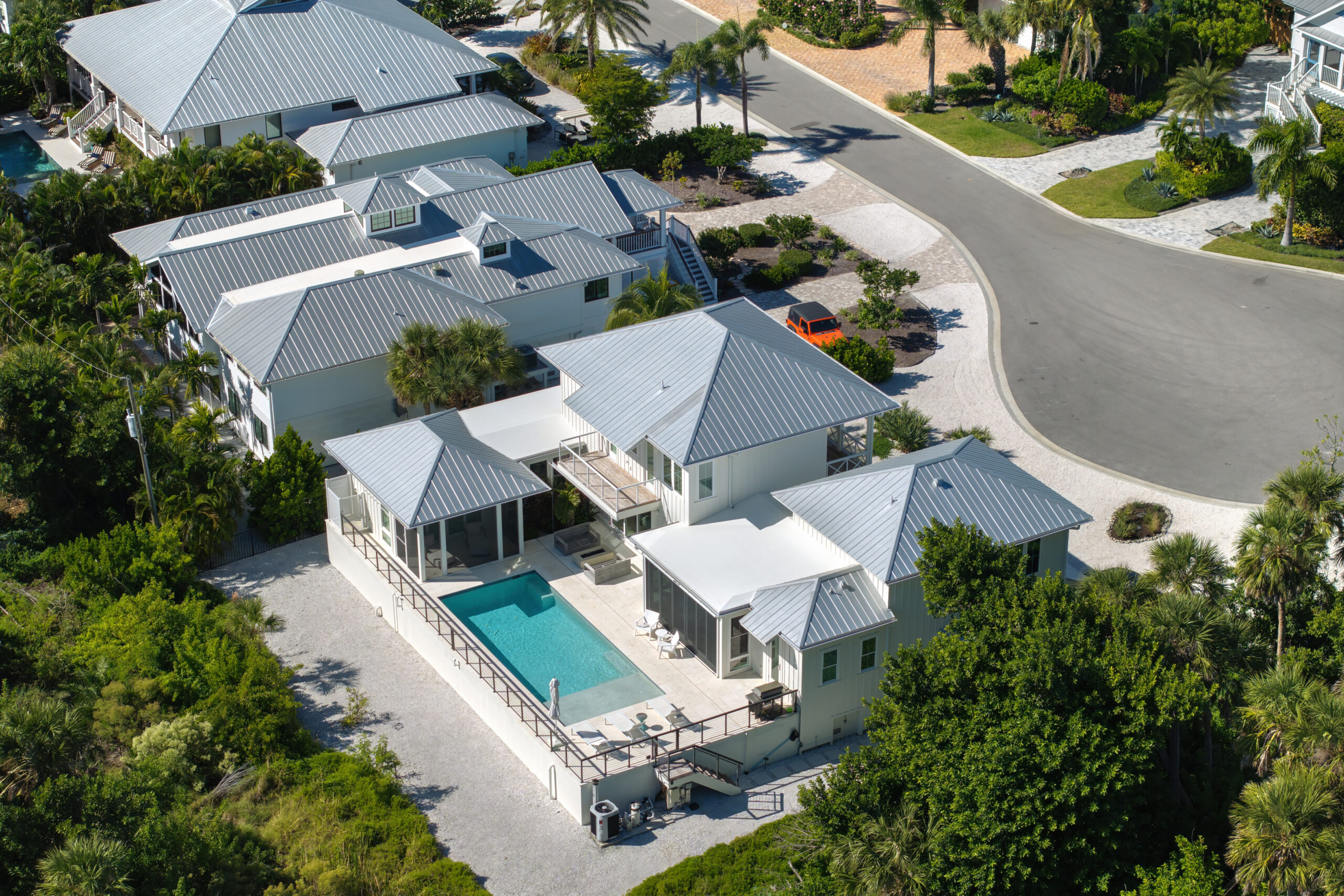

There is a coquina-walled cottage a few blocks off the historic district that books nearly every weekend of the year. Ghost tour crowds in October, snowbirds in January, Nights of Lights visitors from November through February, beach traffic all summer. The owner never advertises beyond a listing page. The property basically markets itself because it sits inside a city that has been drawing visitors since before the United States existed.
Now try explaining that cottage to a conventional underwriter. The income comes from nightly bookings, not a lease. The walls are made of compressed shellstone quarried centuries ago. The nearest comparable sale might be a 1990s block home two miles away that has nothing in common with it. The borrower is self-employed and writes off half her income. Every one of those facts is normal in St. Augustine, and every one of them is a problem at a conventional lender.
A DSCR loan in St. Augustine solves the income half of that puzzle. Instead of underwriting your tax returns, pay stubs, and W-2s, the lender underwrites the property. If the rent covers the payment, the deal works. For investors buying vacation rentals near Anastasia Island, long-term rentals along the US 1 corridor, or one-of-a-kind historic homes downtown, that single shift changes what is possible.
This guide covers how DSCR loans work in the St. Augustine market specifically, which lenders are worth your time, what makes historic and older properties a special case, and how short-term rental income gets treated when the lender runs the numbers. By the end you should know whether this is your financing path and what to prepare before you apply.
The St. Augustine Market an Investor Actually Faces
A Tourism Engine That Never Fully Sleeps
St. Augustine calls itself the nation’s oldest city, and the visitor economy built around that claim runs twelve months a year. The Castillo de San Marcos, St. George Street, the Lightner Museum, the winery and distillery tours, the trolley routes, the Nights of Lights season: these attractions pull steady foot traffic through downtown in every season, not just summer. That matters to an investor because occupancy is less seasonal here than in beach towns that live and die by spring break. A well-located short-term rental can book shoulder seasons that would sit empty elsewhere in Florida.
The beach side adds a second engine. Anastasia Island and St. Augustine Beach draw a more traditional coastal vacation crowd, families renting for a week, surfers, anglers working the pier. Two engines, two guest profiles, and two very different property types feeding the same rental market.
Who Lives and Works Here
Flagler College anchors the downtown core with students, faculty, and events that keep the small city lively outside tourist hours. Healthcare, hospitality, and county government provide the steady local employment base, and a meaningful share of residents commute north toward Jacksonville. That commuter pattern is reshaping the map: growth has been spilling down the US 1 and SR 312 corridors, out toward World Golf Village, and into the master-planned communities on the county’s northern edge near Nocatee. Those newer areas offer the long-term rental play, newer construction, lower insurance friction, and tenant demand from commuting professionals.
The Regulatory Patchwork You Must Confirm
Here is the detail that trips up out-of-area buyers: the City of St. Augustine, the City of St. Augustine Beach, and unincorporated St. Johns County are separate jurisdictions, and each sets its own rules for short-term rentals, registration, and zoning. A property on one side of a street can face different requirements than a property on the other. Rules also change as commissions revisit them. Never assume the listing you toured operates legally as a vacation rental. Confirm the current requirements with the specific city or county office before you write an offer, and build that verification into your due diligence period.
How a DSCR Loan Runs the Numbers on a St. Augustine Rental
DSCR stands for debt service coverage ratio. The formula is simple: the property’s monthly rent, or the appraiser’s opinion of market rent, divided by the full monthly payment. That payment includes principal, interest, property taxes, insurance, and any association dues, the whole package lenders call PITIA.
A ratio of 1.0 means the rent exactly covers the payment. Above 1.0, the property carries itself with room to spare, and lenders generally reward that with better terms. Below 1.0, some programs still work but expect tighter pricing and lower leverage. The thresholds each lender uses vary by program and change over time, so treat any specific number you read online as a starting point, not a rule.
What the lender does not ask for is just as important. No tax returns. No W-2s. No employment verification. No debt-to-income calculation built from your personal finances. For the self-employed tour operator, the 1099 contractor, or the investor whose returns are optimized for deductions, this is the entire appeal.
In St. Augustine the line items inside PITIA deserve extra attention. Florida property insurance is a real cost, wind coverage matters everywhere in the county, and flood insurance applies to a large share of properties near the bayfront, the intracoastal, and the island. Insurance sits inside the payment, so an expensive policy directly lowers your DSCR. Get insurance quotes early, before you fall in love with a property, because on older homes and coastal parcels the premium can decide whether the ratio clears the bar.
Financing Historic and Older Homes: Where St. Augustine Gets Complicated
This is the section that matters most in this city and barely applies anywhere else in Florida. St. Augustine’s housing stock includes homes that predate modern building codes by a century or more, and the downtown historic districts contain properties that are effectively irreplaceable. Financing them takes a lender that understands four specific problems.
The Appraisal Comp Problem
An appraiser valuing a tract home in World Golf Village has dozens of near-identical recent sales to work from. An appraiser valuing a coquina cottage from the 1800s has almost nothing. One-of-a-kind properties force appraisers to make large adjustments across distance, age, condition, and character, and different lenders react differently to that. Some accept a well-reasoned appraisal with wide adjustments. Others cut the loan-to-value or decline the property outright when comps get thin. Ask any lender you interview how they handle unique and historic properties before you pay for an appraisal, and expect the appraisal itself to take longer than it would on a standard home.
Insurance on Old Construction
Insurers underwrite age the way lenders underwrite credit. Older roofs, older wiring, older plumbing, and unusual construction materials all push premiums up or narrow the pool of carriers willing to write the policy at all. A four-point inspection is common on older Florida homes, and the results drive the quote. Since that premium lives inside PITIA, an older home does not just cost more to insure, it scores a lower DSCR on the same rent. Budget for this reality and shop coverage before you go under contract.
Renovation Restrictions in the Historic Districts
Inside St. Augustine’s designated historic districts, exterior changes generally require review and approval through the city’s historic preservation process. What you can do to windows, siding, roofing materials, additions, and even paint in some cases is governed by standards designed to protect the district’s character. The specifics are a verify-with-the-city matter, and they evolve, so speak with the city’s planning and historic preservation staff before you budget a renovation. For a DSCR borrower the financing angle is this: if your business plan depends on a rehab, confirm the work is approvable before you close, because the loan will fund the purchase whether or not the city later approves your dormer.
Why Some Lenders Love These Homes and Others Run
There are two honest views of a historic rental. One lender sees a property with irreplaceable charm, walkable to the top attraction in the region, commanding nightly rates a new-build cannot touch, with demand that has persisted for generations. The other sees deferred maintenance risk, expensive insurance, thin comps, and a repair bill that arrives without warning. Both views have merit. Your job is to find the first kind of lender, and a broker who works with many wholesale investors can save you weeks of trial and error here. This is a real advantage of the broker model over applying to one direct lender at a time.
How Lenders Treat Vacation Rental Income Here
Short-term rental income is the other St. Augustine specialty. Lenders handle it in a few ways, and the differences move your qualifying math.
Some programs qualify the property using the appraiser’s market rent for a long-term lease, even if you plan to run it nightly. That is the conservative route, and in a strong long-term market like St. Johns County it often still works. Other programs will consider short-term rental income, using booking history for an operating property or third-party projection data for a new purchase. A property with a documented track record of strong bookings, like that coquina cottage, presents better under a program that can actually see the STR income.
Which treatment you get, and any adjustments applied to STR figures, is program-dependent and varies by lender. Condotels and non-warrantable condos near the beach add another layer, and program availability for those property types changes, so confirm current options with your broker. And no matter what the lender accepts, the local licensing question from earlier still applies: financing approval is not zoning approval.
What to Demand From a DSCR Lender in This Market
Before comparing names, compare capabilities. For St. Augustine specifically, look for:
- Experience with unique, older, and historic properties, not just tract homes
- Programs that can use short-term rental income, with clear documentation rules
- Comfort with Florida coastal insurance realities and flood zones
- Options for condos, condotels, and non-warrantable projects near the beach
- Lending in LLC and entity names for liability planning
- Transparent prepayment penalty structures you can choose between
- Responsiveness, because good properties here do not sit long
Top DSCR Lenders for St. Augustine Investors
1. Select Home Loans
Select Home Loans is a Florida-based mortgage company with a deep menu of Non-QM and investor programs, including DSCR loans, bank statement loans, and P&L loans for self-employed borrowers. As a broker, Select shops your scenario across multiple wholesale investors, which is exactly what a thin-comp historic property or an STR-income deal needs, since the right home for your file might be the third or fourth lender, not the first. Loan amounts run from roughly $100,000 into the multi-million range depending on the program, and income treatment for vacation rentals is handled flexibly based on what each investor’s guidelines allow. Reach Nick at (888) 550-3296, NMLS #2384002, or visit selecthomeloans.com to have your scenario priced.
2. Kiavi
Kiavi is a large national lender focused on real estate investors, known for a technology-driven process and speed on clean, standard files. The platform works well for standard single-family rentals and investors who value a quick, largely online experience. Unique or historic properties may fit less neatly into a streamlined model, so ask early.
3. Truss Financial Group
Truss Financial Group specializes in mortgages for self-employed borrowers and investors, with DSCR and bank statement products in its lineup. The firm is a fit for business owners whose tax returns understate their real cash flow and who want one shop familiar with that profile.
4. Visio Lending
Visio Lending concentrates almost entirely on rental property loans and has been active in the vacation rental niche for years, which is relevant for St. Augustine’s tourism-driven inventory. Investors with short-term rental business plans often shortlist Visio for that reason.
5. LendSure
LendSure is a wholesale Non-QM lender offering DSCR programs alongside a broader alternative documentation menu, accessed through brokers. Its common-sense underwriting approach can help on files with a story, though your access runs through a broker rather than direct retail.
This list reflects our opinion, and apart from our own top placement the lenders appear in no particular order. Programs change; confirm current offerings directly.
What Shapes Your Terms and What You Will Document
Pricing and structure on a DSCR loan move with a handful of levers, all program-dependent. Stronger credit depth generally earns better pricing. Lower leverage, meaning a larger down payment or more equity in a refinance, does the same. A coverage ratio comfortably above break-even prices better than one scraping by. Property type matters too: a standard single-family home usually prices tighter than a condotel or a four-unit building. Finally, the prepayment penalty structure you choose affects your rate; longer penalty periods typically buy better pricing, shorter or no penalty costs more.
Documentation is light compared with a conventional file but not zero. Expect to provide identification, entity documents if you are buying in an LLC, bank statements showing the down payment and reserves, the purchase contract, insurance quotes, and any lease or booking history the program wants. The appraisal with a market rent analysis does the heavy lifting. Down payments and reserve requirements vary by lender and program, so get current numbers for your scenario rather than relying on a blog’s chart.
An Illustrative Example
The numbers below are round figures for illustration only, not market data or a quote.
Suppose an investor buys a furnished cottage near the downtown core for $500,000, putting 25 percent down and financing $375,000. The appraiser supports market rent of $3,400 per month. The full monthly payment, including principal, interest, taxes, insurance, and no association dues, comes to $3,050. The DSCR is 3,400 divided by 3,050, which is about 1.11. The property covers its own payment with margin, and the file qualifies on the property’s income without a single page of the buyer’s tax returns.
Now notice the sensitivity: if an older roof pushed the insurance quote up by $300 per month, the payment becomes $3,350 and the ratio falls to roughly 1.01. Same house, same rent, materially different loan. That is why insurance quotes come first in this county.
Mistakes St. Augustine Investors Keep Making
- Assuming a downtown property can legally run as a nightly rental without checking the specific jurisdiction’s current rules.
- Ordering the appraisal on a historic home before asking how the lender treats unique properties and thin comps.
- Waiting until the week before closing to shop insurance on an older or coastal home, then watching the DSCR collapse under the real premium.
- Underwriting peak-season booking income as if it ran all year, instead of using conservative figures the lender will actually accept.
- Planning an exterior renovation in a historic district without confirming the approval process with the city first.
- Applying to one direct lender, getting declined on a property quirk, and concluding DSCR financing does not work, when a broker could have placed the same file elsewhere.
DSCR Versus the Conventional Route
| Factor | DSCR loan | Conventional investor loan |
| Income documentation | Property rent versus payment | Tax returns, W-2s, full DTI review |
| Self-employed friendly | Yes, personal income not underwritten | Write-offs can sink qualification |
| Vesting | LLC or entity often allowed | Typically personal name |
| Number of financed properties | Generally flexible | Capped, and each loan gets harder |
| Short-term rental income | Some programs consider it | Rarely usable as qualifying income |
| Pricing | Usually somewhat higher | Usually lower for those who qualify |
If you have clean W-2 income, few properties, and a standard house, conventional financing may cost less. The moment your income gets complicated or your property gets interesting, which describes most of St. Augustine’s best deals, DSCR earns its keep.
Who Should Use a DSCR Loan Here, and Who Should Not
Good fits include self-employed and 1099 borrowers, investors buying vacation rentals on Anastasia Island or near downtown, buyers of historic or otherwise unusual homes, investors scaling past the conventional loan count, and anyone buying through an LLC.
Poor fits include buyers intending to live in the property, since DSCR loans are for investment properties only, borrowers whose property will not come close to covering its payment at realistic rent, and W-2 borrowers with simple files buying ordinary homes who can qualify conventionally at lower cost.
Frequently Asked Questions
Can I get a DSCR loan on a home inside the St. Augustine historic district?
Often yes, but lender appetite varies more here than anywhere else in the deal. The keys are an appraiser experienced with unique properties, an insurance quote obtained early, and a lender or broker who has closed on irreplaceable housing stock before.
Do St. Augustine, St. Augustine Beach, and the county have the same vacation rental rules?
No. They are separate jurisdictions with separate rules that change over time. Confirm the current requirements with the specific city or county office for the exact parcel before you buy.
Will lenders count my Airbnb or Vrbo booking history as income?
Some programs will, typically using documented booking history or third-party market projections, sometimes with adjustments. Others qualify the property on long-term market rent only. Your broker can match your plan to a program that fits.
What if the appraiser cannot find comparable sales for my coquina or century-old home?
Expect wider adjustments and possibly a longer appraisal timeline. Some lenders accept well-supported unique-property appraisals; others reduce leverage or pass. This is a question to ask before you apply, not after.
Does flood zone placement kill a DSCR deal?
Not by itself. Plenty of financed properties near the bayfront and on the island carry flood policies. The premium sits inside PITIA though, so it lowers your ratio, which is why quotes should come before your offer.
Can I buy a condotel near St. Augustine Beach with a DSCR loan?
Some Non-QM investors finance condotels and non-warrantable condos, usually with adjusted terms. Availability for these property types changes, so confirm current options with your broker.
Can I use a DSCR loan for a property I will rent to Flagler College students?
Yes, student rentals are simply long-term rentals from the lender’s perspective. The appraiser’s market rent analysis drives the math, and steady demand near campus can support it.
How long does closing take compared with a conventional loan?
Timelines vary by lender and file, but DSCR loans often move faster because there is no personal income verification. Unique properties can add appraisal time, so build in cushion on historic homes.
Can I refinance a rental I already own in St. Johns County into a DSCR loan?
Yes. Rate-and-term and cash-out refinances are common DSCR uses, including pulling equity from one property to buy the next. Leverage limits on cash-out are program-dependent.
Do I need a Florida LLC to close in an entity name?
Most lenders that allow entity vesting want a properly formed and documented entity, and many investors use LLCs for liability planning. Ask your attorney about structure and your lender about their entity requirements.
What credit score do I need?
Minimums vary by lender and program and change over time, so no single number is reliable. Stronger credit earns better pricing and higher leverage across nearly every program. Get your specific scenario priced rather than guessing from a chart.
Is a prepayment penalty required?
Most DSCR programs offer a menu of prepay structures. Accepting a longer penalty period generally improves pricing, and buying it down or out costs more. Match the structure to how long you plan to hold the property.
The Bottom Line on DSCR Loans in St. Augustine
St. Augustine rewards investors who respect its quirks. The tourism engine runs all year, the historic housing stock commands premiums no new build can copy, and the growth corridors toward World Golf Village and the county’s north end offer a steadier long-term rental play. But the same quirks that create the opportunity, one-of-a-kind construction, layered local rental rules, and real insurance costs, are exactly what conventional financing handles worst. A DSCR loan in St. Augustine sidesteps the personal income problem entirely and puts the focus where it belongs, on whether the property performs.
One caution worth repeating: programs, leverage limits, ratio requirements, and local rental regulations all change over time. Verify current guidelines with a loan expert and the relevant city or county office before you commit.
Talk Through Your St. Augustine Deal
If you are weighing a vacation rental near the beach, a historic cottage downtown, or a long-term rental off US 1, the fastest way forward is a conversation about your actual numbers. Select Home Loans can price your scenario across multiple DSCR programs, including options for short-term rental income and unique properties, and can also walk you through related tools like bank statement loans, cash-out refinancing, or a HELOC on another property if that better fits the plan.
Call Nick at (888) 550-3296, NMLS #2384002, or visit selecthomeloans.com to compare loan options and get pre-approved.