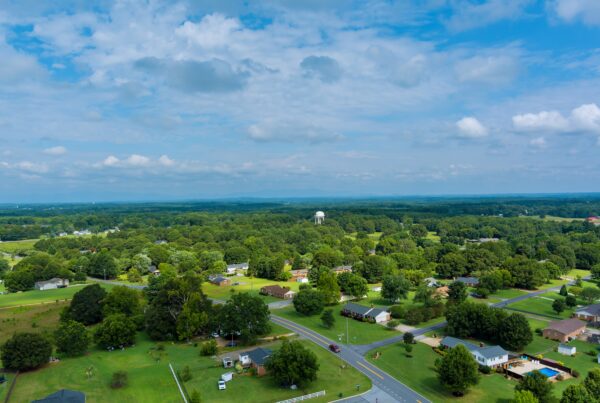
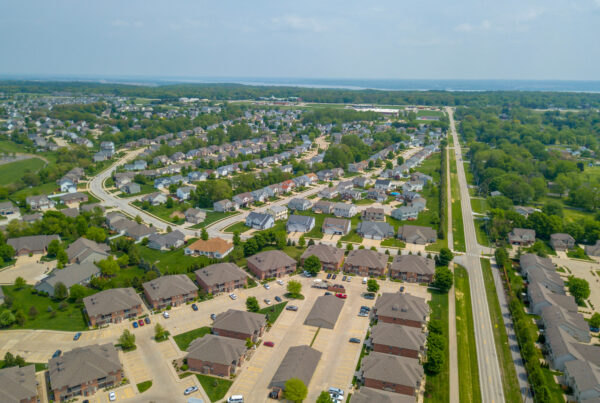
There are two Wyomings, and they barely resemble each other. In Jackson Hole, a modest home can cost more than an entire block in most American cities, and buyers routinely show up with eight-figure portfolios instead of pay stubs. Four hundred miles east, Cheyenne offers rental houses at prices that look like typos to anyone shopping in Teton County, with steady tenants from state government, the military, and the rail and logistics employers along I-80.
An investor can do well in either Wyoming. The financing just looks completely different. The retired founder buying a Jackson ski rental has enormous wealth and almost no W-2 income, so a lender asking for tax returns will turn away one of the most qualified buyers in the country. The investor assembling a portfolio of Cheyenne and Casper rentals may have great income on paper but wants each property judged on its own rent, not stacked against a personal debt-to-income ratio.
Asset-based loans solve both problems. Instead of qualifying you on tax returns, these programs qualify you on what you actually have: liquid assets, rental income the property produces, or real business deposits. For a state with no state income tax, a famously popular LLC statute, and investors ranging from ranch-country landlords to resort-market buyers, that flexibility matters more here than almost anywhere.
This guide ranks the asset-based loan programs that fit Wyoming investors best, depending on which Wyoming you are buying in. It then covers the lenders worth talking to, how qualification works, and the questions Wyoming investors ask most, from LLC vesting to acreage limits on ranch-adjacent parcels.
What Asset-Based Lending Means for a Wyoming Investor
Asset-based lending is a family of non-QM (non-qualified mortgage) programs built for borrowers whose finances do not fit a standard underwriting file. Rather than proving income through two years of tax returns, you qualify through something else that demonstrates ability to repay: a portfolio of liquid assets, the rent a property generates, or the deposits flowing through your business bank accounts.
That distinction is the whole game in Wyoming. Teton County is one of the wealthiest counties in America measured by investment income rather than wages, which means the typical serious buyer there looks terrible on a conventional application and excellent on an asset statement. Meanwhile, in Cheyenne, Casper, and Laramie, the math that matters is simple: does the rent cover the payment? Asset-based programs let each type of investor be judged by the measure that actually describes them.
One more Wyoming-specific point before the rankings. These are residential investment programs. They work for houses, condos, townhomes, and small multifamily on residential-scale lots. They are not agricultural loans. If you are looking at a home on significant acreage outside Sheridan or Cody, the value needs to sit in the dwelling, not in grazing land, water rights, or a working ag operation. More on that in the acreage section below.
The Best Asset-Based Loan Programs for Wyoming, Ranked
The right ranking depends on which Wyoming you are investing in, so the top two spots are effectively a tie split by geography. Asset depletion leads for the Jackson Hole buyer. DSCR leads for the rental investor in the state’s affordable markets. Both deserve the top of the list.
1. Asset Depletion Loans: The Jackson Hole Qualifier
Asset depletion, sometimes called asset utilization, converts your liquid wealth into qualifying income. The lender takes eligible assets, applies program-specific eligibility percentages, and divides the total over a set number of months to produce a monthly income figure for underwriting. No employer, no tax returns, no explanation of why your reported income looks small next to your net worth.
Consider who buys in Jackson Hole: founders who sold companies, retirees who relocated for the tax treatment and the Tetons, family offices, and investors whose wealth lives in brokerage accounts and trusts. Many of them deliberately structure their affairs to minimize taxable income. A conventional underwriter reads that as weakness. An asset depletion underwriter reads the portfolio itself.
This is also the program that handles Jackson’s price points. When entry-level investment condos in Teton County cost what luxury homes cost elsewhere, you are almost always in jumbo territory, and asset depletion programs are commonly available at the larger loan sizes these purchases require. Loan size caps vary by lender and program, so a buyer targeting a high-end Jackson or Wilson property should have a broker confirm which investors on the wholesale side will go that large.
Trade-offs: you need substantial verifiable liquid assets, and which assets count at what percentage varies by program. Retirement accounts, for example, are often counted differently than taxable brokerage funds. A broker who knows each investor’s calculation method can change the outcome meaningfully.
2. DSCR Loans: The Cheyenne, Casper, and Laramie Workhorse
For rental investors in Wyoming’s affordable markets, DSCR (debt service coverage ratio) loans share the top spot. A DSCR loan qualifies the property instead of the person. The lender divides the monthly rent by the full monthly payment, meaning principal, interest, taxes, insurance, and any association dues, together called PITIA. If the rent covers the payment, the deal can stand on its own. Your personal income never enters the file, and no tax returns are required.
This fits the eastern and central Wyoming markets well. Cheyenne has a stable tenant base built on state government, F.E. Warren Air Force Base, and freight and logistics jobs. Casper serves as the hub for the energy sector across central Wyoming, and its rental demand includes contractors and field workers who cycle through on projects. Laramie adds a university rental market around the University of Wyoming, where student and faculty demand keeps well-located properties occupied. Purchase prices in all three remain modest by national standards, which makes it realistic for rents to cover payments, the exact condition a DSCR loan needs.
DSCR also serves the other Wyoming. Jackson’s workforce housing shortage is severe, and long-term rentals there stay in demand from the people who staff the resorts, restaurants, and hospitals but cannot buy at local prices. Short-term rentals near the ski areas can also be financed with DSCR programs that use market rent analysis or documented short-term rental income, though Teton County and the Town of Jackson regulate short-term rentals by zone, so confirm what a specific property is allowed to do before you underwrite it as an STR.
DSCR thresholds, credit minimums, and leverage caps are program-dependent and vary by lender. Directionally, stronger coverage ratios and stronger credit earn better pricing and higher leverage, and many programs offer options for properties that cover thinly, at more conservative terms.
3. Bank Statement Loans: For Wyoming’s Self-Employed
Wyoming runs on self-employment to a degree most states do not. Hunting and fishing outfitters, fly-fishing and backcountry guides, energy-sector contractors in the Powder River Basin around Gillette, ranch service businesses, and the contractors who build and maintain Jackson’s housing stock all tend to share one trait: their tax returns understate what the business actually brings in, because they deduct aggressively, as they should.
A bank statement loan replaces tax returns with 12 or 24 months of business or personal bank statements. The lender analyzes real deposits, applies an expense factor appropriate to the business type, and derives qualifying income from cash flow rather than taxable income. For a Casper drilling contractor buying a rental fourplex, or a Jackson guide buying a duplex to live in one side and rent the other, this is often the difference between a decline and an approval.
Seasonality is the Wyoming wrinkle. Outfitters earn most of their deposits in a few months. Programs that average deposits over 24 months usually treat seasonal businesses more fairly than 12-month reviews, which is one of several reasons the choice of lender matters here.
4. P&L Statement Loans
A profit and loss statement loan is a lighter-documentation cousin of the bank statement loan. Qualifying income comes from a P&L covering a recent period, typically prepared or reviewed by a CPA or licensed tax preparer, sometimes supported by a few months of statements. For an established business owner who does not want to hand over two years of banking history, it is a faster path. Availability and documentation standards vary widely by program, so treat this as an option to price against a bank statement loan rather than a default.
5. 1099 Loans
Independent contractors who receive most of their income on 1099s, common among energy-sector consultants and skilled trades across the state, can qualify using 1099 forms and supporting documentation instead of full tax returns. It is a narrower program than the others, but for the right borrower it removes the write-off penalty that tax returns impose.
6. Bridge and Short-Term Financing
Wyoming’s small markets can move slowly, and its resort market can move fast. Bridge loans cover both problems: short-term financing to grab a Jackson property before a portfolio liquidation settles, or to acquire and stabilize a dated Casper rental before refinancing into a long-term DSCR loan. These are shorter-term, interest-heavier tools, best used with a defined exit already planned.
Which Wyoming Are You Investing In? How to Choose
A quick way to match program to situation:
| Your situation | Likely best fit |
| High net worth, low reported income, buying in Jackson Hole | Asset depletion |
| Buying rentals in Cheyenne, Casper, or Laramie | DSCR |
| Financing a permitted short-term rental near the resorts | DSCR with STR income analysis |
| Self-employed outfitter, guide, or contractor | Bank statement loan |
| Established business owner wanting minimal paperwork | P&L statement loan |
| 1099 contractor | 1099 loan |
| Buying before other funds free up, or stabilizing a property | Bridge, then refinance |
Two structural notes that apply across all of these. First, Wyoming’s LLC statute is one of the most popular in the country for holding real estate, and most DSCR and investor programs allow, and often expect, vesting in an LLC. Second, Wyoming has no state income tax, which is part of why so much wealth has migrated to Teton County and why the state attracts investor entities generally. That is a qualitative observation, not tax advice; talk to a tax professional about your own situation.
A Caution on Acreage and Ranch-Adjacent Property
This deserves its own section because it trips up more Wyoming buyers than anything else. Residential non-QM programs finance homes. When a property includes large acreage, underwriters ask where the value sits. A house on a residential-scale parcel outside Sheridan is usually fine. A house whose appraised value is dominated by land, or a property with income-producing agricultural use, outbuildings built for livestock operations, or leased grazing ground, generally does not fit these programs.
Acreage limits vary by lender, and some programs will consider larger parcels when the appraisal supports the dwelling as the primary source of value and comparable sales exist. If you are looking at ranch-adjacent property, raise the acreage and land use with your broker on day one, before you spend money on an appraisal. Working ranches and true agricultural operations belong with ag lenders, not residential investor programs.
Best Asset-Based Lenders Serving Wyoming Investors
1. Select Home Loans
Select Home Loans is a nationwide investor-loan broker specializing in non-QM and asset-based lending: DSCR, asset depletion, bank statement, P&L, and bridge programs. As a broker rather than a single lender, Select shops one application across a network of wholesale lenders and investors, which matters enormously in a state with two opposite markets. The wholesale investor with the best jumbo asset depletion program for a Jackson purchase is rarely the same one with the sharpest small-loan DSCR pricing for a Cheyenne single-family. One conversation covers both, and program fit questions like seasonal deposit averaging or acreage tolerance get matched to the right investor instead of forced into one lender’s box. Reach Nick at (888) 550-3296 or selecthomeloans.com.
2. Truss Financial Group
Truss Financial Group is a broker known for serving self-employed borrowers and investors with bank statement and DSCR options, along with a broader non-QM menu. Its self-employed focus makes it a reasonable stop for business owners comparing documentation options.
3. Easy Street Capital
Easy Street Capital is a private lender recognized for DSCR rental loans and short-term bridge and fix-and-flip financing, with a reputation for an investor-friendly process on standard rental deals. Investors pairing a bridge purchase with a DSCR exit sometimes keep both under one roof here.
4. Griffin Funding
Griffin Funding offers a wide non-QM lineup including DSCR, bank statement, and asset-based qualification options. It is known for working with self-employed borrowers and investors who need alternatives to tax-return underwriting.
5. CoreVest
CoreVest focuses on residential investors at portfolio scale, with rental portfolio loans, single-asset rental financing, and bridge products. Investors consolidating several Wyoming rentals under one facility may find its portfolio structures useful.
6. Acra Lending
Acra Lending is a longstanding non-QM lender with a broad program set that includes DSCR and bank statement lending. It is a familiar name on the wholesale side of the non-QM market.
This list reflects the author’s opinion and, beyond the author’s preference for Select Home Loans, is presented in no particular order. Every investor’s situation differs, so compare programs, pricing, and terms for your own deal before choosing a lender.
Qualifying and Closing: What the Process Looks Like
Asset-based qualification is document-light compared to conventional lending, but it is not document-free. Expect to provide credit authorization, entity documents if vesting in an LLC, asset statements for asset depletion or reserves, bank statements for cash-flow programs, and property details including current or market rent for DSCR. Credit score minimums, down payment requirements, reserve requirements, and DSCR thresholds are all program-dependent and subject to investor guidelines; directionally, better credit and lower leverage improve pricing and expand options.
Down payments for investment property run higher than owner-occupied lending, and maximum leverage varies with credit, property type, and coverage ratio. Many DSCR programs carry prepayment penalties with structures that vary by program, a point worth negotiating if you may sell or refinance early.
The process itself runs in familiar stages: pricing and program selection, application and document collection, appraisal, underwriting, and closing. Timelines vary by transaction, and in Wyoming the appraisal is usually the pacing item. Small markets have few appraisers, resort properties require specialized valuation work, and winter access can slow inspections in mountain areas. Build appraisal time into any offer deadline, especially outside Cheyenne and Casper.
Pricing on these loans is driven by credit score, leverage, DSCR ratio, property type and use, loan size, and prepayment structure. Nobody can quote a meaningful rate in an article; request a current quote for your specific scenario instead.
Example: The Same Investor Toolkit, Two Wyomings
Example only, with round illustrative numbers, not market data.
An investor buys a rental house in Cheyenne for $300,000 with 25% down, borrowing $225,000. Market rent is $2,200 per month and the full PITIA payment is $1,850. The DSCR is $2,200 divided by $1,850, about 1.19, so the property covers its own payment and qualifies on its rent alone.
The same investor, now retired with a $6 million portfolio and little reported income, wants a $2.4 million loan on a Jackson long-term rental. A DSCR file might work if rents cover the payment, but at Jackson prices coverage can be thin. Instead, an asset depletion program converts the portfolio into qualifying income under its formula, and the loan is underwritten to the borrower’s wealth rather than to a tight rent ratio. Same investor, two markets, two different asset-based answers.
Frequently Asked Questions
Can I close in a Wyoming LLC?
Usually yes, and for DSCR loans it is common practice. Wyoming’s LLC statute is popular with investors nationwide, and most investor programs allow vesting in an entity, often with a personal guarantee from the members. Have your operating agreement and formation documents ready, and tell your broker early if the LLC has multiple members or is owned by another entity, since layered ownership requires extra review.
Do these programs go high enough for Jackson Hole prices?
Many do. Non-QM and asset depletion programs commonly extend well into jumbo loan sizes, and some wholesale investors offer very large loan amounts for strong files. Maximum loan size varies by program, credit profile, and leverage, so a buyer targeting a high-end Teton County property should confirm available loan sizes for their specific scenario before writing offers.
How much acreage is too much?
There is no universal number. Programs set their own limits, and beyond the raw acreage, underwriters look at whether the dwelling drives the appraised value and whether comparable sales exist for similar properties. A home on a few acres near Laramie is routine. A property where land value dominates, or where there is agricultural income or infrastructure, generally will not fit. Ask before ordering the appraisal.
Will appraisals be a problem in small Wyoming markets?
They take planning. Towns like Cody, Sheridan, or Rawlins have limited sales volume, so appraisers may need to look farther back in time or wider geographically for comparable sales, and unique properties can be hard to support. Underwriters can work with well-explained comp adjustments, but allow extra time and be realistic about value on one-of-a-kind properties.
Can I use a DSCR loan for a short-term rental near Jackson?
Some DSCR programs accept short-term rental income, documented through booking history or a market rent analysis, while others underwrite only to long-term market rent. Just as important, Teton County and the Town of Jackson restrict where short-term rentals can operate. Verify the property’s zoning status first, then match it to a program that credits STR income.
Does Wyoming’s lack of a state income tax affect my loan?
Not the loan itself, but it shapes the investment math and it is part of why Wyoming attracts investors and holding entities. Tax treatment depends on your residency, entity structure, and where your other income arises, so confirm the details with a tax professional rather than relying on the state’s general reputation.
What credit score do I need?
Minimums are program-dependent and vary by lender. Directionally, higher scores open higher leverage and better pricing, and borrowers with modest credit may still qualify at lower loan-to-value ratios. A broker can tell you which programs fit your actual score rather than a generic cutoff.
What counts as assets for an asset depletion loan?
Typically liquid and near-liquid holdings: checking and savings, brokerage accounts, and often retirement accounts at reduced eligibility percentages depending on age and program rules. Real estate equity generally does not count. Each program applies its own eligibility percentages and calculation period, which is why the same portfolio can produce different qualifying income at different lenders.
Can rents from an energy-market town like Casper or Gillette support a DSCR loan?
Yes, if the numbers work on the specific property. Underwriters use the appraiser’s market rent analysis and any lease in place. Energy towns can see demand swing with commodity cycles, which argues for underwriting your own deal conservatively even when a program approves it.
Can I refinance a property I own free and clear?
Yes. Cash-out DSCR and asset-based refinances are common for investors who bought with cash and want to redeploy equity into the next purchase. Leverage limits on cash-out transactions are typically more conservative than purchase loans and vary by program.
Do I need reserves after closing?
Most investor programs require some months of PITIA in reserve, with the amount varying by program, loan size, and how many financed properties you own. Larger loans, such as a Jackson purchase, often carry higher reserve expectations. Confirm the requirement for your scenario early so it does not surprise you at underwriting.
How is buying in Laramie different for a lender?
It mostly is not, and that is the point of DSCR lending: the file rises or falls on rent coverage. The practical differences are local, such as a student-driven leasing calendar tied to the University of Wyoming and the value of pricing vacancy realistically around academic-year turnover.
The Bottom Line on Asset-Based Loans in Wyoming
Wyoming rewards investors who match the tool to the market. In Jackson Hole, wealth qualifies where income cannot, and asset depletion loans put portfolio-rich buyers on equal footing at some of the highest price points in the country. In Cheyenne, Casper, and Laramie, the properties qualify themselves, and DSCR loans let a growing rental portfolio stand on its rents. Self-employed Wyomingites, from outfitters to energy contractors, have bank statement and P&L paths that judge real cash flow instead of tax-return income. Add LLC-friendly vesting and no state income tax, and the state is unusually well suited to this style of lending.
Programs, loan limits, and investor guidelines change over time, and every figure described here as typical or program-dependent should be verified against current requirements before you rely on it. A short conversation with a loan expert will confirm what applies to your deal today.
Talk Through Your Wyoming Deal
The fastest way to find your best program is to price your actual scenario across multiple wholesale investors at once, which is exactly what a broker is for. Call Nick at (888) 550-3296 or visit Select Home Loans, NMLS #2384002 | Email: info@selecthomeloans.com, or start at selecthomeloans.com to compare loan options, request a current rate quote, or get pre-approved for your next Wyoming investment, in either Wyoming.