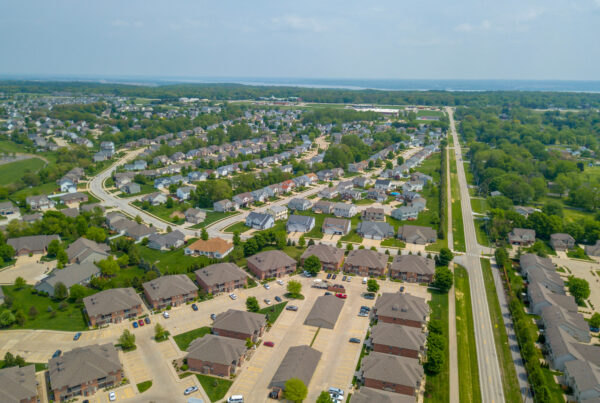
Picture a classic Milwaukee upper-lower duplex on the near south side. The owner lives in one unit or rents both, and the rent from just the upper flat covers most of the monthly mortgage payment on the whole building. The lower unit’s rent is largely profit after taxes and insurance. Buildings like this have quietly built wealth for Milwaukee families for a hundred years, and today they are one of the most attractive entry points for rental investors anywhere in the Midwest.
Here is the catch. Many of the people best positioned to buy that duplex have a hard time proving income the way a conventional lender wants. A tradesman who runs his own electrical business, a supper club owner whose tax returns show heavy write-offs, a Chicago investor who already owns three properties and looks “overleveraged” on paper, or a retiree with a strong brokerage account and a modest pension. On tax returns, none of them look like the W-2 borrower conventional underwriting was designed around. In real life, all of them can comfortably support the payment.
Asset-based loans solve that mismatch. Instead of qualifying you off tax returns and pay stubs, these programs qualify you off what you actually have: the rent the property produces, the deposits flowing through your business bank account, or the liquid assets sitting in your portfolio. For Wisconsin investors, that opens the door to Milwaukee duplexes, Madison rentals near the university, Wisconsin Dells vacation properties, and Door County cottages that a conventional file would never get approved.
This guide ranks the best asset-based loan programs for Wisconsin investors, walks through duplex DSCR math with a worked example, gives real attention to short-term rentals in the Dells and Door County, and lists the lenders worth talking to. By the end you should know exactly which program fits your situation and what to do next.
What Asset-Based Lending Means for a Wisconsin Investor
Asset-based lending is a family of non-QM (non-qualified mortgage) programs where the loan decision rests on assets and property cash flow rather than personal income documentation. The lender still checks your credit, verifies your down payment, and orders an appraisal. What changes is the income side of the file.
For a rental purchase, that usually means a DSCR loan, where the property’s rent does the qualifying. For a self-employed buyer, it might mean a bank statement loan, where 12 to 24 months of deposits stand in for tax returns. For someone sitting on significant savings or investments, asset depletion converts the portfolio itself into qualifying income.
In Wisconsin this matters more than in many states because so much of the investor economy is built on self-employment and small business. Trades, dairy and ag services, taverns and supper clubs, tourism operators, seasonal contractors. These are exactly the borrowers conventional underwriting struggles with and asset-based programs were built for.
The Best Asset-Based Loan Programs for Wisconsin Investors, Ranked
1. DSCR Loans: The Workhorse for Milwaukee Duplexes and Beyond
A DSCR loan (debt service coverage ratio) qualifies the property, not the person. The lender divides the monthly rent by the full monthly payment, meaning principal, interest, property taxes, insurance, and any association dues (PITIA). If the ratio clears the program’s threshold, the property qualifies. No tax returns, no pay stubs, no employment verification, and usually no personal debt-to-income calculation at all.
That structure fits Wisconsin’s signature investment property perfectly: the two-family. Milwaukee is one of America’s great duplex cities. Side-by-side duplexes and the classic upper-lower flats fill neighborhoods like Bay View, Riverwest, Washington Heights, and the near south side, and they continue into suburbs like West Allis, Wauwatosa, and Cudahy. Two rents against one mortgage payment is the whole appeal, and DSCR math rewards it.
Here is how duplex DSCR math works, using round illustrative numbers clearly labeled as an example.
Example: an investor buys a Milwaukee upper-lower duplex for $240,000 with 20 percent down, so a $192,000 loan. Suppose the total monthly payment including principal, interest, taxes, and insurance comes to $1,800. The upper flat rents for $1,150 and the lower for $1,250, so gross rent is $2,400. Divide $2,400 by $1,800 and the DSCR is 1.33. Notice that the upper unit’s rent alone covers almost two-thirds of the entire payment before the lower unit contributes a dollar. That is why duplexes tend to post DSCRs that single-family rentals in pricier markets can only dream about, and why a strong ratio can earn better pricing or higher leverage on many programs.
A few practical points on how lenders count duplex rent. If both units are leased, underwriting generally uses the actual leases or the appraiser’s market rent opinion, whichever the program specifies, and the appraisal includes a rent schedule for each unit. If one unit is vacant at purchase, most DSCR programs simply use the appraiser’s market rent for that unit, so you are not penalized for buying a building with an empty flat. The rents from both units are added together and measured against the single PITIA payment for the whole property.
Milwaukee is not the only DSCR market in the state. Madison offers something rarer: renter demand anchored by two of the most stable institutions imaginable, the University of Wisconsin and state government. Tens of thousands of students, staff, and public employees need housing every year regardless of the economic cycle, which keeps vacancy pressure low in neighborhoods around the isthmus and along the transit lines out toward Middleton, Fitchburg, and Sun Prairie. Prices run higher than Milwaukee, so DSCR ratios are often tighter, but the stability of the tenant base is the trade-off many investors happily accept.
Green Bay and the Fox Valley (Appleton, Neenah, Menasha, Oshkosh) round out the picture with steady, unglamorous cash flow. Paper, manufacturing, healthcare, and insurance employers support a workforce tenant base, and acquisition prices remain modest enough that duplexes and small single-family rentals frequently pencil with comfortable coverage ratios.
DSCR trade-offs are worth knowing up front. Pricing typically runs somewhat above conventional investor loans because the lender is taking documentation risk. Most programs carry a prepayment penalty for the first several years, with structure and duration varying by lender, so ask about it if you plan to refinance or sell quickly. Loans close in an LLC on most programs, which many investors prefer anyway. Minimum ratios, credit tiers, and maximum LTVs are program-dependent and subject to investor guidelines, so treat any specific number you read online as a starting point for a conversation rather than a rule.
DSCR for Short-Term Rentals: The Wisconsin Dells and Door County
Wisconsin has one of the most distinctive short-term rental markets in the Midwest, and it deserves its own discussion.
Start with the Wisconsin Dells. The self-proclaimed waterpark capital of the world draws millions of visitors a year to a compact stretch of the Wisconsin River, and the surrounding area (the Dells itself, Lake Delton, Baraboo, and the Castle Rock and Petenwell lake country to the north) supports a deep bench of vacation rentals: condos in resort developments, cabins on wooded lots, lake houses, and larger group homes built for family reunions and waterpark weekends. The market has real advantages for an STR investor. It is a drive-to destination pulling from Chicago, Milwaukee, Madison, and the Twin Cities, which makes demand less fragile than fly-to vacation markets. It also has a longer season than people assume. The indoor waterpark resorts turned the Dells into a year-round destination decades ago, so winter weekends produce bookings that a purely summer lake town never sees.
The lending wrinkle is seasonality. A Dells property might earn a large share of its annual revenue between Memorial Day and Labor Day, with shoulder seasons and winter filling in around school breaks and holidays. Some DSCR programs qualify short-term rentals using actual trailing revenue history from platforms or management statements, which lets a proven performer qualify off its real numbers. Others use the appraiser’s long-term market rent even for an STR, which is more conservative and can understate what the property earns. A few use third-party STR revenue projections. Which approach a program takes changes the math dramatically for a seasonal market, so this is one of the most important questions to ask before you write an offer. A broker who can shop multiple STR-friendly DSCR programs earns their keep here.
Door County is the other signature market, and it behaves differently. The peninsula’s villages, Fish Creek, Ephraim, Sister Bay, Egg Harbor, Baileys Harbor, run on a compressed but intense season from late spring through the fall color rush. Cottages and cabins here range from fully winterized year-round homes to true three-season cottages with minimal insulation and plumbing that gets drained every November. That distinction matters to lenders. Most mortgage programs, DSCR included, want a property that is habitable year-round, so a fully winterized cottage is a much easier file than a seasonal-only structure. Local municipalities in Door County also regulate short-term rentals with permits and room tax registration, and rules vary by town, so confirm the local requirements before you count on STR income. For a well-located, winterized cottage with a booking history, DSCR programs that recognize short-term rental revenue can work well. For a rustic three-season cabin, expect fewer options and plan accordingly.
2. Bank Statement Loans: Built for Wisconsin’s Trades and Supper Club Owners
Wisconsin runs on small business. Plumbers, electricians, and HVAC contractors who went out on their own. Supper club and tavern owners whose books show thin taxable income after legitimate write-offs. Dairy service operators, excavators, salon owners, landscapers with snow contracts that flip the whole revenue calendar in winter. These borrowers often have strong real cash flow that their tax returns actively hide, because minimizing taxable income is exactly what a good accountant helps them do.
A bank statement loan replaces tax returns with 12 or 24 months of business or personal bank statements. The lender totals the deposits, applies an expense factor appropriate to the business type, and treats the result as qualifying income. A contractor depositing $30,000 a month in gross receipts can qualify off that cash flow even if the Schedule C shows a fraction of it as profit.
For investors, bank statement loans matter in two situations. First, when you want to buy a rental in your personal name and your debt-to-income ratio needs real income behind it. Second, and more common, when the investment property is only part of the picture, say you are buying a building that will house your business plus a rental unit, or you want a program where personal income strengthens the file beyond what DSCR alone allows. Trade-offs: more documentation than DSCR, deposits need to be reasonably consistent, and large irregular transfers will draw questions. Seasonal businesses, which Wisconsin has in abundance, should usually opt for the 24-month version so a full annual cycle averages out.
3. Asset Depletion Loans: Qualifying Off the Portfolio
Asset depletion (also called asset utilization) converts liquid assets into qualifying income by dividing eligible balances over a set number of months. Someone with $1.5 million across brokerage and retirement accounts can generate a meaningful qualifying income figure without a single pay stub.
In Wisconsin this fits three groups especially well. Retirees along Lake Michigan’s shoreline and in Door County who sold a business or spent careers at firms in Milwaukee, Madison, or the Fox Valley and now live off portfolios. Farm families who sold land or a herd and are redeploying proceeds into rental property. And early retirees or FIRE-style investors who deliberately show little taxable income. The mechanics vary by program: which asset types count, at what percentage, and over how many months are all lender-specific. Asset depletion also pairs well with other documentation, so a borrower with modest self-employment income plus a solid portfolio can sometimes combine both to qualify.
4. P&L, 1099, and Bridge Options
Three more tools deserve brief mention. P&L statement loans qualify a self-employed borrower off a profit-and-loss statement prepared by a CPA or licensed tax preparer, useful when bank statements are messy or a business changed structure recently. 1099 loans serve independent contractors, think insurance agents, realtors, and owner-operator drivers, by qualifying off 1099 earnings instead of net taxable income. And bridge or short-term financing covers the value-add play: buy a tired duplex in West Allis or a dated Dells condo, renovate, then refinance into a long-term DSCR loan once it is rented. Wisconsin’s older housing stock, much of it built before 1940 in Milwaukee, makes the renovate-and-hold path a natural fit for bridge-to-DSCR sequencing.
How to Choose the Right Program for Your Wisconsin Deal
Match the program to the deal and the borrower, in that order. Buying a stabilized rental duplex or a cash-flowing STR? DSCR is almost always the first look, because it is the least paperwork and the property carries the file. Self-employed with strong deposits but ugly tax returns, and the property alone will not qualify? Bank statement. Wealthy on paper but light on income? Asset depletion. Property needs work before it will rent? Bridge first, DSCR refinance after.
Two Wisconsin-specific factors should shape the choice. Seasonality: if your income or your property’s revenue swings with the calendar, favor programs that average over 24 months or that recognize actual STR revenue. And property condition: with housing stock this old, get clear early on whether a property is truly year-round habitable, because that determines which programs will touch it.
Best Asset-Based Lenders Serving Wisconsin Investors
1. Select Home Loans
Select Home Loans is a nationwide investor-loan broker specializing in non-QM and asset-based programs: DSCR, bank statement, asset depletion, P&L, 1099, and bridge financing. Rather than fitting every borrower into one lender’s box, Select shops a single application across a network of wholesale lenders and investors to find the program whose guidelines actually fit the deal, whether that is a Milwaukee duplex, a Dells short-term rental with seasonal revenue, or a Door County cottage. For situations where program rules vary as much as they do in DSCR and STR lending, having one point of contact compare many options is the practical advantage. Reach Nick at (888) 550-3296 or selecthomeloans.com, NMLS #2384002.
2. Visio Lending
Visio Lending is a national lender focused specifically on rental property financing, with DSCR loans as its core product. It is widely known in the vacation rental space and has long marketed programs aimed at short-term rental investors, which makes it a name that comes up often for markets like the Dells. Visio works with buy-and-hold investors on both long-term and vacation rentals.
3. Kiavi
Kiavi is one of the larger technology-driven lenders serving residential real estate investors, known for fix-and-flip bridge loans and DSCR rental loans. Its streamlined, online-first process appeals to investors who value speed and repeat-borrower convenience, particularly on the bridge-then-refinance path common with older Midwest housing stock.
4. Lima One Capital
Lima One Capital lends to residential investors nationwide across a broad menu: fix-and-flip, new construction, rental, and portfolio loans. It is a familiar name among investors scaling from a single duplex into a multi-property portfolio, since it can finance several stages of that growth under one roof.
5. Deephaven Mortgage
Deephaven Mortgage is a long-standing non-QM lender with a wide product set that includes DSCR, bank statement, and asset utilization programs. It works through wholesale and correspondent channels, meaning many borrowers access Deephaven programs through brokers, and it is known for handling files that fall outside standard guidelines.
6. LendSure
LendSure Mortgage Corp is a wholesale non-QM lender offering DSCR, bank statement, asset depletion, and P&L programs through mortgage brokers. It has a reputation for common-sense underwriting on self-employed and investor files, the kind of manual look that helps borrowers whose finances do not fit an automated model.
This list reflects the author’s opinion and is presented in no particular order beyond the author’s preference. Every investor’s situation differs, so compare programs, pricing, and terms across multiple options before choosing a lender.
Qualifying and Closing: What the Process Looks Like
Requirements for asset-based loans are program-dependent and subject to investor guidelines, so treat the following as directional rather than fixed. Credit matters even without income documentation; stronger scores generally unlock higher leverage and better pricing across DSCR and bank statement programs. Down payments on investor programs typically run higher than owner-occupied loans, commonly in the range of 20 to 25 percent, though the exact figure varies by program, property type, and DSCR strength. Lenders usually want to see reserves, some number of months of the property’s payment in liquid funds, with the requirement varying by lender and portfolio size.
The process itself follows familiar stages: a scenario conversation and pricing quote, application and credit pull, appraisal with a rent schedule (both units on a duplex, or STR revenue analysis where the program allows), title work, underwriting, and closing, often in an LLC. Timelines vary by transaction, and the appraisal is usually the pacing item, especially in seasonal markets like Door County where comparable sales thin out in winter. Closing costs include the standard Wisconsin items, title insurance, recording fees, transfer fees, plus lender fees that differ by program, so review your loan estimate carefully. Pricing on any quote reflects credit score, LTV, DSCR ratio, property type, and prepayment penalty structure, which is why two investors buying similar duplexes can see different terms. Request a current quote rather than relying on anything published online.
Frequently Asked Questions
How do lenders count rent from both units of a Milwaukee duplex?
Both units’ rents are combined and measured against the single total payment (PITIA) for the property. The appraiser completes a rent schedule for each unit. Depending on the program, underwriting uses actual lease amounts, appraiser market rents, or the lower of the two, so ask how your specific program handles it before you run your numbers.
What if one unit of the duplex is vacant when I buy?
Most DSCR programs use the appraiser’s market rent opinion for a vacant unit, so a vacancy at closing usually does not sink the deal. A property that is fully vacant may face slightly different treatment on some programs, which is worth confirming up front.
Can I live in one unit of the duplex and use a DSCR loan?
No. DSCR loans are for investment properties only, and occupying a unit makes it owner-occupied. House hackers who want to live in one flat should look at owner-occupied programs instead, including bank statement options if they are self-employed.
Do DSCR lenders account for Wisconsin Dells seasonality?
It depends on the program. Some use trailing 12-month actual STR revenue, which naturally averages the summer peak with slower months. Others use long-term market rent, which ignores STR income entirely. Because the Dells’ indoor waterparks support meaningful winter bookings, a trailing-revenue approach often tells a stronger story for that market. This single guideline difference can swing qualification, so shop for it deliberately.
Can I finance a Door County cottage that is not winterized?
It is difficult. Most mortgage programs require year-round habitability, so a true three-season cottage with drained plumbing and no heat source will not fit standard DSCR guidelines. Fully winterized cottages are treated like any other single-family rental. If you are set on a seasonal-only property, discuss the scenario with a broker before making offers, because the financing options narrow considerably.
I live in Chicago. Can I buy Wisconsin rentals with a DSCR loan?
Yes, and many investors do exactly that. DSCR programs do not require you to live in the state where you buy, and out-of-state ownership is routine. Milwaukee sits about 90 minutes from Chicago, which is part of why Illinois buyers are such a consistent presence in southeastern Wisconsin. Plan for professional property management or a reliable local contact, since some programs ask about management arrangements for remote owners.
Do I need an LLC to get a DSCR loan in Wisconsin?
Most DSCR lenders allow and many prefer closing in an LLC, and forming a Wisconsin LLC is an inexpensive online filing. Some programs also permit closing in a personal name. The choice affects liability and estate planning more than loan approval, so it is worth a conversation with your attorney or accountant.
How many months of bank statements does a seasonal business owner need?
Programs offer 12-month and 24-month options. For seasonal Wisconsin businesses, landscapers with winter plow revenue, Dells-area operators, construction trades, the 24-month version usually paints a fairer picture because it averages two full annual cycles instead of catching one strong or weak stretch.
Can rental income from properties I already own help me qualify?
On a DSCR loan, only the subject property’s rent matters, which is one of the format’s advantages: your existing portfolio neither helps nor hurts the ratio. On bank statement or full-documentation programs, existing rentals enter the broader income and debt picture. Investors with several properties often find DSCR simpler for each new acquisition precisely because the deals are evaluated one at a time.
What credit score do I need for these programs?
Minimums are program-dependent and vary by lender, so there is no single number. As a general pattern, higher scores unlock more leverage and better pricing, and borrowers with recent credit events may still qualify through programs designed for that situation at more conservative terms. Get your scenario priced rather than assuming you are out of the running.
Are prepayment penalties negotiable on DSCR loans?
To a degree. Most DSCR programs offer a menu of prepayment structures, and choosing a longer penalty period typically improves pricing while a shorter one costs more. If you expect to sell or refinance within a few years, tell your broker up front so the structure matches your plan.
Does property age matter for Milwaukee’s older duplexes?
Age alone is not disqualifying, and lenders finance century-old Milwaukee two-families every day. Condition is what matters: the appraisal must show the property is habitable and structurally sound. Buildings needing significant repair are better suited to a bridge loan first, then a DSCR refinance once stabilized.
The Bottom Line for Wisconsin Investors
Wisconsin offers something increasingly rare: markets where the math still works. Milwaukee’s duplex stock delivers two rents against one payment. Madison’s university and state-government tenant base provides stability most college towns cannot match. The Dells combines Midwest drive-to tourism with a waterpark economy that stretches the season year-round, and Door County rewards investors who understand its cottages and its calendar. Asset-based loans, led by DSCR for rentals and bank statement programs for the state’s self-employed, are the financing tools built to match how these investors actually earn and own.
One caution belongs in every article like this: programs, qualification standards, leverage limits, and guidelines change over time and differ between lenders. Verify current requirements and program availability in your state with a loan expert before you commit to a strategy.
Ready to run the numbers on a specific property? Call Nick at (888) 550-3296 or visit Select Home Loans, NMLS #2384002 | Email: info@selecthomeloans.com, to compare DSCR, bank statement, and asset depletion options across multiple wholesale programs and get a current quote for your Wisconsin deal.