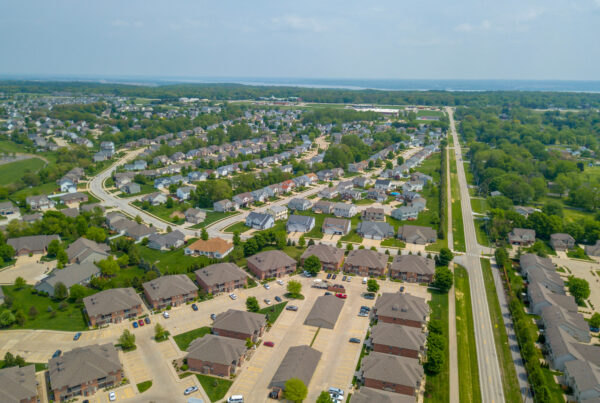
Picture a duplex a few miles from Naval Station Norfolk. The tenants are a petty officer and her family, paying rent on time every month with a housing allowance behind it. In two years they will get orders and move on, and within a few weeks another military family will take their place. The owner of that duplex has a rental that behaves almost like a machine: steady demand, predictable turnover, and a tenant pool that never dries up as long as the base is there.
Now here is the problem. That same owner walks into a traditional bank to buy the triplex down the street, and the bank wants two years of tax returns, a debt-to-income calculation, and an explanation for every deposit. The rental income that makes the deal work barely counts. The deal that pencils out perfectly on paper dies in underwriting.
This is exactly the gap that asset-based loans fill, and Virginia may be one of the best states in the country to use them. Between the Hampton Roads military rental market, Northern Virginia’s contractor economy full of high-earning consultants whose tax returns understate what they make, Richmond’s rental growth, and short-term rental country in Virginia Beach and the Shenandoah Valley, this state is built for financing that looks at the property and the assets instead of a W-2.
In this guide we rank the best asset-based loan programs for Virginia investors, explain who each one fits, walk through a realistic example, and list the lenders worth talking to. By the end you should know exactly which program matches your situation and what to do next.
What Asset-Based Lending Means for a Virginia Investor
Asset-based lending flips the usual mortgage question. Instead of asking “how much do you earn on your tax return,” it asks “does this property carry its own payment” or “do your bank deposits and assets show you can afford this loan.” The property’s rent, your business’s cash flow, or your liquid assets do the qualifying.
These are non-QM loans, meaning they sit outside conventional agency underwriting. That is not a downgrade. It is a different set of rules written for people conventional lending was never designed for: full-time investors with more than ten properties, defense consultants running S-corps in Arlington, 1099 IT contractors in Reston, and retirees in Charlottesville with strong portfolios and modest reported income.
For Virginia specifically, three realities make these programs valuable. First, Hampton Roads runs on military housing demand, and DSCR loans let you scale a rental portfolio there without your personal income ever entering the file. Second, Northern Virginia incomes are among the highest in the country, but contractors and agency owners often write off so much that their taxable income looks nothing like their actual cash flow. Third, the state has real short-term rental markets, from the Virginia Beach oceanfront to cabins near Shenandoah National Park, and several asset-based programs now underwrite those directly.
Here is how we rank the programs for Virginia investors.
1. DSCR Loans: The Best Fit for Virginia Rental Investors
A DSCR loan (debt service coverage ratio) qualifies you based on the property’s rent, not your income. The lender divides the monthly rent by the full monthly payment, meaning principal, interest, taxes, insurance, and any association dues, together called PITIA. If a property rents for $2,400 and the full PITIA payment is $2,000, the DSCR is 1.20. The property covers its own debt with room to spare.
No tax returns. No employment verification. No debt-to-income ratio. Most programs close in the name of an LLC, which many Virginia investors prefer for liability planning. The trade-off is that DSCR pricing and leverage depend on the ratio itself, your credit, and your down payment, and most programs carry a prepayment penalty structure you should understand before signing. All of these terms are program-dependent and vary by lender, so treat any specific number you read online as a starting point, not a rule.
Why DSCR Loans Work So Well Near Virginia’s Military Bases
Hampton Roads deserves its own discussion because military-area rentals behave differently from ordinary rentals, and DSCR underwriting happens to reward exactly how they behave.
The region around Norfolk, Virginia Beach, Chesapeake, Portsmouth, and Newport News hosts one of the largest concentrations of military personnel in the country. That creates a tenant base with unusual characteristics. Demand is steady because new personnel arrive on orders year after year regardless of the broader economy. Rent payment tends to be reliable because service members receive a housing allowance and have strong incentives to pay on time. And turnover is frequent but predictable: tenants typically leave when their orders change, often on a two-to-three-year rhythm, and the next wave of arrivals is already looking.
For an investor, that means military-area rentals trade a little more turnover work for a lot more demand certainty. Vacancy gaps tend to be short if the property is priced right and located within a reasonable commute of a base. Summer, the military’s peak moving season, is when most leases turn over, so experienced Hampton Roads landlords structure lease end dates to land in that window.
DSCR lenders do not underwrite the tenant. They underwrite the rent, usually supported by a lease and an appraiser’s market rent analysis. In a market where market rents are supported by consistent base-driven demand, that appraisal tends to hold up, and properties that cash flow keep qualifying as you buy the next one and the one after that. This is how investors build eight or ten door portfolios in Norfolk and Virginia Beach without ever handing over a tax return.
DSCR for Richmond and the College Markets
Richmond has grown into one of the more interesting rental markets on the East Coast. Neighborhoods like the Fan District, Church Hill, and Scott’s Addition draw young professionals and university-connected renters, and the city’s rowhouse and small multifamily stock suits investors who want two to four units under one roof. A duplex in the Fan that rents well can be a textbook DSCR purchase.
Charlottesville and Blacksburg add a different flavor. Rentals near the University of Virginia and Virginia Tech run on the academic calendar: leases signed months in advance, turnover concentrated in late summer, and demand that renews every fall. DSCR programs generally underwrite these on market rent like any other rental, though per-bedroom student leases sometimes require a lender comfortable with that structure. A broker who knows which programs accept student housing saves you weeks here.
DSCR for Short-Term Rentals in Virginia Beach and the Shenandoah Valley
Virginia’s short-term rental story has two chapters. The first is the Virginia Beach oceanfront and Sandbridge, classic vacation rental territory with a long beach season. The second is cabin country: the Shenandoah Valley and Blue Ridge corridor near Luray, Front Royal, and the national park, where mountain cabins and A-frames serve the enormous drive-to market of Washington, D.C. day-trippers and weekenders.
Some DSCR lenders now underwrite short-term rentals using projected or documented short-term income rather than long-term market rent, though the rules differ sharply between programs. Others will only credit long-term market rent, which can sink a cabin deal that works as an STR but not as a twelve-month lease. Local rules matter too. Virginia Beach regulates short-term rentals by zone, and county rules in the Valley vary, so confirm the property can legally operate before you finance it. This is a corner of the market where shopping multiple wholesale programs, rather than applying to one lender, makes the difference between an approval and a dead file.
2. Bank Statement Loans: Built for Northern Virginia’s Contractor Economy
Northern Virginia runs on contracts. Defense consultants, cybersecurity firms, IT services companies, and government-adjacent agencies fill Arlington, Alexandria, Tysons, Reston, and the Dulles corridor. The people who own and run these businesses often earn strong six-figure incomes, and then their accountants get to work. Legitimate deductions, retirement contributions, equipment write-offs, and S-corp structuring shrink the taxable income that appears on the return. The tax strategy is smart. The mortgage consequence is brutal, because a conventional lender underwrites the shrunken number.
A bank statement loan solves this by qualifying you on deposits instead of tax returns. The lender reviews 12 or 24 months of business or personal bank statements, applies an expense factor appropriate to your business type, and derives a qualifying income from actual cash flow. An Arlington consulting firm owner whose return shows a modest figure but whose business account shows consistent heavy monthly deposits suddenly qualifies like the high earner she actually is.
For investors, bank statement loans matter in two situations. They finance a primary or second home when the DSCR route does not apply. And they finance investment properties when the property’s rent alone will not carry the deal, common at Northern Virginia price points, where a townhouse in Fairfax County can cost enough that rent covers only part of the payment and your documented cash flow needs to bridge the gap. Requirements such as the number of statement months, the expense factor, and self-employment history are program-dependent, and this is another place where a broker comparing multiple lenders’ calculations can change your qualifying income meaningfully.
3. 1099 Loans: For Virginia’s Independent Contractors
Not every contractor runs a company. Plenty of Virginia consultants work as individual 1099 contractors: a cleared systems engineer supporting a prime contractor in Chantilly, a travel nurse rotating through Sentara hospitals in Hampton Roads, a freelance designer in Richmond. A 1099 loan qualifies these borrowers using their 1099 forms, typically one or two years of them, sometimes paired with an expense factor, instead of full tax returns.
It is a simpler documentation path than a bank statement loan when your income arrives as clean 1099s from one or a few payers. The details, including how many years of 1099s and what expense assumptions apply, vary by program, so have a loan expert match you to the right one rather than guessing.
4. Asset Depletion, P&L, and Bridge Options
Three more tools round out the Virginia toolkit, each worth a brief look.
Asset depletion loans, sometimes called asset utilization, convert liquid assets into qualifying income by dividing eligible balances over a set term. They fit retirees and wealth-heavy, income-light borrowers, including the federal retiree in Williamsburg with a large portfolio and a modest pension, or a NoVa tech seller sitting on proceeds from an exit.
P&L loans qualify a self-employed borrower using a profit and loss statement, often prepared or reviewed by a tax professional, instead of bank statements. They suit business owners whose statements are messy, perhaps because personal and business funds mingle, but whose P&L tells a clean story.
Bridge and short-term loans fund purchases and renovations fast, then get replaced by long-term financing. Richmond’s older housing stock and Norfolk’s renovation-heavy neighborhoods make the buy, renovate, rent, refinance path popular here, with a DSCR loan as the exit. If you plan to hold, ask your broker to map the bridge and the DSCR refinance together from day one.
Choosing the Right Program for Your Virginia Deal
A quick way to sort yourself:
| Your situation | Start with |
| Buying or refinancing a rental near a Hampton Roads base | DSCR loan |
| Richmond, Charlottesville, or Blacksburg rental purchase | DSCR loan |
| Virginia Beach or Shenandoah cabin STR | DSCR with STR income treatment |
| NoVa business owner, strong deposits, lean tax returns | Bank statement loan |
| Individual 1099 contractor or consultant | 1099 loan |
| High assets, low documented income | Asset depletion |
| Renovation project with a rental exit | Bridge, then DSCR refinance |
A Worked Example
Take an illustrative Norfolk duplex, used purely as an example with round numbers. Purchase price $400,000, and the investor puts 25 percent down, borrowing $300,000. Both units rent to military families for a combined $3,300 per month. Suppose the full monthly PITIA payment comes to $2,750. The DSCR is $3,300 divided by $2,750, or 1.20.
A ratio like that generally places the deal comfortably within many DSCR programs, subject to credit and program guidelines. The investor’s tax returns never enter the picture. If she buys a similar property in Virginia Beach next year, the new property qualifies the same way, on its own rent. That repeatability is why DSCR is the backbone of most Virginia rental portfolios.
Best Asset-Based Lenders Serving Virginia Investors
1. Select Home Loans
Select Home Loans is a nationwide investor-loan broker specializing in non-QM financing: DSCR loans, bank statement loans, 1099 loans, asset depletion, P&L loans, and bridge options. As a broker, Select shops one application across a network of wholesale lenders and investor programs, which matters enormously in the scenarios this article covers. A Shenandoah cabin STR, a student rental in Blacksburg, and a jumbo-sized NoVa bank statement loan each fit different programs, and comparing many at once is how you find the right structure instead of forcing a deal into one lender’s box. Nick and the team walk you through the options and match the program to the deal. Reach them at (888) 550-3296 or selecthomeloans.com, NMLS #2384002.
2. A&D Mortgage
A&D Mortgage is a national lender with a wide non-QM menu that includes DSCR, bank statement, and other alternative documentation programs. It is known for breadth across borrower types, which makes it a common fit for self-employed investors whose files do not match a single clean category.
3. Griffin Funding
Griffin Funding is a national lender active in DSCR and bank statement lending, with a reputation for working with self-employed borrowers and rental investors. Its program range covers many of the scenarios Virginia investors run into, from long-term rentals to alternative income documentation.
4. Angel Oak Mortgage Solutions
Angel Oak is one of the most established names in non-QM lending, with a broad menu covering bank statement, investor cash flow, and other alternative documentation products. It is frequently a benchmark other non-QM programs get compared against.
5. CoreVest
CoreVest focuses on lending to residential real estate investors, including rental portfolio loans and bridge financing. Investors holding multiple Virginia properties who want portfolio-level structures often find CoreVest’s product set relevant.
6. RCN Capital
RCN Capital is a national private lender serving real estate investors with short-term bridge and fix-and-flip financing alongside long-term rental loans. It tends to appeal to investors running renovation projects who need speed on the front end.
This list reflects the author’s opinion and is presented in no particular order beyond that preference. Every investor’s situation differs, so compare programs, terms, and service for your own deal before choosing a lender.
Qualifying and the Process in Virginia
Asset-based underwriting is lighter on personal documentation but still disciplined. Expect the following, with the caveat that every item is program-dependent and subject to investor guidelines.
Credit matters. There is no single universal minimum across programs, but stronger scores generally open better pricing and higher leverage. Down payments on investment properties are usually larger than owner-occupied conventional loans, and the required equity varies with the program, the property type, and, for DSCR, the coverage ratio. Reserves, meaning months of payments in liquid funds after closing, are commonly required and vary by lender. DSCR loans typically carry prepayment penalty options that affect pricing, so decide how long you plan to hold before you pick a structure.
The process itself runs in familiar stages: a conversation about your scenario, a program match and pre-qualification, property appraisal (with a rent analysis for DSCR deals), underwriting, and closing. Timelines vary by transaction, appraisal turn times, and title work, so build a realistic schedule with your loan expert rather than counting on a quoted average. Entity closings in an LLC are routine on investor programs but bring your operating agreement early to keep title moving.
Frequently Asked Questions
How do military-area rentals near Norfolk handle vacancy between tenants?
Turnover in Hampton Roads clusters around the military’s summer moving season, when orders take effect. Landlords who set lease end dates in that window usually re-rent quickly because incoming families are searching at exactly that time. Lenders underwriting a DSCR loan use market rent, not your personal vacancy history, so a well-located property near a base is evaluated on the demand the market shows.
Do DSCR lenders treat military tenants differently?
No. The tenant’s identity does not enter DSCR underwriting. What helps you is the effect military demand has on market rents and appraisal rent schedules, which tend to be well supported near major installations.
Are Northern Virginia purchase prices a problem for asset-based loans?
Higher price points mean larger loan amounts, and many non-QM programs lend well above conforming loan limits. The practical issue is that expensive NoVa rentals sometimes produce DSCR ratios below what a program wants. Solutions include a larger down payment to lift the ratio, a program that accepts lower coverage, or qualifying through a bank statement loan instead. Loan size caps vary by lender, so have your broker confirm the ceiling for your scenario.
I am a defense consultant with an S-corp. What income will a bank statement lender use?
The lender reviews your business bank statements, typically 12 or 24 months, and applies an expense factor suited to your business type to estimate net cash flow. Consulting firms with low overhead often receive favorable expense treatment, but the exact factor is program-dependent. Different lenders can calculate meaningfully different qualifying incomes from the same statements, which is a strong reason to shop the file.
Can I get a DSCR loan on a Shenandoah Valley cabin I rent on Airbnb?
Often yes, but program selection is everything. Some DSCR lenders credit short-term rental income using documented history or projections, while others only count long-term market rent, which usually understates a cabin’s earnings. Confirm the county’s short-term rental rules first, then match the deal to a lender that underwrites STR income.
Do student rentals in Blacksburg or Charlottesville qualify for DSCR loans?
Generally yes when leased as standard residential rentals. Per-bedroom leases or properties functioning like rooming houses need a lender comfortable with student housing, and not all are. Disclose the leasing structure up front so your broker targets the right programs.
Can I close in an LLC in Virginia?
Most DSCR and investor programs allow, and many investors prefer, closing in an LLC. Expect to provide formation documents and the operating agreement, and expect a personal guarantee on most residential investor loans.
What DSCR ratio do I need?
There is no universal threshold. Many programs like to see the rent fully covering PITIA, some accept ratios below 1.0 with pricing or leverage adjustments, and stronger ratios generally earn better terms. It varies by lender and program, so run your actual numbers with a loan expert.
How many rental properties can I finance this way?
DSCR programs typically do not impose the financed-property limits conventional loans do, since each property qualifies on its own cash flow. Portfolio size limits, where they exist, vary by lender.
Does my housing allowance count if I am active duty and buying a rental?
For a DSCR loan your personal income, including BAH, is not part of the calculation at all. The property’s rent does the qualifying, which is why many service members stationed in Hampton Roads buy rentals near base and keep them after they receive new orders.
What is the difference between a 1099 loan and a bank statement loan?
A 1099 loan documents income with the 1099 forms themselves, which suits contractors paid cleanly by a few payers. A bank statement loan derives income from deposits, which suits business owners with many revenue sources. If both could apply, compare the qualifying income each method produces, because they can differ.
Can I refinance an existing Virginia rental with a DSCR loan?
Yes, both rate-and-term and cash-out refinances are common, subject to seasoning and equity requirements that vary by program. Cash-out DSCR refinances are a popular way to pull equity out of an appreciated Richmond or Virginia Beach rental to fund the next purchase.
The Bottom Line for Virginia Investors
Virginia rewards investors who match the financing to the market. The best asset-based loans for investors in Virginia start with DSCR for the rental engine of Hampton Roads, Richmond, and the college towns, add bank statement and 1099 programs for the Northern Virginia contractor economy, and round out with asset depletion, P&L, and bridge options for everything else. The common thread is that none of these programs punish you for a smart tax return or an unconventional income structure.
One final note: programs, loan limits, and qualification requirements change over time and vary by lender, so verify current guidelines with a loan expert before making decisions based on anything you read here, including this article.
Talk Through Your Virginia Deal
If you have a property in mind, or you just want to know what you could qualify for, the fastest path is a short conversation about your scenario. Nick at Select Home Loans can compare DSCR, bank statement, 1099, and other asset-based programs across multiple wholesale lenders and tell you which one actually fits your deal, no tax returns required to start the conversation.
Call Nick at (888) 550-3296 or visit Select Home Loans, NMLS #2384002 | Email: info@selecthomeloans.com, to request a quote or get pre-qualified.