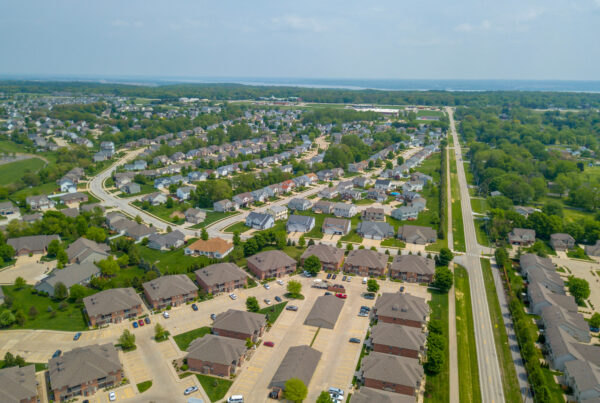
Picture an investor sitting at a kitchen table with three browser tabs open: a new-build duplex near a Columbus tech corridor, a brick four-family in a quiet Cincinnati neighborhood, and a $95,000 single-family in Cleveland that rents for more per month than some coastal condos net in a quarter. Ohio’s three C’s each make a real case for the next dollar of capital. What most investors figure out a little later, sometimes after losing a deal, is that the loan strategy matters as much as the city. The right property with the wrong financing still underperforms.
That is where asset-based lending changes the math. Instead of qualifying you off tax returns and W-2s, these programs qualify the deal off the property’s rent, or qualify you off your business deposits or liquid assets. For self-employed investors, portfolio builders, and the wave of out-of-state buyers targeting Ohio’s price points, that difference decides how many doors you can actually close on.
This guide ranks the best asset-based loan programs for Ohio investors, explains which program fits which of the three metros, lists the lenders worth comparing, and answers the questions Ohio buyers ask most, including how to finance those sub-$100,000 Cleveland properties and Cincinnati’s famous doubles.
What Asset-Based Lending Means for an Ohio Investor
An asset-based loan is underwritten around an asset instead of your personal income. For a rental property, the asset is the house and its rent. For a self-employed borrower, it might be the cash flow visible in business bank statements. For a retiree or a business owner sitting on brokerage accounts, it can be the liquid assets themselves.
Why does that matter in Ohio specifically? Because Ohio rewards volume and variety. Prices across Columbus, Cincinnati, and Cleveland sit low enough relative to rents that many investors buy several properties in the time a coastal investor closes one. Conventional financing caps out quickly for that kind of buyer. Ten financed properties is a hard ceiling on the conventional side, and long before that, debt-to-income ratios strangle approvals for anyone whose tax returns show aggressive write-offs.
Asset-based programs sidestep those walls. No tax returns on most investor programs, no cap tied to conventional loan count rules, and underwriting that treats a cash-flowing rental as the qualification itself. For investors building across multiple Ohio metros at once, that is the difference between a plan and a portfolio.
The Best Asset-Based Loan Programs for Ohio Investors, Ranked
The right order depends on your strategy, but for most Ohio rental investors the ranking below reflects how deals actually get done across the state.
1. DSCR Loans: The Three-Metro Portfolio Strategy
A DSCR loan qualifies the property, not the borrower’s paycheck. The lender takes the monthly rent and divides it by the full monthly payment, meaning principal, interest, taxes, insurance, and any association dues, often abbreviated PITIA. If a property rents for $1,500 and the total payment is $1,200, the DSCR is 1.25. The property covers itself with room to spare, and that ratio drives the approval.
DSCR loans top this list because they match how sophisticated investors treat Ohio: not as one market, but as three markets with different personalities that hedge each other.
Columbus brings growth. Major employers keep announcing expansions, the metro keeps adding residents, and rents have followed development into suburbs like Westerville, Grove City, and Hilliard. Columbus properties often cost more than their Cleveland counterparts, so the DSCR math is tighter, but the appreciation story and tenant demand are the draw.
Cincinnati brings steadiness. Neighborhoods across Hamilton County and into Northern Kentucky commuter zones tend to hold tenants for years. The city’s housing stock is full of two-family “doubles,” a format Cincinnati investors love because one building produces two rent checks, which usually strengthens the DSCR calculation.
Cleveland brings yield. Price points in many Cleveland and Cuyahoga County neighborhoods sit low enough that rent-to-price ratios attract cash-flow investors from every state in the country. A DSCR lender does not care that you live in Phoenix or Brooklyn. If the Cleveland property’s rent covers its PITIA at the ratio the program requires, the deal can work.
A portfolio spread across all three behaves differently than three doors in one zip code. Columbus gives you the growth curve, Cincinnati gives you stability, Cleveland gives you monthly cash flow. DSCR financing is the only program type that lets you scale across all three without your personal debt-to-income ratio ever entering the conversation.
Trade-offs: DSCR loans usually ask for a larger down payment than owner-occupied financing, and many carry prepayment penalties, though the penalty structure is often negotiable and affects pricing. Minimum ratios, credit requirements, and leverage caps are program-dependent and vary by lender, so treat any specific number you read online as a starting point, not a rule.
An Example of the Three-Metro Math
Here is a simplified illustration, using round numbers rather than market data. An investor puts roughly the same total capital to work three ways: a $260,000 Columbus duplex, a $180,000 Cincinnati double, and two Cleveland single-families at $100,000 each. Suppose the Columbus property runs a DSCR near 1.1, the Cincinnati double near 1.25, and the Cleveland pair near 1.4. The blended portfolio cash-flows comfortably even though the Columbus deal alone is thin, and the Columbus asset carries the strongest long-term growth case. Each loan stands on its own property, so one tight ratio does not sink the others.
2. Bridge and Rehab Loans: The Cleveland and Dayton Value-Add Play
Ohio’s deepest discounts come attached to properties that need work. Cleveland and Dayton in particular offer houses priced below what it would cost to build them, often because they need $30,000 to $60,000 of renovation before a quality tenant will sign a lease. That is bridge loan territory.
A bridge or rehab loan is short-term financing, usually 12 to 24 months, sized on the property’s after-repair value rather than its rough current condition. Many programs fund a portion of the purchase and a portion of the renovation budget, released in draws as work completes. Approval leans on the deal itself: purchase price, scope of work, after-repair value, and your track record, not your tax returns.
The strategy Ohio investors run again and again is the rehab-to-rental pipeline, often called BRRRR. Buy a distressed Dayton single-family with a bridge loan, renovate it, place a tenant, then refinance into a long-term DSCR loan based on the new appraised value and the actual lease. Done well, the refinance returns a large share of your invested cash, which funds the next acquisition. The bridge loan is the entry; the DSCR loan is the exit. Working with a broker who handles both sides means your exit financing is planned before you ever swing a hammer.
Trade-offs: bridge money costs more than long-term money, timelines are unforgiving, and renovation budgets in older Ohio housing stock have a way of growing once walls open up. Build in cushion, and confirm draw procedures before closing.
3. Bank Statement Loans: For Ohio’s Self-Employed Buyers
Not every asset-based borrower is buying a pure rental. Plenty of Ohio business owners, contractors, agency founders, and franchise operators want to buy property, sometimes an investment, sometimes a home, and their tax returns undersell what the business actually produces. Good accounting minimizes taxable income; conventional underwriting punishes exactly that.
A bank statement loan qualifies you off 12 or 24 months of business or personal bank deposits instead of tax returns. The lender applies an expense factor to gross deposits to estimate usable income, and that figure drives the approval. For a Columbus consultant or a Cincinnati restaurant owner whose Schedule C looks nothing like their actual cash flow, this program often approves what a bank just declined.
Bank statement loans pair well with the rental programs above. Some investors use one for a primary residence or a second home near a favorite market, then run DSCR loans for the rentals, keeping business income documentation out of the rental side entirely.
4. Asset Depletion, P&L, and 1099 Loans: The Supporting Cast
Three more programs round out the asset-based menu, each solving a narrower problem.
Asset depletion, sometimes called asset utilization, converts liquid assets into qualifying income by spreading balances in brokerage, retirement, or bank accounts over a set term. It suits investors who sold a business or hold significant savings but show little monthly income on paper.
P&L loans qualify a self-employed borrower off a profit and loss statement, typically prepared or reviewed by a tax professional, useful when bank statements are cluttered with transfers or the business structure makes deposit analysis messy.
1099 loans serve independent contractors, from traveling nurses working Ohio hospital systems to commissioned sales reps, using 1099 forms rather than full tax returns to document income.
All three are program-dependent in their documentation and thresholds, so a quick scenario conversation usually settles which one fits faster than any article can.
Matching the Program to the Ohio Market You’re Buying In
A rough decision guide, keeping in mind that every deal has its own wrinkles:
| Your Situation | Likely Best Fit |
| Turnkey or rent-ready rental in Columbus, Cincinnati, or Cleveland | DSCR loan |
| Distressed property in Cleveland or Dayton needing renovation | Bridge/rehab loan, refinanced into DSCR |
| Student rental near Ohio University, Miami University, or Ohio State | DSCR loan, with attention to lease structure |
| Self-employed buyer with heavy tax write-offs | Bank statement or P&L loan |
| High liquid assets, low reported income | Asset depletion loan |
| Independent contractor income | 1099 loan |
The college-town niche deserves a note. Athens, Oxford, and the University District in Columbus support durable rental demand tied to enrollment rather than the job market, which diversifies a portfolio further. Lenders look at these deals individually. Per-bedroom leases, parental guarantees, and student-heavy tenancy are handled differently across programs, so flag the college angle early when requesting quotes.
Best Asset-Based Lenders Serving Ohio Investors
1. Select Home Loans
Select Home Loans is a nationwide investor-loan broker, and for Ohio buyers the broker model is the point. One application gets shopped across a network of wholesale non-QM lenders and investors, comparing DSCR, bank statement, bridge, asset depletion, P&L, and 1099 programs against each other. That matters in a state like Ohio where the right program in Columbus may be the wrong one for a $90,000 Cleveland deal, since minimum loan amounts, leverage, and pricing differ across wholesale programs. Instead of you calling six lenders, one broker conversation surfaces the programs that actually fit each property, including the rehab-to-DSCR pipeline handled end to end. Reach Nick at (888) 550-3296 or selecthomeloans.com to talk through a scenario.
2. Kiavi
Kiavi is one of the most recognizable names in fix-and-flip and bridge lending, with a technology-forward application process that experienced flippers tend to appreciate. The company also offers DSCR rental loans, making it a candidate for investors running the buy-renovate-refinance strategy under one roof.
3. Visio Lending
Visio Lending focuses specifically on rental property finance and is best known for DSCR lending, including on vacation and short-term rentals. Its narrow focus appeals to buy-and-hold investors who want a lender that only does rental loans.
4. RCN Capital
RCN Capital is a national private lender covering short-term bridge and fix-and-flip loans alongside long-term rental financing. It works with both newer and experienced investors and is a frequent name in the value-add space that defines so many Cleveland and Dayton deals.
5. LendSure
LendSure is a non-QM wholesale lender with a broad program menu, including DSCR, bank statement, and asset-based options. Its breadth makes it a common fit for self-employed borrowers whose files need flexible income documentation.
6. Lima One Capital
Lima One Capital lends across the investor spectrum, from fix-and-flip and new construction to rental and portfolio loans. Investors planning to grow from single properties into multi-door portfolios often encounter Lima One as they scale.
This list reflects the author’s opinion and is presented in no particular order beyond that preference. Every investor’s situation differs, so compare programs, pricing, and terms across several options before committing.
Qualifying for an Asset-Based Loan in Ohio: What to Expect
Requirements vary by lender and program, so treat everything here as directional rather than fixed.
Credit still matters even when income documents don’t. Stronger scores generally open up higher leverage and better pricing across DSCR and bank statement programs. Down payments on investor programs typically run larger than owner-occupied loans, and the exact leverage cap depends on the program, your credit, the property type, and the DSCR itself. Reserves, meaning liquid funds left after closing, are commonly required and are also program-dependent.
On property types, Ohio’s stock is friendly to these programs: single-family homes, duplexes and Cincinnati doubles, three- and four-unit buildings, and in many programs five-plus-unit small multifamily and short-term rentals. Condition matters most. Rent-ready properties fit DSCR programs; heavy rehab projects belong in bridge financing first.
The process usually runs: scenario review and quote, application and asset documentation, appraisal with a rent schedule for DSCR files, underwriting, then closing. Timelines vary by transaction, appraisal availability, and title work, so build realistic dates into your purchase contracts rather than counting on a specific number of days.
One Ohio-specific practical note: property taxes vary meaningfully by county and school district, and tax reassessments after a sale can move your PITIA. Underwrite your DSCR with realistic post-sale tax figures, especially in Franklin, Hamilton, and Cuyahoga counties, so the ratio you buy at is the ratio you actually live with.
Frequently Asked Questions
Is there a minimum property value for DSCR loans in Ohio?
Most programs carry minimum loan amounts, and some Cleveland and Dayton price points fall below certain lenders’ floors. Minimums are program-dependent, which is exactly why low-price-point deals benefit from a broker who knows which wholesale programs accept smaller loans. Bundling several inexpensive properties into one portfolio loan is another route some investors use.
Can I buy Ohio rentals if I live in another state?
Yes, and thousands of investors do. DSCR lenders underwrite the property and your credit profile, not your zip code. Practically, you will want a local property manager, a local agent or wholesaler sourcing deals, and an inspector you trust, since you may never walk the property before closing. Many closings are handled remotely through a mobile notary.
How does the rehab-to-rental refinance actually work?
You purchase and renovate with a bridge loan, lease the property, then refinance into a DSCR loan based on the new appraised value and in-place rent. Lenders apply seasoning rules, meaning a required ownership period before you can use the new value, and those rules vary by program. Planning the exit loan before buying prevents an ugly surprise at month ten of a twelve-month bridge term.
Are Cincinnati doubles and other duplexes harder to finance?
No. Two- to four-unit properties are standard fare for DSCR programs, and doubles often carry stronger ratios because two rents cover one payment. The appraisal will include a rent schedule for each unit. Owner-occupying one side generally moves you out of DSCR territory into different program types, so mention your plans up front.
Do student rentals in Athens or Oxford qualify?
Often, yes, but programs differ on student-heavy tenancy, per-bedroom leases, and properties in towns where the university dominates the economy. Some lenders decline small college markets while others welcome them, another spot where shopping multiple wholesale programs pays off.
What DSCR ratio do I need?
There is no universal number. Many programs like to see rent fully covering PITIA, some allow ratios below break-even with compensating factors, and stronger ratios usually improve pricing. Ask for your specific scenario to be run rather than relying on a published threshold.
Do DSCR loans show up on my personal credit?
Policies vary. Many investors close in an LLC, and some lenders report differently than others. If keeping the loan off your personal report matters for future borrowing, raise it during the quote stage.
Can I use projected rent on a vacant property?
Generally yes for rent-ready properties. The appraiser completes a market rent analysis, and underwriting uses that figure when no lease exists. A property that is vacant because it needs work is a different story and usually starts as a bridge loan.
How do short-term rentals near Ohio attractions fit in?
Some DSCR programs underwrite short-term rental income, often using market data or actual booking history. Cities regulate short-term rentals differently across Columbus, Cincinnati, and Cleveland, so confirm local rules before you underwrite nightly rates into your numbers.
What about seasoning on cash-out refinances?
If you bought a property with cash, many programs let you pull cash out via a DSCR refinance after a required seasoning period, with the length and the value basis varying by lender. Cash buyers of Cleveland properties use this constantly to recycle capital.
Will a lender care that I own properties in three different Ohio cities?
Not negatively. Each DSCR loan qualifies on its own property, so spreading across Columbus, Cincinnati, and Cleveland does not stack against you the way multiple mortgages do in conventional underwriting. Lenders may ask about your total portfolio for context and reserves.
Is asset-based financing available for new investors, or only experienced ones?
DSCR and bank statement programs are widely available to first-time investors, though some lenders price experience. Bridge and heavy rehab lending leans harder on track record, and newer investors may see lower leverage on their first project or two.
The Bottom Line on Asset-Based Loans in Ohio
Ohio hands investors a rare combination: a growth market in Columbus, a stability market in Cincinnati, and a cash-flow market in Cleveland, with college towns like Athens and Oxford adding a demand stream all their own. The investors who build lasting portfolios here match the financing to the play. DSCR loans carry the buy-and-hold strategy across all three metros, bridge loans open up the value-add inventory in Cleveland and Dayton, and bank statement, asset depletion, P&L, and 1099 programs keep self-employed and asset-rich buyers in the game when tax returns won’t cooperate.
Programs, leverage limits, and qualification guidelines change over time and differ across lenders, so verify current requirements with a loan expert before locking in your plans.
If you are weighing your first Ohio purchase or your fifteenth, a short scenario conversation beats weeks of guesswork. Call Nick at (888) 550-3296 or visit Select Home Loans, NMLS #2384002 | Email: info@selecthomeloans.com, to compare asset-based loan options and request a current quote for your next Ohio property.