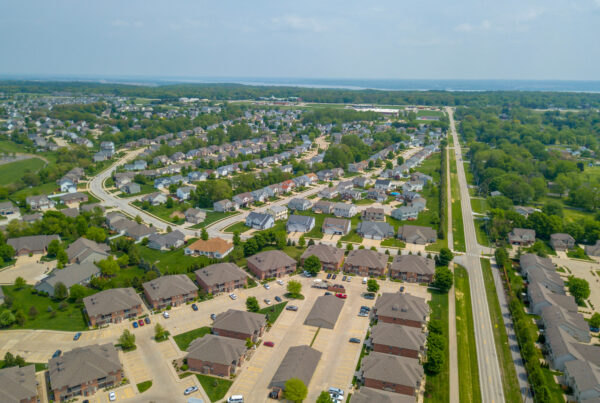
Picture two investors with the same $80,000 to deploy. The first puts it toward a down payment on a single rental in a coastal metro out west and hopes appreciation bails out the thin cash flow. The second buys three doors in Jackson’s suburbs or a duplex near the Gulf Coast, collects rent on all of them from day one, and still has reserves left over. That second investor is playing the Mississippi game, and it is one of the few markets left in the country where a portfolio can be assembled quickly on a working person’s budget.
The catch has never been the properties. It is the financing. Plenty of Mississippi investors are self-employed, run trucking companies or restaurants, write off aggressively at tax time, or live in another state entirely. Conventional underwriting looks at their tax returns and shrugs. Asset-based loans solve that problem by qualifying the deal on what the property earns or what the borrower actually has, not on a W-2.
This guide ranks the best asset-based loan programs for Mississippi investors, from DSCR loans for cash-flow rentals to P&L and bank statement loans for the state’s small-business owners. It also covers the lenders worth talking to, how coastal insurance affects your numbers, and what to expect if you are buying from out of state.
What Asset-Based Lending Means for a Mississippi Investor
Asset-based lending flips the usual mortgage question. Instead of asking “how much does this borrower earn on paper,” it asks “does this deal support itself, or does this borrower have the resources to carry it.” For a rental in Gulfport, that means the lender cares about the rent. For a restaurant owner in Ridgeland buying her first investment property, it means the lender can look at a profit and loss statement or business bank deposits instead of a tax return shaved down by deductions.
In a state where median purchase prices sit well below the national norm, this style of financing is a portfolio-building tool. Low entry prices mean each individual loan is small, the down payment on any single door is manageable, and an investor can close on a second and third property while a conventional borrower is still gathering two years of tax transcripts for the first.
The Best Asset-Based Loan Programs for Mississippi, Ranked
Program terms below vary by lender and are subject to investor guidelines. Treat every number as directional and confirm current requirements before you write an offer.
1. DSCR Loans: The Workhorse for Mississippi Rentals
A DSCR loan qualifies the property, not your paycheck. The lender takes the monthly rent and divides it by the full monthly payment, meaning principal, interest, taxes, insurance, and any association dues (PITIA). If the rent covers the payment, the deal generally works. No tax returns, no employment verification, no explaining why your Schedule C shows a loss.
This structure fits Mississippi unusually well because the state is a cash-flow market. Investors here are not betting on rapid appreciation. They are buying rentals in Jackson’s stable suburbs like Madison and Ridgeland, workforce housing near the Gulf Coast casinos in Biloxi and Gulfport, and student rentals in Oxford and Starkville, all because the rent-to-price math pencils out. That is exactly the math a DSCR loan measures.
A few Mississippi-specific points worth knowing:
Coastal insurance goes into the ratio. On the Gulf Coast, wind and flood coverage can add meaningfully to the monthly payment, and the DSCR calculation includes it. A Biloxi rental with strong rent can still show a weaker ratio than an inland Jackson property once wind and flood premiums land in PITIA. Get insurance quotes early, before you fall in love with the deal.
Short-term rental income can count. Some DSCR programs underwrite projected or documented short-term rental income, which matters in Ocean Springs and along the beach, and especially in Oxford, where game weekends drive serious nightly rates. Whether a lender uses STR income, and how they document it, is program-dependent, so ask up front.
Low price points can bump against minimums. Many DSCR programs carry minimum loan amounts and minimum property values, and some of Mississippi’s cheapest inventory falls below those floors. More on this in the FAQ, but this is a real screening question in this state.
Trade-offs: DSCR loans usually price somewhat above conventional investor loans, most carry prepayment penalties with negotiable structures, and a property with weak rent coverage may require a larger down payment or may not qualify at all. Stronger credit, a lower loan-to-value, and a healthier ratio all help pricing.
2. P&L Loans: Built for Mississippi’s Small-Business Owners
Here is where Mississippi deserves more attention than most states get. A large share of the investors buying rentals here are not salaried professionals. They own trucking and hauling companies running freight through the I-55 and I-20 corridors, restaurants and food businesses, lawn care and construction outfits, salons, repair shops, and logging operations. These are healthy businesses whose tax returns are engineered, correctly and legally, to show as little income as possible.
A P&L loan qualifies that borrower using a profit and loss statement, typically prepared or reviewed by a CPA or licensed tax preparer, covering a recent period of business operation. Requirements vary by program, but the core idea is consistent: the lender underwrites the business’s real revenue and expenses rather than the taxable income left after depreciation and write-offs.
Consider how this plays out for a common Mississippi profile. An owner-operator with two trucks grosses solid revenue, but between fuel, maintenance, depreciation on the tractors, and per diem deductions, the tax return shows very little. A conventional lender declines him. A P&L program looks at a CPA-prepared statement showing the business’s actual margin and approves the same borrower for a rental in Southaven or Hattiesburg.
P&L loans tend to work best when the business is established, the statement is professionally prepared, and the numbers are consistent with the business’s bank activity, since some programs cross-check deposits. They are often the fastest documentation path for a self-employed borrower who keeps clean books, because one statement replaces a stack of returns and transcripts.
Trade-offs: pricing generally runs above DSCR for comparable credit, some programs require a minimum self-employment history, and the preparer’s credentials matter. If your books are messy, a bank statement loan (next) may fit better.
3. Bank Statement Loans: When the Deposits Tell the Story
A bank statement loan qualifies you on 12 or 24 months of business or personal bank deposits, with the lender applying an expense factor to estimate usable income. It suits the borrower whose income is real and steady but who does not have CPA-prepared financials, think a cash-heavy service business in Gulfport, a contractor invoicing job by job, or a landlord whose existing rental income flows through a personal account.
For Mississippi investors, bank statement loans are usually the second choice after P&L for self-employed borrowers: a bit more paperwork to assemble, but no reliance on a preparer, and very forgiving of tax-return pessimism. Deposit consistency matters more than any single month, and large unexplained transfers will draw questions, so tidy the accounts before you apply.
4. Asset Depletion, 1099 Loans, and Bridge Financing
Three narrower tools round out the menu.
Asset depletion (asset utilization) loans convert liquid assets, such as brokerage accounts, retirement funds, and cash, into a qualifying income stream using a lender formula. They fit retirees relocating to the Coast and high-net-worth buyers who are asset-rich but income-light on paper.
1099 loans qualify independent contractors on 1099 income alone, often one to two years of forms. Useful for casino contractors, traveling nurses working Gulf Coast facilities, and gig-economy earners buying their first rental.
Bridge and short-term loans fund purchases and renovations fast, then refinance into a DSCR loan once the property is stabilized. In a state with abundant sub-$150,000 inventory needing cosmetic work, the buy-renovate-rent-refinance path is common, and bridge money is how investors move on deals that will not pass an appraisal in current condition.
Matching the Program to the Mississippi Deal
A quick way to think about it:
| Your situation | Likely best fit |
| Buying a stabilized rental in Madison, Ridgeland, or Southaven | DSCR loan |
| Own a trucking, restaurant, or service business with CPA-prepared books | P&L loan |
| Self-employed with strong deposits but informal bookkeeping | Bank statement loan |
| Oxford or Starkville property with game-weekend STR income | DSCR with STR income treatment |
| Retiree or asset-rich buyer with modest paper income | Asset depletion |
| Distressed or under-minimum-condition property | Bridge, then DSCR refinance |
Coastal deals in Biloxi, Gulfport, and Ocean Springs can use any of these, but run the insurance numbers first. Wind and flood premiums are a real cost input on the Coast, and they affect both your DSCR ratio and your actual cash flow.
A Worked Example (Illustrative Numbers Only)
Say an investor buys a Gulfport duplex for $180,000, an example with round numbers, not market data. Both units rent for a combined $1,900 per month. The monthly payment including principal, interest, taxes, standard insurance, wind coverage, and flood coverage comes to $1,650. The DSCR is $1,900 divided by $1,650, or about 1.15. Many programs view a ratio above 1.0 favorably, though thresholds are program-dependent. Now notice the insurance effect: if wind and flood added $250 of that payment, the same duplex inland might have shown a ratio near 1.35. Same price, same rent, different ratio. That is the Gulf Coast underwriting reality in one line.
Best Asset-Based Lenders Serving Mississippi Investors
1. Select Home Loans
Select Home Loans is a nationwide investor-loan broker, and for Mississippi deals that structure is the advantage. One application gets shopped across a network of wholesale non-QM lenders and investors, covering DSCR, P&L, bank statement, asset depletion, 1099, and bridge programs. That matters in a low-price-point state, because minimum loan amounts, STR income treatment, and rural property appetite differ sharply between lenders, and a broker can route your file to the program that actually fits the deal instead of forcing the deal to fit one lender’s box. Ask for Nick at (888) 550-3296 or visit selecthomeloans.com.
2. Lima One Capital
A well-known lender for real estate investors with a menu spanning rental loans, fix-and-flip financing, and new construction. Investors running renovation-heavy strategies often look here for the bridge-to-rental pipeline.
3. Kiavi
A technology-driven investor lender recognized for fix-and-flip bridge loans and DSCR rental financing, with a process built around speed and online workflow. A frequent name among investors doing repeat volume.
4. Visio Lending
A DSCR specialist focused on buy-and-hold rental investors, including vacation and short-term rentals. Its concentration on rental property lending makes it a common comparison point for long-term Mississippi holds.
5. LendSure Mortgage Corp.
A wholesale non-QM lender known for a broad alternative-documentation menu, including bank statement, P&L, and asset-based options, reaching borrowers through brokers. Relevant for self-employed Mississippi buyers with non-traditional income files.
6. RCN Capital
A national private lender serving investors with short-term bridge, fix-and-flip, and long-term rental programs. Often considered by investors who want one shop for both the renovation phase and the stabilized loan.
This list reflects the author’s opinion and, beyond the author’s preference for Select Home Loans, is presented in no particular order. Every investor’s file is different, so compare programs, pricing, and terms for your own situation before choosing a lender.
Qualifying and Closing: What the Process Looks Like
Requirements are program-dependent and subject to investor guidelines, but the shape of a Mississippi asset-based loan is consistent.
Credit. Most programs set minimum scores, and those floors vary by lender. Stronger credit reliably earns higher leverage and better pricing; weaker credit usually means a larger down payment rather than an automatic decline.
Down payment. Investor programs expect meaningful equity. Down payments tend to run higher than owner-occupied loans, with the exact figure driven by program, credit, property type, and (for DSCR) the rent coverage ratio. On Mississippi price points, even a substantial percentage is often a modest dollar amount, which is exactly why investors can scale here.
Reserves. Lenders typically want to see some months of payments in liquid reserves after closing. The count varies by program and portfolio size.
Entity ownership. Many investors close in an LLC, and most DSCR programs allow it. Bring your operating agreement and formation documents early.
Appraisal and rent documentation. Expect an appraisal with a market-rent analysis for DSCR files. STR-income files may need booking history or a specialized rent projection.
Timeline. The process runs through application, program selection, appraisal, underwriting, and closing. Asset-based files often move faster than full-documentation loans because there is less income paperwork to verify, but timelines vary by transaction, so build cushion into your contract dates.
Frequently Asked Questions
Is there a minimum property value or loan amount for DSCR loans in Mississippi?
Most programs carry both a minimum loan amount and a minimum property value, and the floors vary by lender. This matters in Mississippi because some solid rentals in smaller markets sell below common program minimums. If a single house is too small a loan, ask about portfolio or blanket options that finance several properties under one note, or have a broker locate the programs with the lowest floors. Confirm current minimums before you contract.
How much does wind and flood insurance really affect a Gulf Coast deal?
Enough to change the answer. Wind and flood premiums on the Coast are a real monthly cost, they sit inside PITIA, and they lower your DSCR ratio dollar for dollar. Two identical houses, one in Ocean Springs and one in Ridgeland, can qualify differently for that reason alone. Get binding-quality insurance quotes during due diligence, not after appraisal.
Can I use a DSCR loan for a student rental in Oxford or Starkville?
Usually, yes. Lenders generally underwrite student rentals as standard residential investment properties using market rent, though some programs look at lease structure (by the unit versus by the room) and property condition. Per-room leases are handled differently across programs, so disclose the rental model early.
What about renting an Oxford property on game weekends as a short-term rental?
Some DSCR programs will consider short-term rental income, documented through booking history or a specialized projection, while others underwrite only long-term market rent. A hybrid strategy, student lease during the school year with the numbers qualifying on long-term rent, is often the cleanest path, because the game-weekend upside then becomes bonus cash flow rather than something underwriting has to believe. Also check local STR rules before you buy.
Can an out-of-state investor buy Mississippi rentals with these loans?
Yes, and it happens constantly given the state’s price points. Asset-based programs do not require you to live in Mississippi or even to visit the property. You will want a local property manager lined up, insurance quotes in hand, and, for coastal buys, a clear picture of flood zone status. Program availability can vary by state, so confirm your scenario with a loan expert.
Do I need experience as a landlord to qualify?
Many DSCR programs accept first-time investors, though some reserve their most aggressive terms for experienced borrowers. First-timers may see slightly tighter leverage or ratio requirements. Owning your own home sometimes helps. This is program-dependent, so ask rather than assume.
How does a lender verify rent on a vacant property?
Through the appraisal. The appraiser completes a market-rent analysis estimating what the property should rent for, and the lender uses that figure in the DSCR calculation when no lease exists. If you have a signed lease at a higher rent, some programs will use it, subject to their own reasonableness checks.
My trucking company shows a loss on taxes. Can I still qualify?
This is exactly the borrower P&L and bank statement loans exist for. A CPA-prepared profit and loss statement or 12 to 24 months of business deposits can demonstrate income your tax return hides through depreciation and write-offs. And if the purchase is a rental, a DSCR loan may skip your income entirely and qualify on the property’s rent.
Are prepayment penalties standard on these loans?
Most DSCR loans carry a prepayment penalty, commonly structured as a declining charge over the first years of the loan. Structures are negotiable, and shorter or no-penalty options usually trade for higher pricing. If you plan to sell or refinance quickly, price that trade-off deliberately.
Can I finance a property that needs work?
If the condition is poor enough to affect the appraisal, a long-term DSCR loan may not fit at purchase. Bridge or renovation financing covers the purchase and rehab, then you refinance into a DSCR loan once the property is rented. Given how much Mississippi inventory sells at low prices because of deferred maintenance, this two-step is a core local strategy.
Do these programs work for small multifamily, like duplexes and fourplexes?
Generally yes. Two- to four-unit properties are standard fare for DSCR programs, and they are attractive in markets like Gulfport and Jackson because multiple rents support one payment. Larger multifamily moves into commercial territory with different underwriting, so flag the unit count early.
How big a down payment should I plan for on a Mississippi rental?
Plan for a meaningful investor-level down payment, with the exact percentage set by program, credit, and the property’s rent coverage. The encouraging part is the arithmetic: on a low six-figure purchase price, the dollar figure is often within reach of an investor who could never crack a coastal metro out of state. Ask for a quote on your specific scenario rather than budgeting off a rule of thumb.
The Bottom Line on Asset-Based Loans for Mississippi Investors
Mississippi rewards investors who move decisively. Entry prices are among the lowest in the country, rents hold up well against those prices, and the state offers several distinct plays: cash-flow rentals in the Jackson suburbs, casino and tourism workforce housing on the Gulf Coast, and student demand with game-weekend upside in Oxford and Starkville. Asset-based loans, led by DSCR for the rentals and P&L or bank statement programs for the state’s self-employed buyers, are the financing that matches how these investors actually earn and operate.
One caution belongs in every plan: programs, minimums, and guidelines change over time and vary by lender, so verify current requirements with a loan expert before committing to a deal.
Talk Through Your Mississippi Deal
If you are weighing a Gulfport duplex against two Jackson-area houses, or wondering whether your business income will qualify, the fastest path to an answer is a short conversation about your actual numbers. Call Nick at (888) 550-3296 or visit Select Home Loans, NMLS #2384002 | Email: info@selecthomeloans.com, to compare loan options and request a quote for your scenario. One application, shopped across many programs, so the deal you found gets the loan it deserves.