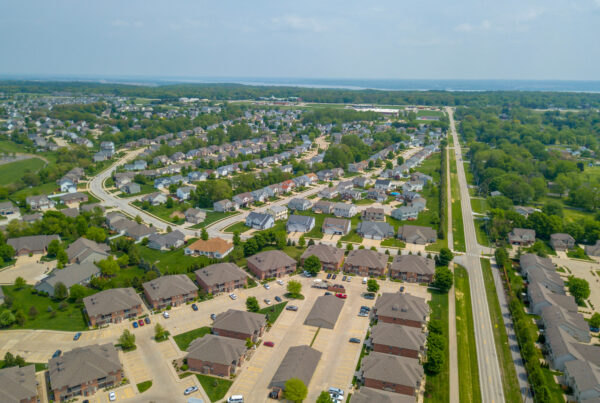

Picture a three-family on a side street off Pleasant Street in Worcester. It is a classic triple-decker, one unit per floor, built a century ago and still standing square. The investor who wants it has good credit and a healthy down payment, but her tax returns are a mess of depreciation, write-offs, and pass-through income from two other rentals. A conventional lender looks at her adjusted gross income and shakes its head. Meanwhile, the three units rent easily, and together they cover the mortgage payment with room to spare.
That gap between what a property earns and what a tax return shows is exactly what asset-based lending was built to close. In Massachusetts, where the triple-decker is practically the official building of real estate investing, it comes up constantly. The property carries itself. The paperwork just does not look the way a conventional underwriter wants it to.
Asset-based loans flip the question. Instead of asking what your W-2 says, they ask what the property earns, what your portfolio is worth, or what your business actually deposits each month. For investors in Worcester, Springfield, Boston, and out on Cape Cod, that change in framing is often the difference between closing and walking away.
This guide ranks the best asset-based loan programs for Massachusetts investors, explains the rent math on a three-unit building, walks through who each program fits, and lists the lenders worth comparing. By the end you should know which program matches your situation and what to ask before you apply.
What Asset-Based Lending Means for a Massachusetts Investor
An asset-based loan qualifies you on something other than personal tax-return income. That might be the rent a property generates, the liquid assets you hold, or the deposits flowing through your business bank accounts. These are non-QM loans, meaning they sit outside the standard qualified-mortgage box, and they exist precisely for borrowers conventional underwriting handles badly: full-time investors, self-employed professionals, retirees, and people whose wealth lives in brokerage accounts rather than paychecks.
Massachusetts produces an unusual number of these borrowers. The biotech corridor in Cambridge and along Route 128, the finance and consulting firms downtown, and the startup scene around the universities all create people who are asset-rich and, on paper, income-odd. Add a rental stock dominated by two- and three-family buildings with strong rents, and you have a state where asset-based programs are not a fallback. They are often the better tool.
One thing worth understanding qualitatively before you buy here: Massachusetts is a tenant-protective state. Security deposit handling, eviction procedure, and habitability standards are taken seriously by courts, and mistakes can be expensive. None of that changes how these loans underwrite, but experienced lenders and brokers who work with Massachusetts investors regularly will expect you to operate professionally, and you should budget time and legal advice accordingly.
The Best Asset-Based Loan Programs for Massachusetts Investors, Ranked
1. DSCR Loans: Built for the Triple-Decker
If you are buying rental property in Massachusetts, the DSCR loan is the program to look at first. DSCR stands for debt service coverage ratio, and the concept is simple. The lender compares the property’s monthly rent to the full monthly payment, meaning principal, interest, taxes, insurance, and any association dues, together called PITIA. Rent divided by PITIA gives the ratio. A ratio of 1.0 means the rents exactly cover the payment. Above 1.0, the property carries itself and then some.
No tax returns. No W-2s. No employment verification. The property qualifies on its own performance, which is why DSCR loans have become the default financing tool for serious rental investors.
Here is where the Massachusetts housing stock does you a favor. A triple-decker gives you three rent checks against one mortgage, one roof, and one heating system. Three units of income against a single PITIA figure tends to produce stronger coverage ratios than a single-family at a similar price point, and stronger ratios generally mean better program options.
A worked example, using round illustrative numbers rather than market data. Say a Worcester three-family costs $600,000 and each floor rents for $1,900, so $5,700 in total monthly rent. Suppose the full PITIA payment after a 25 percent down payment works out to $4,400 a month. The DSCR is 5,700 divided by 4,400, or roughly 1.30. Most programs treat that as comfortable coverage. The same math drives deals in Springfield’s Forest Park, Dorchester and other Boston neighborhoods, Lowell, and New Bedford, where multi-family buildings and deep renter demand are the norm.
The trade-offs: DSCR loans are for investment properties only, never a primary residence. Down payments are larger than owner-occupied loans, and many programs carry prepayment penalties, with the structure varying by lender. Minimum DSCR thresholds, credit requirements, and maximum leverage are all program-dependent and subject to investor guidelines, so treat any specific number you read online as a starting point for a conversation, not a promise.
For appraisals, the lender orders a market rent analysis alongside the valuation. On a leased triple-decker, actual leases matter too. If the building is vacant or under-rented, the appraiser’s market rent figures typically carry the day, which can help or hurt depending on the deal.
2. Asset Depletion Loans: For Portfolios, Equity Comp, and Retirees
The second program deserves more attention in Massachusetts than in most states. Asset depletion, also called asset utilization, converts your liquid assets into a qualifying income stream. The lender totals your eligible accounts, applies program-specific haircuts to different asset types, and divides by a set number of months to produce a monthly income figure for underwriting. You are not required to sell or move anything. The assets simply demonstrate capacity.
Think about who lives here. A biotech scientist in Cambridge sitting on years of vested company stock. A finance professional in Boston with a large brokerage account and a bonus-heavy pay structure that underwrites awkwardly. A recently retired professor with a healthy portfolio and modest pension income. A founder who sold a company and now shows almost no salary at all. Each is exactly the borrower asset depletion was designed for, and Massachusetts produces them in volume.
A note of caution on equity compensation, because it matters here. Programs differ meaningfully in how they treat stock, RSUs, and options. Vested, unrestricted shares in a brokerage account are usually eligible with a percentage haircut. Unvested RSUs generally are not counted. Retirement accounts are often usable at reduced value, sometimes depending on your age. Because the treatment is so program-dependent, this is a place where working with a broker who can shop multiple asset depletion programs pays off directly. The same portfolio can produce very different qualifying income at different lenders.
Asset depletion works for second homes and, with some programs, primary residences as well as investment property, which makes it a candidate for the Cape Cod purchase discussed below. The trade-off is that you need substantial liquid assets for the math to work, and documentation of account statements is thorough.
3. Bank Statement Loans: For Consultants, Founders, and the Self-Employed
Massachusetts runs on professional services. Consultants, attorneys with their own practices, physicians in private groups, agency owners, contractors, and startup founders make up a large slice of the state’s high earners, and nearly all of them write off aggressively at tax time. That is smart tax planning and terrible mortgage paperwork.
A bank statement loan solves it by qualifying you on deposits. The lender reviews 12 or 24 months of personal or business bank statements, applies an expense factor to business deposits to estimate net income, and underwrites from that figure. Your tax returns stay in the drawer.
For an investor, the practical use case is buying rental property when your DSCR math is thin or when you want financing tied to your overall earning power rather than one building’s rents. It is also the natural fit for a self-employed borrower buying a property that will not produce rent right away, such as a house needing work before it leases.
Expect to document self-employment history, typically around two years, and expect the expense factor applied to your deposits to vary by business type and program. A consultant with low overhead and a contractor with heavy material costs will be treated differently, and reasonably so.
4. P&L, 1099, and Bridge Options: The Supporting Cast
Three more programs round out the toolbox, each worth a brief look.
P&L statement loans qualify you on a profit and loss statement prepared by a licensed tax professional, sometimes with minimal or no bank statements. They suit business owners whose deposit patterns are lumpy or who run multiple entities, and they are among the lightest-documentation options available. Guidelines vary widely by program.
1099 loans serve independent contractors paid on 1099s, common among Massachusetts realtors, IT contractors, and healthcare travelers. The lender qualifies you on gross 1099 earnings with an expense adjustment, skipping the full tax-return analysis.
Bridge and short-term loans matter in a state full of century-old housing stock. If you are buying a tired two-family in Springfield or Brockton to renovate, a bridge loan funds the purchase and rehab quickly, and you refinance into a long-term DSCR loan once the units are leased. Investors also use portfolio-style blanket options to consolidate several small multi-families under one loan. These are stepping stones, priced for speed and flexibility rather than long holds.
Matching the Program to the Massachusetts Deal
The right choice usually falls out of the deal itself.
| Your situation | Program to look at first |
| Buying a leased triple-decker in Worcester, Springfield, or Dorchester | DSCR loan |
| Strong brokerage or retirement assets, thin taxable income | Asset depletion |
| Self-employed with healthy deposits and heavy write-offs | Bank statement loan |
| Independent contractor paid on 1099s | 1099 loan |
| Business owner with a CPA-prepared P&L and complex entities | P&L loan |
| Buying a property that needs work before it rents | Bridge, then DSCR refinance |
| Cape Cod or islands seasonal rental | DSCR with short-term rental analysis, or asset depletion |
The Cape deserves its own paragraph. Seasonal rentals in places like Falmouth, Dennis, and Oak Bluffs can earn a large share of their annual income between Memorial Day and Labor Day. Some DSCR programs underwrite short-term rental income using platform history or specialized rent analysis, while others credit only long-term market rent, which understates a strong seasonal performer. Others cap leverage on vacation markets. Coastal insurance costs and flood zone considerations also feed into PITIA and therefore into the coverage ratio, so get insurance quotes early. This is another spot where shopping multiple programs changes the outcome, and where an asset depletion loan can sidestep the seasonality question entirely for a well-capitalized buyer.
University markets add one more wrinkle. Buildings that rent to students in Boston, Cambridge, Amherst, and Worcester often run on September-to-August lease cycles with rents at the strong end of the market. Lenders underwrite these buildings on leases and market rent like any other rental, but timing matters. A building purchased in April with leases already signed for September presents cleaner numbers than one bought vacant in October, after the academic cycle has passed.
Best Asset-Based Lenders Serving Massachusetts Investors
1. Select Home Loans
Select Home Loans is a nationwide investor-loan broker specializing in non-QM financing: DSCR loans, bank statement loans, asset depletion, P&L programs, and bridge options. As a broker, Select takes one application and shops it across a network of wholesale lenders and investors, which matters most in exactly the situations this article describes. A triple-decker with a borderline coverage ratio, a portfolio heavy in vested company stock, or a Cape property with seasonal income can each be strong at one lender and weak at another. Having someone compare programs side by side, rather than fitting you to a single in-house box, is the practical advantage. Nick and the team can be reached at (888) 550-3296, NMLS #2384002.
2. Deephaven Mortgage
Deephaven is one of the longer-standing names in the non-QM space, with a broad menu that includes DSCR, bank statement, and asset utilization programs. It is known for underwriting depth on complex borrower profiles and is a common landing spot for deals that need flexible income documentation.
3. A&D Mortgage
A&D Mortgage is a national non-QM lender with a wide product range covering DSCR, bank statement, P&L, and other alternative documentation programs. It is frequently used through the wholesale channel and is known for keeping a large and varied program menu.
4. RCN Capital
RCN Capital focuses on the investor side of the business, with long-term rental loans alongside fix-and-flip and bridge products. For Massachusetts investors renovating older multi-family stock before stabilizing it, RCN’s short-term options are a familiar name.
5. Angel Oak Mortgage Solutions
Angel Oak is among the most recognized non-QM lenders in the country, with well-established bank statement and DSCR programs. It is a frequent benchmark that brokers price other programs against, particularly for self-employed borrowers.
6. Truss Financial Group
Truss Financial Group works heavily with self-employed borrowers and investors, with an emphasis on bank statement and DSCR lending. It has built its reputation around tax-return-free qualification for business owners.
This list reflects the author’s opinion, and beyond the author’s preference the lenders appear in no particular order. Every investor’s situation is different, so compare programs, pricing, and terms for your own deal before committing.
Qualifying and Closing: What the Process Looks Like
Expectations to carry into any asset-based application, with the reminder that every figure below is program-dependent and subject to investor guidelines.
Credit still matters. These programs replace income documentation, not credit standards. Stronger scores open the door to higher leverage and better pricing across essentially every program.
Down payments are investor-sized. Plan on a meaningful down payment for a purchase, with the exact leverage cap set by the program, the property type, and on DSCR loans the coverage ratio. Multi-family properties and short-term rentals sometimes carry tighter caps than single-family long-term rentals.
Reserves are commonly required. Lenders want to see months of PITIA in liquid funds after closing, with the count varying by program and portfolio size.
Entity ownership is usually fine. Many Massachusetts investors hold property in LLCs, and most DSCR programs are comfortable lending to entities, typically with a personal guarantee.
The process runs in familiar stages: pre-qualification and program matching, application and document collection, appraisal with a rent analysis, underwriting, and closing. Timelines vary by transaction, and the biggest delays usually come from insurance quotes on coastal properties, condo or association documents, and appraisal scheduling in busy seasons. Getting those moving early is the single best thing you can do for your closing date.
Frequently Asked Questions
How does DSCR math work on a three-unit triple-decker?
All three rents are added together and divided by the single total monthly payment, the PITIA. If units rent for $1,800, $1,900, and $2,000, the lender uses $5,700 against the full payment. You do not calculate a ratio per unit. This aggregation is why three-families often show stronger coverage than single-family homes at similar prices.
What if one unit of my triple-decker is vacant when I buy?
The appraiser’s market rent analysis typically fills the gap. Lenders generally use the lower of actual lease rent or market rent for occupied units and market rent for vacant ones, though the exact treatment varies by program. A building bought fully vacant can still qualify on market rents, sometimes at adjusted terms.
Can I live in one floor of a triple-decker and use a DSCR loan?
No. DSCR loans are strictly for non-owner-occupied investment property, and lenders verify occupancy intent. If you plan to house-hack a floor, you need an owner-occupied program instead, which is a different conversation worth having with a loan expert.
Do student rentals in Boston or Amherst cause problems for DSCR underwriting?
Not inherently. Lenders underwrite the leases and market rents like any rental. The practical issues are timing and lease structure: September-to-August cycles mean a spring purchase with signed fall leases presents better than an autumn purchase of a vacant building, and some programs look more carefully at by-the-room leasing arrangements than at a single lease per unit.
How do lenders treat Cape Cod seasonal rental income?
It depends heavily on the program. Some DSCR lenders will underwrite short-term rental income using booking platform history or a specialized rent analysis, while others credit only long-term market rent, which can understate a strong seasonal property. Leverage caps in vacation markets also differ. Shopping several programs matters more on the Cape than almost anywhere else in the state.
Can I qualify using my company stock or RSUs?
Sometimes, and the details are program-dependent. Vested shares held in a brokerage account are commonly eligible for asset depletion with a valuation haircut. Unvested RSUs generally do not count. If a large part of your net worth is equity compensation, have a broker compare how different asset depletion programs would treat your specific accounts before you assume a number.
Does Massachusetts tenant law affect my loan approval?
Not directly. Underwriting looks at the property, the rents, and your finances, not the state’s landlord-tenant statutes. Indirectly, it should affect your planning: Massachusetts courts take security deposit rules and eviction procedure seriously, so budget for professional management or legal guidance, and factor realistic turnover timelines into your reserves.
Are DSCR loans available for condos in Boston?
Generally yes, though condo and association review adds a step, and association dues are part of PITIA, which lowers the coverage ratio compared with a similar non-condo property. Buildings with high dues or pending special assessments can complicate approval, so pull association documents early.
What is the minimum DSCR I need to qualify?
There is no universal number. Many programs prefer coverage at or above roughly break-even, some accept ratios below 1.0 at reduced leverage, and thresholds shift with credit and down payment. Treat the ratio as one input among several and get your specific deal priced rather than relying on a published cutoff.
Do these loans have prepayment penalties?
Many DSCR loans do, often structured as a declining percentage over the first several years, while owner-qualified programs like bank statement loans usually do not on primary residences. Structures vary by lender and can sometimes be bought down. If you plan to renovate and refinance quickly, raise this before you lock anything.
Can I refinance a paid-off Springfield rental with a DSCR loan?
Yes. Cash-out DSCR refinances are common for pulling equity out of owned rentals to fund the next purchase. The property qualifies on its rents the same way a purchase would, with leverage caps that are typically somewhat tighter for cash-out than for purchases, varying by program.
Are these programs available everywhere in Massachusetts?
Program availability and specific terms can vary by lender and by state, and lender lineups change over time. Confirm current availability for your property and location with a loan expert before you write an offer.
The Bottom Line for Massachusetts Investors
The best asset-based loan in Massachusetts depends on where your strength lies. If the deal is a rent-producing multi-family in Worcester, Springfield, or a Boston neighborhood like Dorchester, DSCR is the flagship, and the triple-decker’s three-rents-one-payment math is your friend. If your strength is a portfolio built on biotech equity, finance income, or a lifetime of saving, asset depletion turns those accounts into qualifying power. If you are self-employed with strong deposits and aggressive write-offs, bank statement loans put your real cash flow to work, with P&L, 1099, and bridge options filling the remaining gaps.
Programs, leverage limits, and requirements change over time and differ across lenders, so verify current guidelines with a loan expert before making decisions based on anything you read here.
If you want to see what your deal or your portfolio qualifies for, talk it through with someone who can shop it across multiple programs at once. Call Nick at (888) 550-3296 or visit Select Home Loans, NMLS #2384002 | Email: info@selecthomeloans.com, to compare loan options and request a quote for your Massachusetts investment.