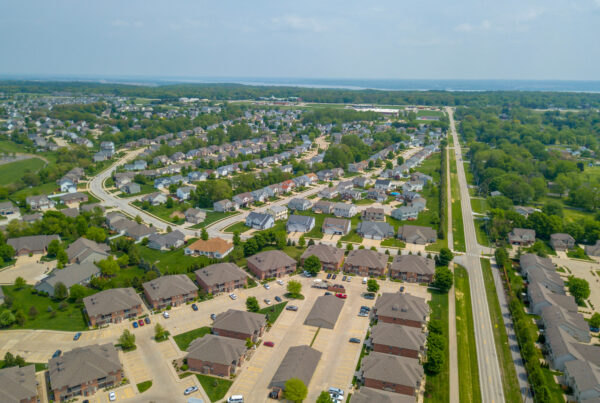

A duplex in Los Angeles can cost more than a whole block of rentals in Indianapolis. That math is why so many California and New York investors have stopped trying to make deals pencil at home and started shopping in Indiana instead. A software engineer in San Jose or a nurse practitioner in Brooklyn can buy a tidy three-bedroom rental on the east side of Indianapolis for a fraction of what a studio condo costs in their own zip code, and the rent actually covers the payment.
The catch is that most of these buyers will never set foot in the property before closing. They are buying through turnkey providers, working with local property managers, and reviewing inspection photos from two time zones away. That kind of remote investing works, and thousands of people do it every year, but it changes what you need from your financing. You want a loan that does not care where you live, does not demand a W-2 from an Indiana employer, and does not fall apart because your income is complicated.
That is exactly what asset-based loans are built for. These programs qualify you on the property’s rent, your bank deposits, or your liquid assets instead of tax returns and pay stubs. For an out-of-state buyer, that distinction is everything.
This guide ranks the best asset-based loan programs for Indiana rental investors, explains how to run a purchase from a distance, and lists the lenders worth calling. Because Select Home Loans is a nationwide investor-loan broker, one application here gets shopped across a network of wholesale programs rather than boxed into a single lender’s rulebook.
Why Indiana Keeps Showing Up on Out-of-State Buy Lists
Indiana has become one of the country’s favorite long-distance cash-flow markets, and the reasons are practical rather than flashy. Indianapolis offers affordable single-family homes, a diversified metro economy, and a deep bench of turnkey providers and property management companies that exist specifically to serve investors who live somewhere else. When an entire local industry is set up to hand you a renovated, tenanted, professionally managed rental, remote ownership stops being an experiment and starts being a system.
Fort Wayne adds a second act. It is a steadily growing city with a lower entry price point than Indianapolis and a rental base built on a broad mix of employers. Investors who feel priced out of the hotter Indianapolis submarkets often move their search north.
Then there are the college towns. Bloomington, home to Indiana University, and West Lafayette, home to Purdue, run on student and university-affiliated renters. Demand renews itself every August. These markets take more management skill, with academic-year leases and higher turnover, but they reward owners who plan for that rhythm.
The common thread is that none of these strategies require you to live in Indiana. What they require is financing that treats the property, not your paycheck, as the star of the application.
The Best Asset-Based Loan Programs for Indiana Investors, Ranked
Here is how the major programs stack up for buyers targeting Indiana rentals from out of state, starting with the one built for exactly this situation.
1. DSCR Loans: The Natural Loan for Remote Investors
If you are buying an Indiana rental from California, New York, or anywhere else, a DSCR loan is almost always the first program to price out. DSCR stands for debt service coverage ratio, and the concept is simple: the lender compares the property’s monthly rent to its full monthly payment, meaning principal, interest, taxes, insurance, and any association dues, often abbreviated PITIA. If a house rents for $1,400 and the total payment is $1,150, the property covers its own debt with room to spare.
Notice what is missing from that calculation: your salary, your tax returns, your employer, and your home state. The property qualifies itself. A DSCR loan on an Indianapolis rental works identically whether you live in Carmel or Sacramento. For remote investors, that is the whole appeal. There is no debt-to-income puzzle where your California mortgage crushes your ratios, and no underwriter asking why you are buying a house 2,000 miles from your job.
DSCR loans in Indiana typically close in the name of an LLC if you prefer, which many out-of-state owners do for liability and organization. Rent is verified through the existing lease or through the appraiser’s market rent analysis, so even a vacant property can qualify on what it should rent for.
The trade-offs are real but manageable. Down payments run higher than owner-occupied loans, pricing reflects credit score, leverage, and the coverage ratio itself, and many DSCR loans carry prepayment penalties with structures that vary by program. Exact minimums for credit, down payment, and DSCR thresholds are program-dependent and subject to investor guidelines, which is a strong argument for working with a broker who can compare several programs at once.
Who it fits in Indiana: almost everyone buying a straight rental. Turnkey buyers in Indianapolis, portfolio builders in Fort Wayne, and landlords picking up student rentals near Indiana University or Purdue all fit the DSCR mold.
2. Bank Statement Loans: For Self-Employed Buyers Who Want Flexibility
Bank statement loans qualify you on business or personal bank deposits, usually 12 or 24 months of statements, instead of tax returns. Lenders apply an expense factor to arrive at usable income, and the details differ by program.
For an Indiana purchase, this program matters in two situations. First, some self-employed investors want to qualify on their full financial picture rather than a single property’s rent, especially when the target property’s coverage ratio is thin. A Bloomington house near campus with high taxes and insurance might not clear a DSCR hurdle on rent alone, but a strong-earning consultant can carry it on a bank statement loan. Second, bank statement programs can work for property types or scenarios where a particular DSCR program says no.
The trade-off is paperwork. You are documenting deposits rather than just the property, so the file takes more assembly, and large irregular transfers invite questions. But for freelancers, agency owners, and contractors whose tax returns understate what they actually earn, this program often approves what a conventional lender cannot.
3. Asset Depletion Loans: Qualify on What You Have Saved
Asset depletion, sometimes called asset utilization, converts your liquid assets into qualifying income using a formula. If you hold substantial brokerage accounts, retirement funds, or savings, the lender divides an eligible portion across a set term and treats the result as monthly income. No job, no tax returns, no rent analysis required.
This is a natural fit for a specific kind of remote Indiana buyer: someone who sold a business or a high-priced coastal property, is sitting on the proceeds, and wants to redeploy into affordable Midwest rentals. It also serves early retirees whose income looks small on paper but whose balance sheets are anything but. The formulas and eligible asset types vary meaningfully by lender, so this is another spot where shopping multiple programs pays off.
4. P&L and 1099 Loans: Lighter Documentation for the Self-Employed
Two briefer options round out the income-documentation menu. P&L loans qualify self-employed borrowers on a profit and loss statement, often prepared or reviewed by a licensed tax professional, without full bank statement packages. 1099 loans use 1099 forms to document income for independent contractors, from traveling nurses to commissioned salespeople. Both are useful when your earnings are solid but your bookkeeping does not fit the bank statement format cleanly. Availability and requirements are program-dependent, so ask which version fits your paperwork before committing to one path.
5. Bridge and Short-Term Loans: For Value-Add Deals
Not every Indiana purchase is turnkey. Investors buying dated houses in Indianapolis or Fort Wayne to renovate and rent often use short-term bridge financing to acquire and improve the property, then refinance into a long-term DSCR loan once it is leased. This is the standard playbook behind the BRRRR strategy. Bridge loans price higher and run shorter, so they are a tool for a specific job rather than a place to park debt.
An Example: Buying an Indianapolis Rental from California
Here is a simplified, illustrative example with round numbers, not a quote or market data.
Maria lives in San Diego and wants her first out-of-state rental. Through a turnkey provider, she finds a renovated three-bedroom home on the near east side of Indianapolis listed at $180,000 with a tenant in place paying $1,500 per month.
She applies for a DSCR loan with 20 percent down, borrowing $144,000. Suppose her total monthly payment, including principal, interest, taxes, and insurance, comes to $1,250. Her DSCR is $1,500 divided by $1,250, or 1.20. The property covers its own payment with a cushion, which supports approval and can help pricing.
Maria never provides tax returns. Her California W-2 job, her existing home mortgage, and her state of residence play no role in the income calculation. She closes in an LLC, her Indianapolis property manager keeps collecting rent, and her involvement is a monthly statement and a bank deposit. The same file structure would work for a Fort Wayne duplex or a West Lafayette student rental; only the numbers change.
How to Run a Long-Distance Indiana Purchase
The loan is only half of a remote deal. The other half is process. Investors who buy well from a distance tend to do these things in roughly this order.
Line up the property manager before you write offers. In Indianapolis and Fort Wayne, interview two or three managers and ask what streets they avoid, what rents they are actually achieving, and how they handle turnovers. A good manager is your eyes on the ground and will often flag a bad block faster than any spreadsheet. In Bloomington and West Lafayette, choose a manager who works student housing specifically, because academic-year leasing is its own discipline.
Verify market rent independently. Do not rely on a seller’s or turnkey provider’s pro forma alone. Your DSCR loan will use the lease or the appraiser’s market rent figure, so pressure-test the rent number early with your property manager and comparable listings. If the real rent is $150 lower than the marketing sheet, you want to know before you are under contract.
Get insurance quotes early. Landlord insurance costs vary by neighborhood, property age, and construction, and the premium feeds directly into your PITIA and therefore your DSCR. Parts of Indiana also carry flood considerations near rivers and low-lying areas, so check whether the property sits in a flood zone that requires separate coverage. An early quote prevents a late surprise in your coverage ratio.
Order a full inspection and review it line by line. You are not walking the property, so the inspection report, photos, and a video walkthrough from your agent or manager are your substitute. Turnkey does not mean flawless.
Understand the process stages. A typical asset-based purchase moves through application, program selection, appraisal with a market rent analysis, underwriting, and closing, which you can usually complete remotely with a mobile notary. Timelines vary by transaction, so build flexibility into your contract dates rather than counting on a specific number of days.
Best Asset-Based Lenders Serving Indiana Investors
Plenty of companies will fund an Indiana rental. These are the names investors most often compare.
1. Select Home Loans
Select Home Loans is a nationwide investor-loan broker, which means one application gets shopped across a network of wholesale non-QM lenders rather than matched against a single company’s guidelines. For Indiana buyers, that covers DSCR loans, bank statement loans, asset depletion, P&L loans, 1099 programs, and bridge options through one point of contact. That structure matters most for remote investors, because when one program balks at a property type, a rent figure, or a credit profile, the file can move to another program without starting over. Nick at Select Home Loans works with out-of-state buyers regularly and can walk through how a specific Indianapolis, Fort Wayne, or college-town deal would be structured before you commit to a contract.
2. Visio Lending
Visio Lending focuses squarely on long-term rental financing and is one of the better-known DSCR specialists in the country. The company built its reputation on single-family rental loans, which lines up well with the bread-and-butter Indiana purchase.
3. Kiavi
Kiavi is a technology-forward lender known for fix-and-flip and bridge financing along with DSCR rental loans. Investors running renovation projects in Indianapolis or Fort Wayne before refinancing into long-term debt often have Kiavi on their comparison list.
4. Lima One Capital
Lima One Capital lends across the investor spectrum, from short-term renovation loans to rental and portfolio financing. Its multi-product menu appeals to investors who expect to scale beyond a single property.
5. Griffin Funding
Griffin Funding offers a broad non-QM lineup that includes DSCR, bank statement, and asset-based programs. It draws borrowers whose situations need more than one documentation option under a single roof.
6. Acra Lending
Acra Lending is a longstanding name in non-QM lending with programs spanning DSCR, bank statement, and other alternative documentation loans, often reaching credit profiles and scenarios that stricter programs decline.
This list reflects the author’s opinion, and beyond the author’s preference for Select Home Loans it is presented in no particular order. Every investor’s situation is different, so compare terms, programs, and service for your own deal.
Frequently Asked Questions
Can I buy a rental property in Indiana if I have never been there?
Yes, and many owners of Indianapolis rentals never visit. The combination of a DSCR loan, a local property manager, a thorough inspection, and a remote closing with a mobile notary makes a sight-unseen purchase workable. The discipline is in verification: independent rent checks, a full inspection report, and a manager you trust.
Do asset-based lenders have minimum property values?
Most programs do set a floor on property value or loan amount, and this matters in Indiana because some neighborhoods in Indianapolis, Fort Wayne, and smaller cities like Evansville have very low-priced housing. The minimums are program-dependent, so if you are targeting a sub-$100,000 property, confirm eligibility before you write the offer. A broker can steer the file toward programs comfortable at that price point.
How does a DSCR lender verify rent on an Indiana property?
Through the existing lease if the property is tenanted, or through the appraiser’s market rent analysis, a standard form comparing similar rentals nearby. For turnkey purchases with a tenant already in place, the lease usually does the heavy lifting.
What if the property is vacant when I buy it?
Vacant properties can still qualify under most DSCR programs using the appraiser’s market rent figure instead of a lease. Some programs treat vacant properties differently on pricing or leverage, so disclose the vacancy up front. Plan your lease-up with your property manager before closing so the marketing starts the day you get keys.
Are turnkey properties harder to finance?
Generally no. A renovated, tenanted turnkey home in Indianapolis is close to the ideal DSCR file: documented rent, recent updates, and a management contract in place. Just verify the rent and the renovation quality independently, because the loan will be yours long after the sales pitch is over.
Can I close in an LLC as an out-of-state owner?
Most DSCR and investor programs allow, and some prefer, closing in an LLC. You can typically use an LLC formed in your home state or register one for Indiana; talk to your attorney or accountant about which structure fits, and tell your loan expert early so title and documents are prepared correctly.
Do student rentals in Bloomington or West Lafayette qualify for DSCR loans?
Standard single-family and small multifamily homes rented to students usually qualify, with rent verified by lease or market analysis. Properties rented by the bedroom or with many unrelated tenants can face extra scrutiny under some programs, so describe the leasing setup accurately when you apply.
Does my out-of-state income or existing mortgage hurt my application?
Not on a DSCR loan, because personal income and debt-to-income ratios are not part of the qualification. Your credit score and liquid reserves still matter. On bank statement or asset depletion loans, your finances are the qualification, but your location still is not an obstacle.
What reserves will I need after closing?
Most investor programs want to see liquid funds beyond the down payment and closing costs, often measured in months of the property’s payment. The required amount is program-dependent, and reserves matter more for remote owners anyway, since you want a cushion for turnovers, repairs, and the occasional slow lease-up.
What happens if my tenant leaves right after closing?
The loan does not change; your payment is due whether the property is occupied or not. This is why lease-up planning belongs in your purchase process, not after it. Have your manager pre-market the property if you know a lease is ending, keep reserves for the gap, and price the rent to the market rather than to your spreadsheet.
Can I refinance an Indiana rental I already own free and clear?
Yes. Cash-out DSCR refinances are a common way for investors to pull equity from a paid-off rental and buy the next one. The property’s rent still needs to cover the new payment, and cash-out leverage limits vary by program.
Will a prepayment penalty affect my exit plans?
It can. Many DSCR loans carry prepayment penalties for the first several years, with structures that vary by program. If you expect to sell or refinance quickly, say so up front, since some programs offer shorter or reduced penalty options in exchange for different pricing.
The Bottom Line for Remote Indiana Investors
Indiana earned its place on out-of-state buy lists by being unglamorous in the best way: affordable single-family rentals in Indianapolis, steady growth in Fort Wayne, and reliable tenant demand around Indiana University and Purdue. The financing that fits this strategy is asset-based lending, with DSCR loans leading the way because they let the property qualify itself no matter where you live. Bank statement, asset depletion, P&L, and 1099 programs cover the self-employed and asset-rich buyers that conventional underwriting turns away, and bridge loans handle the value-add deals in between.
One caution before you run the numbers on that first deal: programs, leverage limits, and qualification requirements change over time and differ across lenders, so verify current guidelines with a loan expert rather than relying on any article, this one included.
If you are comparing asset-based loans for an Indiana rental, whether it is your first turnkey purchase in Indianapolis or the next addition to a Fort Wayne portfolio, talk it through with someone who can shop the whole market. Call Nick at Select Home Loans, NMLS #2384002, at (888) 550-3296, or visit selecthomeloans.com to compare loan options and request a current quote for your deal.