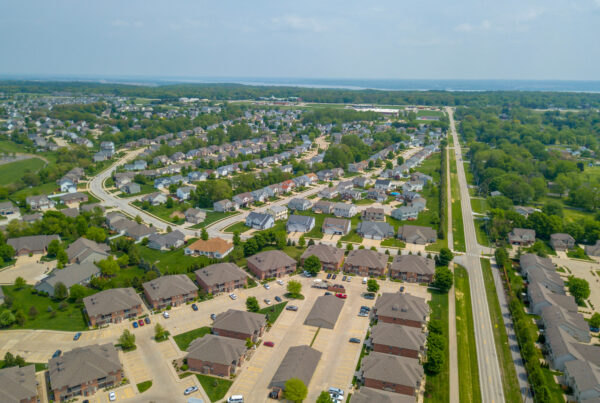

Picture a classic brick two-flat in Chicago’s Avondale neighborhood. The numbers look great on the surface. Both units are rented, the combined rent is strong, and the purchase price seems fair for the block. Then the lender runs the DSCR calculation and the deal barely squeaks by. What happened? The property tax bill. In Illinois, taxes take a bigger bite out of the monthly payment than they do in most states, and because DSCR lenders count taxes inside the payment, a tax bill that looks manageable on paper can quietly drag a qualifying ratio below the line.
That is the reality of asset-based lending in Illinois. The state offers some of the best cash-flow real estate in the country, from Chicago’s two-flats and greystones to workforce rentals in Rockford and Peoria. But the investors who win here are the ones who understand how property taxes, multi-unit rent schedules, and local rules feed into the loan math before they write an offer.
Asset-based loans qualify you on the deal, not your tax returns. The lender looks at what the property earns, or what your business deposits or liquid assets show, instead of demanding two years of W-2s and a debt-to-income calculation. For self-employed borrowers, full-time investors, and anyone building a portfolio across Cook County and downstate, that is usually the difference between growing and stalling.
This guide ranks the best asset-based loan programs for Illinois investors, walks through the tax-and-DSCR math that trips people up here, covers the two-to-four-unit mechanics that matter in Chicago, and lists the lenders worth comparing. By the end, you should know exactly which program fits your next Illinois deal.
What Asset-Based Lending Means for an Illinois Investor
An asset-based loan flips the underwriting question. Instead of asking “how much do you earn on your tax returns,” the lender asks “does this asset support this loan?” The asset might be the rental property itself, your business bank deposits, or your investment accounts.
That framing suits Illinois investors for a practical reason. Many of the people buying two-flats in Chicago or single-family rentals in Springfield are self-employed, run construction or trades businesses, own multiple LLCs, or have already maxed out the number of conventional loans a bank will give them. Their tax returns are optimized to reduce taxable income, which is smart accounting and terrible for a conventional mortgage application.
Asset-based programs, often called Non-QM loans, sidestep that problem. Select Home Loans is a Non-QM mortgage broker that works with a nationwide network of wholesale lenders, which means one application gets shopped across many programs rather than judged by a single bank’s rulebook. Here is how the main programs stack up for Illinois, ranked by how well they fit the way investors actually buy here.
The Best Asset-Based Loan Programs for Illinois Investors, Ranked
1. DSCR Loans: The Workhorse for Two-Flats, Greystones, and Rentals Statewide
A DSCR loan qualifies the property on its own cash flow. The lender divides the monthly rent by the full monthly payment, meaning principal, interest, property taxes, insurance, and any association dues, together known as PITIA. If the rent covers the payment, the deal generally works. No tax returns, no employment verification, no debt-to-income ratio.
In most states, the DSCR conversation centers on rent and interest. In Illinois, it centers on taxes. Property taxes here run high relative to much of the country, and because they sit inside PITIA, they directly compress your ratio. Two identical duplexes with identical rents can produce very different DSCR results if one carries a heavier tax bill. That is why experienced Illinois investors pull the actual tax history on a property, check for pending reassessments, and confirm whether any current exemptions will disappear at closing, before they ever run numbers past a lender.
Here is a simplified example with round numbers, for illustration only.
| Line item (example only) | Two-flat A | Two-flat B |
| Combined monthly rent | $3,400 | $3,400 |
| Principal and interest | $2,000 | $2,000 |
| Monthly property taxes | $500 | $900 |
| Monthly insurance | $200 | $200 |
| Total PITIA | $2,700 | $3,100 |
| DSCR | 1.26 | 1.10 |
Same rent, same loan, and the tax difference alone moves the ratio from comfortable to marginal. Many programs price better above certain DSCR thresholds, and those thresholds vary by lender, so the tax line can affect not just approval but your rate tier and maximum leverage. This is the single most Illinois-specific piece of DSCR advice you will get: underwrite the tax bill first.
The good news is that Chicago’s signature housing stock was practically built for DSCR lending. Two-flats, three-flats, and four-unit greystones spread the tax and insurance burden across multiple rents. One vacant unit does not zero out your income the way it does on a single-family rental. Neighborhoods on the Northwest and Southwest Sides are full of these buildings, and they remain one of the most reliable house-of-cash-flow strategies in the Midwest.
A few mechanics matter on two-to-four-unit deals. The appraiser completes a rent schedule covering every unit, and the lender typically uses the lower of actual lease rents or the appraiser’s market rent estimate. If a long-term tenant pays below market, that lower figure may be what counts, so know your leases before you apply. Vacant units are usually underwritten at market rent from the appraisal, which helps buyers purchasing a building with an open unit. And if you plan to rent units furnished or short-term, ask up front, because not every program treats that income the same way.
Anyone buying rental property in Chicago proper should also understand the city’s landlord ordinances. Chicago has long-standing rules governing the landlord-tenant relationship, including requirements around security deposits, notices, and lease practices, and suburban Cook County has its own tenant regulations. None of this blocks a DSCR loan, but it shapes how you operate the asset, and lenders like borrowers who clearly understand their market. Read the current rules or talk to a local attorney before your first Chicago closing.
Down payments on DSCR loans are typically larger than owner-occupied loans, and maximum leverage depends on credit score, the DSCR itself, and the program. Stronger ratios and stronger credit qualify for higher loan-to-value. Requirements vary by lender and change over time, so treat any specific number you read online as a starting point, not a promise.
2. Bridge and Renovation Loans: Built for Illinois’s Older Housing Stock
Illinois rewards investors who can renovate, because so much of its housing was built generations ago. Chicago’s greystones and frame two-flats often need systems work, deconversions or reconfigurations, and cosmetic updates before they rent at full market. Downstate, tired single-family homes in Rockford and Peoria sell at prices low enough that a modest rehab budget transforms the property’s rent potential.
Bridge loans, sometimes called fix-and-flip or short-term rehab loans, fund these projects. They are asset-based in the purest sense: the lender underwrites the purchase price, the rehab budget, and the after-repair value, not your personal income. Terms usually run twelve to twenty-four months, funds for construction are released in draws as work completes, and the exit is either a sale or a refinance.
For Illinois rental investors, the most common play is the BRRRR sequence: buy a dated two-flat with a bridge loan, renovate, lease both units, then refinance into a long-term DSCR loan based on the new, higher rents. Because the DSCR refinance qualifies on rent versus PITIA, the renovation does double duty. It raises the rent side of the ratio, which helps offset the heavy Illinois tax line. One caution: a major renovation can trigger a reassessment, so build a realistic post-rehab tax estimate into your refinance math rather than assuming the old bill carries forward.
Bridge pricing is driven by experience, leverage, and project scope, and it costs more than long-term money. It is a tool for creating value quickly, not for holding. Investors with completed projects behind them typically qualify for better terms, though first-timers can still get funded with the right deal.
3. Bank Statement Loans: For Illinois’s Self-Employed Buyers
Not every Illinois investor property fits DSCR underwriting. Maybe you are buying a second home near the lake in far northern Illinois, a property that needs your personal income to qualify, or a rental where the ratio falls short but your business earns plenty. Bank statement loans fill that gap.
Instead of tax returns, the lender reviews twelve or twenty-four months of your personal or business bank statements and calculates a qualifying income from your deposits, applying an expense factor for business accounts. For the contractors, restaurant owners, truckers, and consultants who make up a huge share of the Chicago metro and downstate economy, this is often the first time their real cash flow, rather than their write-down-heavy tax return, gets counted.
Bank statement loans work for investment properties, primary residences, and refinances. Deposit consistency matters more than any single big month, and lenders look at the trend across the full statement period. If your business runs seasonal, common in Illinois trades that slow every winter, a twenty-four-month review often presents your income more fairly than twelve.
4. Asset Depletion Loans: Qualify on What You Have Saved
Some investors have the opposite profile: substantial liquid assets and little documentable income. Retirees relocating downstate, business sellers sitting on proceeds, and investors living off portfolios all fit here. An asset depletion loan, also called asset utilization, converts your eligible liquid assets into a qualifying monthly income figure using a lender formula, no employment required.
This program suits Illinois investors buying in lower-priced markets especially well. A retiree with a healthy brokerage account can qualify for a rental in Springfield or a duplex in Peoria without touching a tax return, and the purchase prices in those markets keep the required asset base reasonable. Eligible assets and calculation methods vary by program, so this is one where comparing lenders through a broker makes a visible difference.
5. P&L and 1099 Loans: Lighter Documentation, Briefly
Two more options round out the menu. A P&L loan qualifies you using a profit and loss statement, typically prepared by a licensed tax professional, in place of full tax documentation. A 1099 loan uses your 1099 forms to establish income for contractors and commission earners. Both are worth a look when bank statements are messy, such as when personal and business funds mix in one account. Availability and documentation requirements differ by lender, which again is where shopping multiple wholesale programs pays off.
Matching the Program to the Illinois Market You Are Buying In
Chicago and its inner suburbs reward the DSCR-plus-renovation combination. The two-to-four-unit stock is deep, rents are strong, and value-add opportunities are everywhere, but you must underwrite Cook County taxes carefully and know the city’s landlord rules before you buy.
Downstate is a different game. Rockford, Peoria, and Springfield offer some of the most favorable rent-to-price ratios in the Midwest. Purchase prices are modest, and even with meaningful tax bills the DSCR math often clears comfortably because the rent-to-price relationship is so strong. These markets suit investors focused purely on cash flow, and DSCR loans handle them well, though some programs set minimum loan amounts that very low-priced properties can bump against. A broker can steer you toward programs that fit smaller loan sizes.
Champaign-Urbana deserves its own mention. The University of Illinois anchors constant rental demand, and investors there run student housing playbooks with by-the-bedroom leases and August turnover cycles. DSCR lenders underwrite these as standard rentals, so keep your leases clean and your rent documentation simple.
Best Asset-Based Lenders Serving Illinois Investors
1. Select Home Loans
Select Home Loans is a nationwide investor-loan broker specializing in Non-QM lending: DSCR loans, bank statement loans, asset depletion, P&L, 1099, and bridge financing. Rather than fitting your deal into one lender’s box, Select shops a single application across a network of wholesale lenders and investors, which matters in Illinois where the tax line can push a deal past one program’s DSCR floor while another program accepts it. For two-to-four-unit Chicago buildings, marginal-ratio deals, and LLC vesting questions, that comparison across programs is the whole advantage. Reach Nick at (888) 550-3296 or selecthomeloans.com.
2. Kiavi
Kiavi is a large national lender focused on real estate investors, best known for fix-and-flip bridge loans and DSCR rentals. Its technology-driven process appeals to investors doing steady volume, and its renovation lending fits Illinois’s older-stock rehab plays.
3. CoreVest
CoreVest concentrates on portfolio and rental finance, including single-asset DSCR loans and blanket loans covering multiple properties. Investors who have accumulated several Illinois rentals and want to consolidate financing often look here.
4. RCN Capital
RCN Capital is a national private lender offering short-term bridge and fix-and-flip financing alongside long-term rental loans. Its range across both project money and hold money suits BRRRR investors working Illinois’s value-add inventory.
5. Visio Lending
Visio Lending is a DSCR specialist focused almost entirely on long-term rental financing, including vacation and small multifamily rentals. Investors who want a lender that lives and breathes rental underwriting keep it on their comparison list.
6. LendSure
LendSure is a wholesale Non-QM lender with a broad program menu, including DSCR, bank statement, and asset-based options, accessed through brokers. Its flexibility on documentation makes it a frequent fit for self-employed Illinois borrowers.
This list reflects the author’s opinion and is presented in no particular order beyond that preference. Every investor’s situation is different, so compare programs, terms, and service for your own deal before choosing a lender.
Qualifying and Closing: What the Process Looks Like
Asset-based qualification centers on four things: your credit score, your down payment or equity, the asset being underwritten, and your reserves. Minimum credit scores, maximum loan-to-value, DSCR thresholds, and reserve requirements are all program-dependent and subject to investor guidelines, so treat them as levers rather than fixed walls. Stronger credit generally earns higher leverage and better pricing. A larger down payment can rescue a deal with a thin ratio.
Most Illinois investors vest DSCR loans in an LLC, which these programs are built to allow. Expect to provide your operating agreement and formation documents, and expect a personal guarantee on most programs. If your entity is registered in another state, confirm any Illinois registration requirements with your attorney before closing.
The process runs in familiar stages: a scenario conversation and quote, application and credit pull, appraisal with rent schedule on rental deals, underwriting, and closing. Timelines vary by transaction, and the appraisal is usually the pacing item. Many DSCR programs carry prepayment penalties with structures that vary by lender, so ask how each option treats an early sale or refinance if your hold period is short.
One pricing note specific to this niche: DSCR pricing responds to the ratio itself, leverage, credit, property type, and prepay structure. Because Illinois taxes pressure the ratio, getting an accurate tax figure early protects you from surprise pricing changes late in the process. Rates change constantly, so request a current quote rather than relying on anything published.
Frequently Asked Questions
How do Illinois property taxes affect my DSCR qualification?
Taxes sit inside PITIA, the payment figure your rent is measured against. A high tax bill raises PITIA and lowers your ratio directly. Always use the actual current tax amount, adjusted for any exemptions that will fall off when an investor takes title, rather than a rough estimate.
Can a property tax reassessment break my deal after I buy?
It can hurt your ratio on a future refinance. Cook County reassesses on a cycle, and a sale or major renovation can change the assessed value. Underwrite with headroom rather than at the bare minimum ratio so a tax increase does not flip your property to negative cash flow.
How does the appraisal work on a Chicago two-flat or three-flat?
The appraiser completes a rent schedule estimating market rent for every unit, and the lender generally uses the lower of your actual leases or those market figures. Provide current leases up front, and if a unit is vacant, the market rent from the schedule typically counts.
Do garden units or basement apartments count in the rent calculation?
Only if they are legal units. An unpermitted garden apartment common in older Chicago buildings may be excluded from qualifying rent even if it is occupied. Confirm legal unit count before you write your offer, because a “three-flat” that appraises as a two-flat changes your entire ratio.
Is a DSCR loan better for Chicago or for downstate markets like Rockford and Peoria?
Both work, differently. Chicago offers appreciation potential and deep multi-unit inventory but heavier taxes and tighter ratios. Downstate markets often clear DSCR comfortably because prices are low relative to rents, though some programs have minimum loan amounts that small deals can hit. Many investors run both strategies at once.
What should I know about Chicago’s landlord ordinances before buying a rental there?
Chicago has detailed rules governing landlord and tenant obligations, including security deposit handling and required notices, and suburban Cook County has its own regulations. They do not affect loan approval, but violating them is expensive. Review current requirements with a local attorney before your first lease.
Can I close a DSCR loan in an Illinois LLC?
Yes, most DSCR programs are designed for entity vesting and many investors prefer it for liability separation. Expect to sign a personal guarantee. Bring your formation documents and operating agreement early so entity review does not slow closing.
Does student rental income in Champaign-Urbana count for DSCR?
Generally yes, when documented with standard leases. By-the-bedroom leases are common in university markets and lenders handle them regularly, though documentation preferences vary by program. Parental guarantees on student leases do not usually change the qualifying rent.
Can I use a bridge loan to renovate a greystone and then refinance into a DSCR loan?
Yes, that is the classic BRRRR structure and it fits Illinois’s older stock well. The bridge loan funds purchase and rehab, and the DSCR refinance qualifies on the improved rents. Budget for a possible tax reassessment after renovation when projecting the refinance ratio.
What credit score do I need for an asset-based loan in Illinois?
There is no single number. Minimums are program-dependent and vary by lender, and your score interacts with leverage and DSCR to determine both approval and pricing. Stronger credit widens your options. A broker can match a mid-tier score with the programs most forgiving of it.
Are these programs available everywhere in Illinois?
Program availability can vary, and guidelines change over time, so confirm your specific property type and location with a loan expert before relying on any program. Rural properties and unusual property types sometimes need a different program than a standard city rental.
What if my two-flat’s DSCR comes in just below the lender’s threshold?
You have options: a larger down payment lowers the payment side, shopping other programs may find a lower qualifying threshold, buying down the rate can shift the math, or documenting higher market rents through the appraisal can lift the income side. This is exactly the situation where a broker comparing multiple wholesale programs earns their keep.
The Bottom Line on Asset-Based Loans in Illinois
Illinois gives investors an unusual combination: nationally significant cash-flow markets downstate, a one-of-a-kind multi-unit inventory in Chicago, and steady university demand in Champaign-Urbana. The catch is the tax line. Investors who underwrite property taxes first, understand two-to-four-unit rent schedule mechanics, and respect Chicago’s landlord rules put themselves in position to use DSCR, bridge, bank statement, and asset depletion programs to full effect.
Programs, guidelines, and requirements change over time, and everything from DSCR thresholds to reserve requirements varies by lender. Verify current guidelines with a loan expert before making decisions based on this article.
If you are weighing a two-flat in Chicago, a portfolio play in Peoria, or a student rental near campus, talk it through with someone who can shop the scenario across multiple programs. Call Nick at Select Home Loans, NMLS #2384002, at (888) 550-3296, or start online at selecthomeloans.com to compare your loan options and request a current quote.