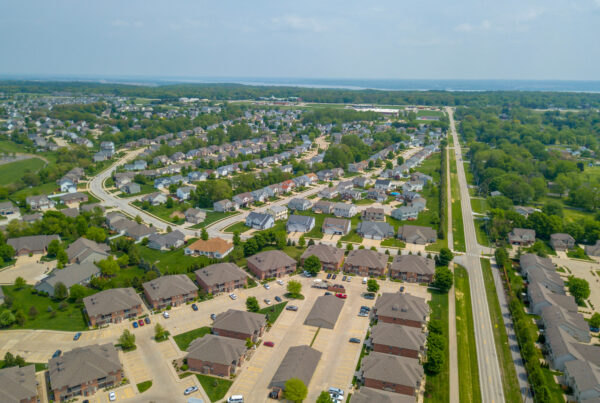

Picture an investor sitting in a home office in Phoenix or New Jersey, scrolling listings in Lawrenceville, Marietta, and McDonough. The numbers on Georgia rentals still make sense in a way that many coastal markets stopped making sense years ago. The problem is not finding the deal. The problem is that this investor already owns six properties, writes off most of their income, and just got told by a conventional lender that their debt-to-income ratio is too high to buy a seventh.
That conversation happens every day with buyers targeting metro Atlanta. Georgia has become one of the most heavily shopped rental markets in the country, and a large share of the buyers competing for suburban single-family homes are not using loans that care about tax returns at all. They are using asset-based loans, financing that qualifies the property or the investor’s real financial picture instead of a W-2.
If you want to compete for rentals in Gwinnett, Cobb, or Henry County, or you are eyeing a historic-district short-term rental in Savannah, understanding these programs is the difference between writing offers with confidence and watching deals go to someone else.
This guide ranks the best asset-based loan programs for Georgia investors, explains who each one fits, walks through a realistic example, and lists the lenders worth comparing. Select Home Loans is a nationwide mortgage broker specializing in exactly this kind of financing, so this is the same framework we use when we shop a Georgia file across our wholesale lender network.
What Asset-Based Lending Means for a Georgia Investor
Asset-based lending is a family of non-QM loan programs that replace tax-return underwriting with something that better reflects how investors actually operate. Depending on the program, the lender qualifies you using the property’s rental income, your business bank deposits, a profit and loss statement, or your liquid assets. Your personal debt-to-income ratio, the thing that kills most conventional applications for active investors, either matters far less or does not enter the picture at all.
For Georgia specifically, that matters for two reasons. First, metro Atlanta attracts an unusual number of out-of-state and portfolio buyers, and those buyers routinely hit the ceiling on how many conventional mortgages they can carry. Second, Atlanta’s economy runs heavily on self-employment. The film and television production boom built an entire class of well-paid 1099 workers, production crew, editors, and creative contractors whose tax returns dramatically understate what they earn. Asset-based programs were built for both groups.
The Best Asset-Based Loan Programs for Georgia Investors, Ranked
Every program below is available through multiple lenders, and guidelines differ from one to the next. Treat the descriptions as directional. Specific credit minimums, leverage caps, and reserve requirements are program-dependent and subject to investor guidelines.
1. DSCR Loans: The Workhorse for Suburban Atlanta Rentals
If you are buying single-family rentals in Georgia, the debt service coverage ratio loan is almost always the first program to price out. A DSCR loan qualifies the property, not you. The lender takes the monthly rent, either from an existing lease or the appraiser’s market rent estimate, and divides it by the full monthly payment: principal, interest, taxes, insurance, and any association dues, together known as PITIA. Rent that covers the payment produces a ratio of 1.0 or better, and stronger ratios generally earn better pricing and more leverage.
No tax returns. No employment verification. No personal debt-to-income calculation. That structure is why DSCR loans dominate the suburban Atlanta market. Gwinnett, Cobb, and Henry counties have spent the past decade as some of the most competed-over single-family rental territory in the country, with institutional buyers scooping up homes alongside individual investors. You cannot outspend an institution, but you can show up with financing that is fast, predictable, and does not fall apart in underwriting because of a tax-return quirk. Sellers and listing agents in these submarkets know DSCR financing, and a clean pre-approval from a broker who has already vetted the file carries real weight against other offers.
DSCR loans also scale. Because each property qualifies on its own rent, your fifth and tenth Georgia purchases underwrite roughly the same way your first one did. Most programs allow closing in an LLC, which portfolio builders strongly prefer.
The trade-offs: down payments are larger than owner-occupied loans, pricing runs somewhat higher than conventional financing, and many DSCR programs carry a prepayment penalty for the first few years. Prepay structures vary by lender and can often be adjusted, so ask how each option affects pricing before you lock in.
Who it fits in Georgia: out-of-state buyers targeting metro Atlanta suburbs, portfolio investors adding doors in Augusta or Columbus, and short-term rental investors in Savannah, where some programs will consider STR income depending on guidelines.
2. Bank Statement Loans: Built for Atlanta’s Entrepreneurs and Creatives
A bank statement loan qualifies you using 12 or 24 months of business or personal bank deposits instead of tax returns. The lender applies an expense factor to your deposits to estimate usable income, then underwrites the loan on that figure.
This is the natural fit for Atlanta’s self-employed economy. The metro area is thick with agency owners, consultants, restaurateurs, trucking and logistics operators, and the enormous creative workforce attached to film and television production. These borrowers often show strong, consistent deposits while their tax returns, after legitimate write-offs, show a fraction of that cash flow. A bank statement loan lets the deposits tell the story.
For investors, bank statement programs are especially useful when the property itself would not carry a DSCR loan, for example a rental in a softer rent-to-price submarket, or when you want financing tied to your overall income strength rather than one property’s lease. They can also be used for a primary residence purchase, which matters for the Atlanta entrepreneur buying a home in Decatur while building a rental portfolio on the side.
Expect the lender to look at deposit consistency, large or irregular transfers, and how long you have been self-employed. Two years of self-employment history is a common benchmark, though requirements vary by program.
3. P&L Statement Loans: The Underused Option for Georgia’s Project-Based Earners
P&L loans deserve more attention in Georgia than they get, so here is a fuller picture of how they work.
A profit and loss statement loan qualifies you using a P&L for your business, typically covering the most recent 12 to 24 months, prepared or reviewed by a licensed tax professional such as a CPA or an enrolled agent. Some programs accept a borrower-prepared P&L with a CPA attestation; others want the CPA to prepare it outright. Depending on the lender, the P&L may stand alone or be paired with a few months of bank statements to sanity-check the revenue.
Why does this matter in Georgia specifically? Think about how income actually arrives for a large slice of Atlanta’s workforce. A line producer or gaffer working the studio circuit might have a phenomenal year of back-to-back productions, then a planned gap. A staging company or a post-production shop might invoice in large, lumpy payments that make month-to-month bank statements look erratic even when the annual picture is strong. Bank statement underwriting can penalize that lumpiness, because the expense factor and deposit averaging flatten out a business that does not run on smooth monthly revenue.
A P&L loan solves that. The statement presents the business the way an accountant sees it, annual revenue, real expenses, and net income, without forcing the borrower’s cash-flow timing into a monthly mold. For project-based earners in the film and creative economy, for contractors who front costs and get paid on completion, and for seasonal businesses along the coast near Savannah, the P&L format often produces a higher and more accurate qualifying income than deposits alone.
The trade-offs are real but manageable. Because the lender is relying on a professionally prepared document rather than raw bank data, P&L programs tend to be somewhat more conservative on leverage or pricing than full-documentation loans, and the CPA relationship matters. You need a tax professional who knows your business and will stand behind the numbers. Documentation standards vary meaningfully from one lender to the next, which is exactly the kind of file that benefits from a broker shopping it, since one lender’s decline is often another lender’s clean approval.
Who it fits in Georgia: film and TV crew and vendors, creative agencies, event and hospitality businesses, contractors with lumpy receivables, and any self-employed borrower whose bank statements undersell a strong bottom line.
4. Asset Depletion Loans: Qualifying Off What You Own
Asset depletion, sometimes called asset utilization, converts your liquid assets into qualifying income. The lender totals eligible assets, brokerage accounts, savings, and often a portion of retirement funds, then divides by a set number of months to produce a monthly income figure for underwriting.
This program fits Georgia’s growing population of relocating retirees and equity-rich transplants, the buyer who sold a business or a California house and arrived with a large portfolio but modest reportable income. It also works for investors between ventures who are asset-heavy and income-light on paper. Eligible asset types and the depletion formula vary by program, so the same portfolio can produce very different qualifying income at different lenders.
5. 1099 Loans and Bridge Financing: Two Quick Mentions
A 1099 loan qualifies independent contractors using their 1099 forms rather than full tax returns, a clean middle path for Georgia’s gig and contract workforce, including plenty of film-industry earners who receive 1099s rather than running a formal business entity.
Bridge and short-term financing covers purchases that need speed or renovation before they can carry long-term debt, a dated Augusta duplex that needs work before it rents, or a Savannah property being repositioned as a short-term rental. Investors commonly bridge in, renovate, then refinance into a DSCR loan once the property is stabilized and leased.
How to Choose the Right Program for Your Georgia Deal
Start with the property. If it is a rental that covers its payment, a DSCR loan is usually the cleanest and most scalable route, especially in the strong rent markets of suburban Atlanta, Augusta, and Columbus. If the property’s numbers are thin or the deal is really about your income strength, move to the borrower-based programs: bank statements if your deposits are steady, a P&L if your income is lumpy or project-based, asset depletion if your balance sheet is the headline.
Then think about your next three purchases, not just this one. Georgia investors who plan to keep buying usually benefit from establishing a DSCR track record early, because it keeps each property’s financing independent of their personal ratios. A broker can price the same file across several of these programs at once and show you the actual trade-offs instead of a single lender’s menu.
Example: Out-of-State Investor Buying in Henry County
The numbers below are illustrative round figures, not market data. Say an investor buys a single-family rental in McDonough for $300,000 with 20 percent down, borrowing $240,000. The full monthly payment including taxes and insurance comes to $2,000, and the appraiser supports market rent of $2,300. Rent of $2,300 divided by a PITIA of $2,000 gives a DSCR of 1.15. The property qualifies on its own income, the investor’s six existing mortgages never enter a debt-to-income calculation, and the loan closes in the investor’s Georgia LLC. Actual pricing and leverage depend on credit, ratio, and program.
Best Asset-Based Lenders Serving Georgia Investors
- Select Home Loans. Select Home Loans is a nationwide mortgage broker focused on investor and non-QM financing: DSCR loans, bank statement loans, P&L programs, asset depletion, 1099 loans, and bridge options. One application gets shopped across a network of wholesale lenders, which matters most on files that do not fit a single lender’s box, a Savannah short-term rental, a lumpy-income film professional, or an investor buying several doors at once. Ask for Nick, NMLS #2384002, at (888) 550-3296 or selecthomeloans.com.
- Lima One Capital. A Southeast-rooted lender well known among rental and fix-and-flip investors, with programs spanning short-term renovation financing, new construction, and long-term rental loans. Its regional familiarity makes it a frequent name in Georgia investor circles.
- Kiavi. A technology-forward lender known for fix-and-flip bridge loans and DSCR rental financing, with a heavily digital application process that appeals to investors who value speed and a streamlined experience.
- Visio Lending. A long-standing rental-property specialist recognized for DSCR lending, including experience with vacation and short-term rentals, which can make it relevant for coastal Georgia investors.
- Deephaven Mortgage. One of the established names in the broader non-QM space, offering a wide menu that includes DSCR and alternative-documentation programs for self-employed borrowers, typically accessed through brokers and correspondent partners.
- Griffin Funding. A lender with a broad non-QM lineup, including DSCR, bank statement, and asset-based programs, and it also serves VA borrowers, which is worth noting in a military-heavy state like Georgia.
This list reflects the author’s opinion, is presented in no particular order beyond that preference, and every investor should compare current terms across multiple options for their own situation.
Qualifying and Closing: What Georgia Investors Should Expect
Requirements are program-dependent, but the shape of the process is consistent. Expect the lender to review your credit, verify your down payment and reserves, and order an appraisal that, for DSCR loans, includes a market rent analysis. Stronger credit generally opens up higher leverage and better pricing across every program in this article. Reserve requirements, usually expressed as months of payments in liquid funds, vary by lender and by how many properties you own.
The process runs through the usual stages: pre-approval, offer, appraisal, underwriting, and closing. Timelines vary by transaction, and the best way to keep one on schedule is a complete file up front, entity documents if you are vesting in an LLC, leases or STR income documentation where relevant, and clean sourcing for your funds.
Two Georgia-specific notes. Coastal properties around Savannah may sit in flood zones, and flood insurance premiums flow directly into PITIA, which means they directly affect a DSCR calculation. And investors buying condos or townhomes in HOA communities around Atlanta should remember association dues count in PITIA too, so pull those numbers before you run your ratio.
Frequently Asked Questions
Can I use a DSCR loan for a build-to-rent or new-construction rental in Georgia?
Often, yes, once the home is complete. Build-to-rent communities have expanded rapidly around metro Atlanta, and finished new-construction homes generally qualify for DSCR financing using the appraiser’s market rent estimate, since there is no lease history yet. Financing the construction phase itself is a different product, typically a construction or bridge loan that you refinance into a DSCR loan at completion.
Do asset-based lenders finance short-term rentals in Savannah’s historic district?
Some DSCR programs consider short-term rental income, using market data or the property’s booking history, while others underwrite only long-term market rent. Savannah regulates short-term vacation rentals, and the rules differ by zoning district, so confirm the property’s eligibility with the city before you buy. A lender will care about that too, since legal operation supports the income used to qualify.
Can I buy multiple Georgia properties at the same time?
Yes. Investors regularly close several DSCR loans in parallel, and some lenders offer portfolio or blanket structures that put multiple doors under one loan. Buying in bulk raises reserve requirements and paperwork, so coordinate the files through one point of contact. A broker can also split a multi-property package across different lenders if that produces better overall terms.
Should I close in an LLC, and do Georgia lenders allow it?
Most DSCR and investor programs allow, and many investors prefer, vesting title in an LLC for liability separation and cleaner bookkeeping. Expect to provide your operating agreement and formation documents, and expect a personal guarantee from the members. Conventional loans generally do not allow LLC vesting at closing, which is one more reason investors migrate to asset-based programs. Talk to an attorney about whether an LLC fits your situation.
How many bank statements will I need for a bank statement loan?
Most programs ask for 12 or 24 months of business or personal statements. A longer window can smooth out slow months, which helps seasonal or project-based earners. The lender applies an expense factor to business deposits, and that factor varies by program and business type.
My tax returns show almost no income because of depreciation. Am I stuck?
No, and this is the classic asset-based borrower. Depreciation and write-offs that shrink taxable income do not affect a DSCR loan at all, since the property qualifies on rent versus PITIA. For a primary residence or a borrower-based loan, bank statement and P&L programs measure your real cash flow instead of your taxable income.
Does Georgia’s film industry income work for these loans?
Yes, and the right program depends on how you are paid. Crew members receiving 1099s can use a 1099 loan. Professionals running a loan-out company or production business often fit bank statement or P&L programs, with the P&L route working especially well for back-to-back project income with planned gaps.
What credit score do I need for an asset-based loan in Georgia?
Minimums are program-dependent and vary by lender, so there is no single number to plan around. Directionally, higher scores earn better pricing and higher allowable leverage, and borrowers with credit events in their past can still find programs, usually at more conservative terms. Ask for quotes at your actual score rather than assuming you are out of the running.
Are closing costs different on asset-based loans?
You will see the standard items, appraisal, title, recording, and lender fees, and DSCR appraisals include a rent analysis that can cost slightly more than a standard report. Points and origination structures vary by program and by how you choose to price the loan, so compare full cost breakdowns, not just the rate quote.
Can I refinance an existing Georgia rental with a DSCR loan?
Yes. Rate-and-term and cash-out DSCR refinances are common, and cash-out is a popular way to pull equity from an appreciated Atlanta-area rental to fund the next purchase in Augusta or Columbus. Seasoning requirements for cash-out vary by program, and a HELOC or second mortgage may be worth comparing if you want to leave a low-rate first mortgage untouched.
Do these programs work in smaller Georgia markets, not just Atlanta?
Generally yes. Augusta and Columbus attract steady investor interest because purchase prices are lower relative to rents, which often produces comfortable DSCR ratios. Lenders may apply different guidelines in rural areas or for unusual property types, so flag the location early.
Is asset-based financing available on 2-4 unit properties in Georgia?
Most DSCR programs cover 1-4 unit residential properties, and many extend to small multifamily beyond that under separate guidelines. Duplexes and quads in Columbus and Augusta are a common target because multiple rents supporting one PITIA can strengthen the ratio.
The Bottom Line for Georgia Investors
Georgia rewards investors who can move quickly, and asset-based financing is how investors without W-2 paychecks keep pace. DSCR loans carry the load for suburban Atlanta rental portfolios, bank statement and P&L programs put Atlanta’s entrepreneurs and film-economy earners on equal footing, and asset depletion, 1099, and bridge options fill the gaps. The best asset-based loans for investors in Georgia are ultimately the ones matched to your income style and your property’s numbers, which is why comparing programs beats settling for the first quote.
One reminder before you run numbers: programs, guidelines, and requirements change over time, and everything described here varies by lender. Verify current guidelines with a loan expert before making decisions.
Ready to price out a Georgia deal? Talk it through with Nick at Select Home Loans, NMLS #2384002. Call (888) 550-3296 or visit selecthomeloans.com to compare DSCR, bank statement, P&L, and asset depletion options across multiple wholesale lenders and get pre-approved with the program that fits how you actually earn.