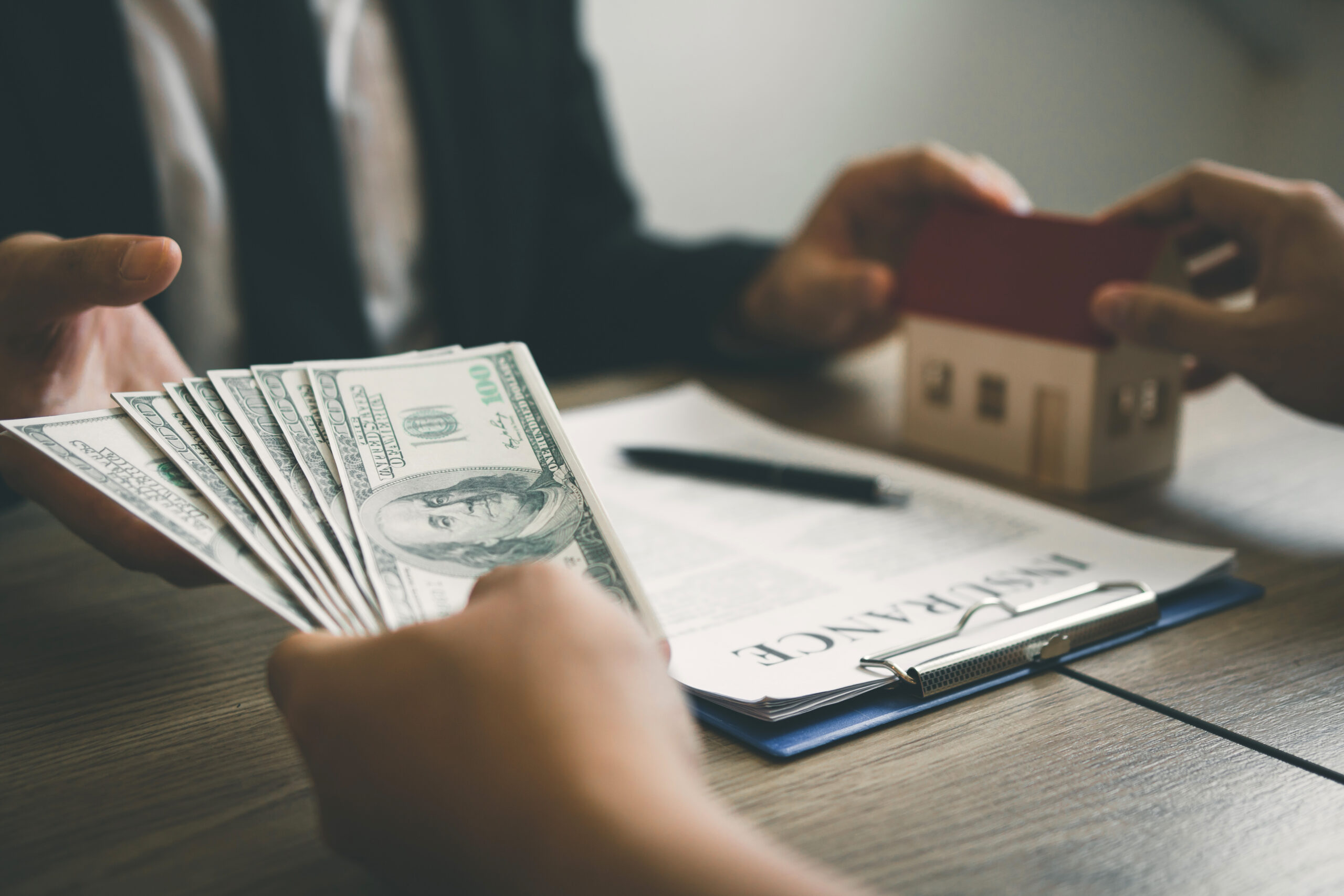

Florida homeowners have been quietly accumulating equity at a pace that few other states can match. Between 2019 and 2025, median home values across the state climbed by 50% or more in many metro areas and even after a modest cooling in certain segments, the average Florida homeowner is sitting on a substantial financial cushion. The question isn’t whether you have equity. It’s how you should access it. And for a growing number of homeowners, a second mortgage or HELOC in Florida is the answer particularly if you’re holding onto a first mortgage rate in the 3-4% range that you’d be foolish to give up through a cash-out refinance.
That distinction matters more in 2026 than it has in over a decade. The gap between legacy first-mortgage rates and current market rates is wide enough that replacing your entire mortgage just to pull out equity can cost you tens of thousands in additional interest over the life of the loan. A second mortgage whether structured as a home equity loan or a home equity line of credit (HELOC) lets you tap your equity while leaving your favorable first mortgage completely untouched.
But the product you choose, the lender you work with, and the terms you negotiate all make a real difference in the outcome. This guide covers everything Florida homeowners need to know about second mortgages and HELOCs in 2026: how they work, what they cost, who qualifies, what to watch out for, and how to choose a lender who structures the loan around your interests rather than their own.
What Is a Second Mortgage?
A second mortgage is any loan secured by your home that sits behind your first mortgage in lien position. If you default and the property is sold, your first mortgage gets paid first, and the second mortgage lender gets what’s left. That subordinate position is why second mortgages carry higher interest rates than first mortgages the lender is taking on more risk.
There are two main types of second mortgages, and they work very differently:
Home Equity Loan
A home equity loan gives you a lump sum at a fixed interest rate with a fixed repayment term typically 10 to 20 years. You receive the full amount at closing and start making principal-and-interest payments immediately. It’s predictable and straightforward. You know exactly what you’re borrowing, what you’ll pay each month, and when the loan will be paid off.
Home equity loans work best when you need a specific amount of money for a defined purpose paying off high-interest credit card debt, funding a major home renovation with a known budget, covering a medical expense, or making a lump-sum investment. The fixed rate means your payment never changes regardless of what happens with the broader interest rate environment.
Home Equity Line of Credit (HELOC)
A HELOC works more like a credit card secured by your home. The lender approves you for a maximum credit limit based on your equity, and you draw from it as needed during the “draw period” typically the first 5 to 10 years. During the draw period, most HELOCs require interest-only payments on the balance you’ve actually used. Once the draw period ends, you enter the “repayment period” (usually 10 to 20 years), where you pay back both principal and interest on whatever balance remains.
The flexibility of a HELOC is its greatest strength. If you’re renovating a home in phases, funding a business that needs intermittent capital, or simply want a financial safety net you can access without reapplying for a loan, a HELOC gives you that optionality. You only pay interest on what you use, and many HELOCs allow you to pay down and redraw during the draw period without penalty.
The trade-off is that most HELOCs carry variable interest rates, typically tied to the Wall Street Journal prime rate plus a margin. When rates rise, your payment rises. When they fall, so does your payment. That variability introduces uncertainty that some borrowers find uncomfortable, particularly retirees or anyone on a fixed income. Some lenders do offer fixed-rate HELOC options or the ability to lock portions of your balance at a fixed rate features worth asking about.
HELOC vs. Home Equity Loan vs. Cash-Out Refinance: Which One Makes Sense in Florida?
This is the most important decision in the entire process, and getting it right depends on three things: your existing first-mortgage rate, how you plan to use the funds, and how long you need the money.
If your first mortgage rate is below 5%: A second mortgage (either a HELOC or home equity loan) almost always makes more financial sense than a cash-out refinance. Here’s why. Say you owe $300,000 at 3.5% and your home is worth $550,000. You want $100,000 in cash. A cash-out refinance would replace your entire mortgage with a new $400,000 loan at, say, 6.75%. You’d be paying 6.75% on the full $400,000 including the $300,000 that was sitting happily at 3.5%. Over 30 years, that rate increase on the original balance alone costs you well over $100,000 in additional interest. Alternatively, you keep the $300,000 first mortgage at 3.5% and take a $100,000 home equity loan at 8.5%. You pay the higher rate only on the $100,000. The blended cost across both loans is dramatically lower than the cash-out refinance.
If your first mortgage rate is above 6.5%: A cash-out refinance might make more sense, because you’re not giving up a favorable rate you might actually improve it while pulling equity. The math flips when there’s no rate advantage to protect on the first mortgage.
If you need funds all at once: A home equity loan is cleaner. One disbursement, fixed rate, predictable payments.
If you need funds over time or want a safety net: A HELOC gives you the flexibility to draw only what you need, when you need it, and pay interest only on what you’ve used.
There’s no universally “best” option. There’s only the one that costs the least and serves your goals most efficiently given your specific numbers. Any lender who pushes you toward one product without running all three scenarios side by side isn’t doing their job.
Who Qualifies for a Second Mortgage or HELOC in Florida?
Qualification requirements for second mortgages are somewhat stricter than for first mortgages, mainly because the lender is in a subordinate position. Here’s what Florida borrowers should expect:
Equity. Most lenders require a combined loan-to-value (CLTV) ratio of 85% or less meaning your first mortgage balance plus the second mortgage can’t exceed 85% of your home’s appraised value. Some programs stretch to 90% CLTV, though rates increase meaningfully at higher leverage. On a $500,000 Florida home with a $300,000 first mortgage, an 85% CLTV cap means you could borrow up to $125,000 on a second mortgage.
Credit score. Minimums typically start at 620, but you’ll want 680 or higher for competitive rates. Borrowers above 740 see the best pricing. If your score is in the lower range, you may still qualify but expect a higher rate and possibly a lower credit limit on a HELOC.
Debt-to-income ratio (DTI). Lenders calculate your DTI using all monthly debt obligations both mortgage payments, car loans, student loans, credit card minimums, and the proposed second mortgage payment. Most programs cap DTI at 43-50%. Because Florida carrying costs (insurance, property taxes, HOA) tend to be higher than national averages, your DTI may be tighter than expected even with strong income.
Income documentation. Standard programs require tax returns, W-2s, and pay stubs. Self-employed borrowers may need to provide additional documentation, and in some cases, a bank statement loan approach can be used for second mortgages through Non-QM lenders though this is less common than for first mortgages and depends on the lender’s product lineup.
Property type. Primary residences qualify most easily. Second homes and investment properties can qualify for second mortgages, but guidelines are tighter and rates are higher. Florida’s large population of second-home owners and real estate investors means there’s meaningful demand for these products, but fewer lenders offer them compared to primary residence programs.
What Does a Second Mortgage or HELOC Cost in Florida?
Interest Rates
As of early 2026, home equity loan rates for well-qualified Florida borrowers generally fall in the 7.5% to 9.5% range for a fixed-rate product, depending on credit score, LTV, and loan amount. HELOC rates are variable and typically quoted as prime plus a margin with prime currently around 7.5%, most HELOCs price between 8% and 10% at the start, though introductory rates can be lower for the first 6-12 months.
These rates are higher than first mortgage rates, which is expected given the subordinate lien position. But the comparison that matters isn’t second-mortgage rate versus first-mortgage rate it’s the total cost of the second mortgage versus the total cost of a cash-out refinance that replaces your low-rate first mortgage. That’s where the second mortgage wins for most borrowers with legacy rates below 5%.
Closing Costs and Fees
Closing costs on second mortgages and HELOCs are generally lower than on first mortgages, but they’re not zero. Here’s what to expect in Florida:
Appraisal: $400-$600. Some HELOC programs use automated valuation models (AVMs) instead of full appraisals, which saves both cost and time. However, for higher loan amounts or unusual properties, a full appraisal is usually required.
Title search and insurance: A title search is required to confirm your property’s lien status. Title insurance on a second mortgage is typically less expensive than on a first mortgage expect $500-$1,000 depending on the loan amount and county.
Documentary stamp tax: Florida charges doc stamps at $0.35 per $100 on the mortgage amount. On a $100,000 second mortgage, that’s $350. It’s not a massive cost, but it’s Florida-specific and catches some borrowers off guard.
Origination and processing fees: Some lenders charge origination fees (0.5-1% of the loan amount), while others absorb these costs particularly on HELOCs, where the competitive landscape has pushed many lenders toward zero-fee or reduced-fee structures. Always ask for the full fee breakdown before committing.
Annual fees: Some HELOCs carry annual maintenance fees of $50-$100 per year. Minor, but worth knowing about.
Early closure penalties: Some HELOC lenders charge a fee if you close the line within the first 2-3 years typically $300-$500. This discourages borrowers from opening a HELOC, using it once, and immediately closing it. If you think you might close the line early, negotiate this fee away or choose a lender that doesn’t charge one.
Florida-Specific Factors That Affect Second Mortgages and HELOCs
The insurance factor. Florida’s property insurance crisis directly affects second mortgage qualification. Higher insurance premiums increase your monthly housing costs, which increases your DTI ratio, which reduces how much you can borrow. A borrower whose annual insurance premium jumped from $3,000 to $8,000 has effectively added $417 per month to their housing expenses that’s a meaningful hit to DTI. When you’re applying for a second mortgage, make sure you use your current insurance costs in any preliminary calculations, not what you were paying two or three years ago.
Flood insurance requirements. If your property is in a FEMA-designated Special Flood Hazard Area, flood insurance is mandatory. The second mortgage lender will verify this independently, and the cost gets factored into your DTI just like the first mortgage lender required it. In some coastal Florida communities, flood insurance alone runs $3,000-$8,000 annually a substantial number that lenders take seriously.
Condo complications. Second mortgages on Florida condos face additional scrutiny. Lenders need to review the condo association’s financials, insurance coverage, reserve funding, and increasingly since the post-Surfside legislation structural inspection reports. Buildings with deferred maintenance, underfunded reserves, or pending special assessments may be ineligible for second mortgage financing under some lender guidelines. If you live in a condo, ask your lender early in the process whether your building meets their requirements.
Homestead protection and second mortgages. Florida’s homestead exemption provides strong creditor protection but a second mortgage is a voluntary lien that you consent to, so homestead protections don’t prevent a lender from foreclosing if you default. This is worth understanding clearly: just because your home is protected from unsecured creditors under Florida homestead law doesn’t mean your home equity loan or HELOC lender can’t take action if you stop making payments.
Property tax considerations. Florida has no state income tax, which is a financial advantage but property taxes vary significantly by county. Borrowers in Miami-Dade, Broward, and Palm Beach counties often face higher effective property tax rates than those in less urban parts of the state. These taxes are factored into your DTI and affect how much you can borrow on a second mortgage. If you’re homesteaded, your Save Our Homes cap keeps assessment increases manageable, but non-homesteaded properties (second homes, recently purchased primaries) can see larger tax jumps.
What Florida Homeowners Are Using Second Mortgages and HELOCs For
Home renovations and hurricane hardening. This is the most common use. Florida homes, particularly older construction, benefit from impact windows, roof replacements, updated electrical systems, and other improvements that not only increase value but can reduce insurance premiums through wind mitigation credits. A HELOC is particularly well-suited for renovation projects because you can draw funds in phases as work progresses rather than borrowing the full amount upfront.
Debt consolidation. If you’re carrying $40,000-$80,000 in credit card debt at 22-28% interest, replacing it with a home equity loan at 8.5% can cut your monthly debt payments dramatically and save a substantial amount in interest. The risk, of course, is that you’re converting unsecured debt into secured debt if you can’t make payments on the home equity loan, your home is at stake. Borrowers who consolidate debt and then run up their credit cards again end up in a worse position than where they started.
Investment property down payments. Some Florida homeowners use HELOC funds as down payments on rental properties. This can be an effective wealth-building strategy if the rental income covers both the investment property mortgage and the HELOC payment but it adds leverage and risk. Borrowers pursuing this strategy should also explore DSCR loans in Florida, which qualify based on the rental property’s income and can simplify the financing structure.
Business capital. Self-employed borrowers sometimes tap home equity to fund business growth, bridge seasonal cash flow gaps, or invest in equipment. The interest may be tax-deductible if the funds are used for business purposes (consult your accountant), and the rates are significantly lower than most business credit lines. Florida’s large self-employed population makes this a common use case.
Emergency reserves. Some financially conservative homeowners open a HELOC with no intention of using it immediately. It sits there as a low-cost emergency fund no interest accrues until you draw, and you have instant access to significant capital if you need it. Given Florida’s exposure to hurricanes and the associated financial disruptions, having a HELOC in place before you need it is a practical form of financial preparedness.
Mistakes to Avoid With Second Mortgages and HELOCs in Florida
Ignoring the variable rate risk on a HELOC. If the prime rate increases by 2% over the next three years, your HELOC payment increases by 2% on every dollar of outstanding balance. On a $100,000 draw, that’s an additional $2,000 per year in interest. Borrowers who plan to carry a large HELOC balance for an extended period should seriously consider a fixed-rate home equity loan instead or ask whether the HELOC lender offers a fixed-rate lock feature.
Borrowing the maximum just because you can. Approval for a $150,000 HELOC doesn’t mean you should draw $150,000. Every dollar you draw increases your monthly obligation and reduces the equity cushion protecting you if property values decline. Borrow what you need. Leave the rest available for genuine emergencies.
Forgetting about the repayment period. During the draw period, HELOC payments are interest-only and feel manageable. When the repayment period kicks in, your payment can increase significantly because you’re now paying principal and interest. Some borrowers are caught off guard by this transition a $100,000 HELOC at 8.5% with interest-only payments costs about $708/month, but once you hit the 15-year repayment period, the fully amortizing payment jumps to roughly $985/month. Plan for it.
Not shopping rates aggressively. Second mortgage rates and HELOC margins vary more between lenders than first mortgage rates do. One lender might offer prime plus 0.5%, while another offers prime plus 2.0% for the same borrower profile. That 1.5% difference on a $100,000 balance is $1,500 per year. Get at least three quotes.
Using a HELOC for depreciating purchases. Funding a new car, a vacation, or other consumption spending with home equity is generally a poor financial decision. You’re borrowing against an appreciating asset (your home) to pay for something that loses value immediately. The best uses of home equity are investments that either increase the home’s value, reduce other high-interest debt, or generate income.
How to Choose a Second Mortgage or HELOC Lender in Florida
The lender market for second mortgages and HELOCs is broader than for first mortgages banks, credit unions, mortgage companies, and online lenders all compete in this space. That variety gives you leverage as a borrower, but it also means the quality gap between lenders is wider.
Look for product flexibility. The best lenders offer both fixed-rate home equity loans and HELOCs and ideally HELOCs with a fixed-rate lock option. They should also be able to compare these options against a cash-out refinance so you can see the full picture. Lenders who only offer one product will steer you toward that product regardless of whether it’s the best fit.
Prioritize Florida experience. Insurance verification, flood zone issues, condo association reviews, documentary stamp tax calculations, and title procedures all vary in Florida. A lender who processes most of their volume in other states will encounter friction on Florida transactions that delays your closing and creates unnecessary stress.
Understand the rate structure. For HELOCs, ask exactly what index the rate is tied to, what the margin is, whether there’s an introductory rate, and what the lifetime rate cap is. A HELOC might advertise a 7.5% introductory rate but carry a lifetime cap of 18% you need to know that before signing.
Ask about the full fee picture. Origination fees, annual fees, early closure penalties, draw fees these all vary between lenders and can add up. Some lenders waive all fees to win business; others bury costs in the margin. Compare total cost, not just the headline rate.
Why Select Home Loans Is a Strong Choice for Florida Second Mortgages
Select Home Loans has developed a strong position in the Florida second mortgage and HELOC space, and the reasons are practical rather than promotional.
They start by running the comparison that every borrower needs but few lenders voluntarily provide: second mortgage versus cash-out refinance, with real numbers based on your existing first mortgage rate, your equity position, and your intended use of funds. That analysis alone separates them from lenders who default to whichever product generates the most revenue for their operation.
Their product range extends well beyond second mortgages. If your situation calls for a different approach a bank statement loan for a self-employed borrower who needs a first mortgage refinance, a DSCR loan for an investment property, or even a reverse mortgage for an older homeowner who wants to access equity without any monthly payments they have the programs and the expertise to pivot. That flexibility means the recommendation you receive is based on what works for you, not what’s available on their shelf.
Their processing teams have specific experience with Florida’s unique challenges the insurance documentation that’s become increasingly complex, the condo reviews that require more scrutiny post-Surfside, the flood zone determinations that need to happen early in the process, and the closing procedures that differ county by county. These details sound minor until they delay your closing by two weeks because a less experienced lender didn’t anticipate them.
For Florida homeowners who want a lender that treats second mortgage structuring as a strategic conversation rather than a transactional process, Select Home Loans consistently delivers that experience.
Practical Steps Before Applying for a Second Mortgage in Florida
Know your numbers. Before you talk to any lender, know your first mortgage balance, your current interest rate, your estimated home value (use recent comparable sales, not online estimates), your credit score, and your total monthly debt payments. These numbers determine which product makes sense and how much you can borrow.
Check your insurance situation. Get a current quote or confirm your renewal premium. If your insurance costs have increased significantly since your last mortgage transaction, your DTI ratio will be tighter than you might expect.
Pull your credit report. Dispute any errors and pay down revolving balances below 30% utilization if possible. A 20-40 point credit score improvement can shift you into a better pricing tier on a second mortgage potentially saving thousands over the life of the loan.
Define your purpose. Lenders will ask what you’re using the funds for, and your answer affects both the product recommendation and in some cases the terms. A HELOC for home improvement may qualify for different pricing than one for debt consolidation. Be clear about your goals from the first conversation.
Get multiple quotes. This bears repeating because the rate and fee variation between second mortgage lenders is larger than most borrowers realize. Three quotes is a minimum. Five is better if you’re borrowing a significant amount. Focus on total cost over the expected life of the loan, not just the initial rate.
Final Thoughts
A second mortgage or HELOC in Florida is one of the most powerful tools available to homeowners with significant equity and in 2026, with so many Floridians holding first mortgages in the 3-4% range, it’s often the smartest way to access cash without destroying favorable existing terms. But “powerful” and “smart” are only true if the loan is structured correctly, priced competitively, and aligned with your actual financial goals.
Don’t default to whatever product a single lender pushes. Understand the tradeoffs between a HELOC’s flexibility and a home equity loan’s predictability. Know how a cash-out refinance compares to a second mortgage given your specific first-mortgage rate. And work with a lender who runs those comparisons honestly even if the answer is that you shouldn’t borrow at all.
For Florida homeowners ready to have that conversation, Select Home Loans brings the product range, the Florida market knowledge, and the advisory approach that turns a complex financial decision into a clear one. Start with the numbers. The right answer will follow.