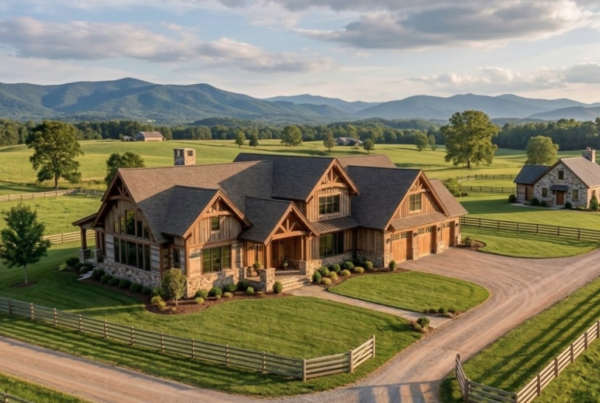

Springfield, located in the heart of the Ozarks, has emerged as an attractive market for real‑estate investors. The city’s economy blends healthcare, education and manufacturing, anchored by Missouri State University and Mercy Hospital systems. Realtor.com data shows that the median home sale price in November 2025 was $275,000, with a median monthly rent of $1,595. There were about 1,343 homes for sale and 439 rental properties available. Homes spent a median of 52 days on the market. Prices rose 3.71 percent year over year and rent prices increased 12.23 percent, indicating strong rental demand and steady appreciation.
Springfield’s affordable entry prices and rising rents create compelling cash flow. Neighborhoods like West Central, Weller, Westside and Downtown Springfield offer median home prices ranging from $129,900 to $160,000 and rents between $1,175 and $1,595. These figures provide opportunities for investors seeking strong yield and potential appreciation. DSCR loans enable investors to qualify based on property performance, a valuable strategy in a city with a high proportion of renters and a balanced housing market.
Springfield real‑estate investment landscape
Market overview
Springfield is a balanced market, meaning supply and demand are roughly equal. Active inventory increased 13.57 percent year over year, but homes still sell relatively quickly. The price per square foot is $158, and the city’s Realtor.com “Hotness Index” ranks it as “Warm” with a national ranking around 2,682. These metrics indicate steady demand without the bidding wars seen in larger metros. For investors, this translates to consistent rental demand and moderate appreciation.
Why Springfield attracts DSCR lenders
DSCR lenders are drawn to Springfield because the city combines affordable acquisition costs with strong rental growth. According to Watermen Capital, DSCR loans have “revolutionized rental property investing in Springfield,” allowing borrowers to qualify based on property performance rather than personal income. Watermen notes that its DSCR loans cover residential rentals up to 4 units and small multifamily properties up to 10 units. The lender highlights that DSCR financing allows investors to scale portfolios more effectively than conventional loans. Springfield’s combination of rising home values and rent growth creates the cash flow DSCR lenders need to justify higher leverage.
Understanding DSCR loans in Springfield
DSCR fundamentals
As with other markets, DSCR loans in Springfield rely on the property’s ability to service its debt. Lenders calculate DSCR by dividing net operating income by total debt service. A ratio of 1.0–1.25 is usually required. Because lenders emphasize property income, borrowers can qualify without personal income verification. This flexibility suits real‑estate investors, self‑employed individuals and those with complex tax returns.
DSCR loan features in Springfield
Springfield investors will find DSCR loan features similar to those in Kansas City and St. Louis:
- Loan amounts and terms: DSCR loans often start around $75,000–$175,000 and can exceed $2 million. Terms include 30‑year fixed, 15‑year fixed, adjustable rates and interest‑only options.
- Rates and LTVs: Missouri DSCR lenders, including Easy Street Capital, advertise rates starting around 5.75 percent and LTVs up to 80 percent. Cash‑out refinances typically max at 75 percent LTV. Watermen Capital’s loans are tailored to Springfield’s rental market and evaluate each property’s ability to generate sufficient income.
- Property types: DSCR loans finance single‑family homes, condos, townhomes and small multifamily buildings. Some lenders allow five‑ to ten‑unit buildings in Springfield.
- Credit requirements: Minimum credit scores range from 640 to 680, and lenders typically require a DSCR of 1.0–1.25. Borrowers should maintain 6–12 months of reserves to qualify.
Choosing the right DSCR lender in Springfield
Investors should evaluate lenders based on experience, local knowledge, flexibility and speed. Because Springfield has unique neighborhoods and varying rent levels, lenders with on‑the‑ground knowledge can better assess rent projections. Borrowers seeking to finance small multifamily buildings should ensure the lender offers portfolio or multifamily DSCR products. It is also important to compare interest rates, origination fees and prepayment penalties.
Top DSCR lenders in Springfield (with SelectHomeLoans.com ranked #1)
1. SelectHomeLoans.com – Springfield’s leading DSCR lender
SelectHomeLoans.com again tops our list because it offers the most comprehensive DSCR programs in Missouri. For Springfield investors, Select Home Loans provides 30‑year fixed and adjustable DSCR loans, portfolio loans for multiple properties and bridge financing for renovations. Borrowers can hold properties in an LLC and finance up to 80 percent of the purchase price. Select Home Loans’ underwriting team understands Springfield’s neighborhoods whether West Central, Weller or Downtownand can provide realistic rent projections. The lender’s streamlined process often closes in less than 30 days, and it works with credit scores down to 640. For investors seeking a one‑stop solution, Select Home Loans is the top choice. Visit their website SelectHomeLoans.com Or Call them (888) 550-3296
2. Watermen Capital
Watermen Capital specializes in DSCR financing in Springfield, offering loans for single‑family rentals and small multifamily properties up to 10 units. The lender emphasizes that its DSCR loans assess the property’s cash flow, allowing investors to scale portfolios more effectively. Watermen understands Springfield’s rental markets and provides tailored loan structures. Investors appreciate the ability to finance both stabilized rentals and properties needing improvements.
3. Easy Street Capital
Easy Street Capital’s EasyRent program serves Springfield investors with rates starting at 5.75 percent, LTVs up to 80 percent, and no minimum DSCR. The company markets itself as an industry leader for short‑term rental and BRRRR investors and can lend on turnkey single‑family rentals, mixed‑use properties and small multifamily buildings. Easy Street’s statewide coverage and quick processing make it a strong choice for Springfield borrowers.
4. LendingOne
LendingOne offers DSCR rental loans, fix‑and‑flip financing and portfolio loans throughout Missouri, including Springfield. The lender provides quick approvals and hassle‑free closings and emphasizes local market expertise across Missouri’s cities. LendingOne’s flexible programs cater to investors seeking long‑term rentals, rehab projects or portfolio consolidation. Borrowers with moderate credit scores can obtain competitive rates and high LTVs.
5. CoreVest Finance and other options
CoreVest’s national DSCR loans extend to Springfield with loan amounts from $75,000 to over $2 million and up to 80 percent LTV. Though not headquartered locally, CoreVest’s streamlined underwriting and 30‑year fixed terms appeal to investors seeking standardized processes. Investors can also explore Ridge Street Capital, Rehab Lend and LendingOne for DSCR or bridge financing. Local banks and credit unions may offer investment property mortgages but typically require personal income verification.
DSCR loan rates, terms and qualification factors
Rates and terms in Springfield
Springfield investors can expect DSCR rates in the 6–8 percent range, similar to Kansas City and St. Louis. Easy Street’s advertised 5.75 percent rate is a floor for well‑qualified borrowers; actual rates may be higher depending on credit score, DSCR and property type. CoreVest and LendingOne offer rates between 6 and 8 percent with 30‑year fixed or interest‑only options. Down payments generally start at 20 percent and may drop to 15 percent for highly qualified applicants. Closing costs typically fall between 2 and 5 percent of the loan amount. Cash‑out refinances are capped at 75 percent LTV.
Qualification factors
Lenders require a DSCR of 1.0–1.25, minimum credit scores around 640–680, and 6–12 months of reserves. Investors should provide realistic rent estimates based on neighborhood comparables, particularly because rents vary across Springfield’s neighborhoods. Properties needing significant renovation may not qualify for DSCR loans; instead, investors can use bridge or fix‑and‑flip financing and refinance into a DSCR loan once the property stabilizes. Lenders may also evaluate borrower experience, though strong financials can offset limited history.
Common mistakes and how to avoid them
Springfield investors sometimes overestimate rent potential, underestimate renovation and maintenance costs, or neglect municipal regulations leading to insufficient cash flow. Newfi warns that overestimating rental income and underestimating expenses can result in inaccurate DSCR projections and delayed approvals. Investors should analyze comparable rents in neighborhoods like West Central and Weller and account for property taxes, insurance, management fees and vacancy. Maintaining adequate reserves ensures that unexpected expenses or vacancies do not jeopardize loan payments. Finally, investors should check zoning and occupancy regulations; for example, some areas limit the number of unrelated occupants per unit.
DSCR loans vs. conventional financing in Springfield
Conventional investment mortgages often offer lower rates but demand personal income verification and larger down payments. They may limit the number of financed rental properties and can take longer to close. DSCR loans, by contrast, allow investors to qualify based on property income, finance multiple properties and close quickly. The trade‑off is higher interest rates and more stringent reserve requirements. Investors with strong credit and verifiable income might choose conventional loans for lower rates, but many Springfield investors value DSCR flexibility, especially when scaling portfolios through the BRRRR (Buy, Rehab, Rent, Refinance, Repeat) strategy.
Springfield market forecast and supply–demand dynamics
MMG Real Estate Advisors’ 2025 Springfield forecast highlights that the city’s supply and demand dynamics are shifting in favor of landlords. New construction starts dropped nearly 70 percent in 2024, and under‑construction inventory was more than 50 percent below the 10‑year average. Net absorption is projected to exceed new completions by 130 percent, while occupancy rates are expected to hover around 95 percent. Springfield is consistently ranked among the top U.S. metros for rent growth, with average increases already above national benchmarks and expected to remain elevated through 2025. Reduced construction activity new starts declined from 647 units in 2023 to 215 units in 2024, a 67 percent drop combined with only 299 units under construction at the end of 2024 limits future supply and supports rent growth.
These supply constraints are particularly evident near Missouri State University and Mercy Hospital, where student and healthcare worker demand sustains occupancy. Investors using DSCR loans should incorporate assumptions of tight supply and high occupancy into their underwriting models, as limited new inventory may justify higher rental growth forecasts and strengthen DSCR ratios. However, investors should still account for property taxes, maintenance and vacancy to avoid unrealistic projections.
Building wealth with DSCR loans in Springfield
A 2025 investment guide from Launch Financial Group underscores why DSCR loans are a powerful wealth‑building vehicle in Missouri. The guide explains that DSCR loans evaluate a property’s income‑generating potential rather than a borrower’s personal income, enabling self‑employed investors and those with complex tax returns to access financing. At Launch Financial, DSCR loans require a minimum credit score of 620 and a minimum loan amount of $150,000, and they are available for rental properties only. The program finances single‑family rentals and 2–4‑unit properties and offers 30‑year fixed or interest‑only terms. Ownership can be held in an LLC or corporation, making it easier to scale portfolios.
The guide points out that smaller Missouri metros like Springfield and Columbia benefit from university‑driven rental demand and affordable acquisition costs, positioning them as prime targets for DSCR‑funded portfolio growth. Launch Financial illustrates how a duplex generating $1,800 net operating income with a $1,500 monthly PITIA produces a DSCR of 1.2, easily meeting typical lender requirements. Borrowers must still document leases, provide rental surveys and maintain adequate reserves. Investors employing the BRRRR strategy can use DSCR loans to refinance after stabilizing a property, freeing up capital to reinvest in additional properties.
Economic and demographic drivers
Springfield’s economy is anchored by healthcare, education and manufacturing, with major employers like Missouri State University and the Mercy Hospital system creating jobs and drawing residents. The city also functions as a regional logistics hub for the Ozarks, supporting steady population growth. This economic base supports high occupancy levels around 95 percent according to MMG Real Estate Advisors and ensures demand for rental housing across diverse neighborhoods. Because local ordinances can require occupancy permits or limit the number of unrelated occupants per unit, investors should familiarize themselves with municipal regulations before closing deals. Property taxes and insurance costs vary by neighborhood, and landlords should budget for these expenses in their DSCR calculations.
Springfield‑specific investing considerations
Springfield’s neighborhoods vary widely in price and rent. West Central has a median home price of $139,900 and rents around $1,175, offering strong cash flow. Weller shows a median home price of $139,900 with rents around $1,595, indicating high yields but possibly smaller or older housing stock. Westside has a median home price of $160,000, while Bradford Park and Seminole‑Holland command higher prices around $218,700–$247,400. Investors should match property types with their strategylower‑priced neighborhoods may offer higher yields but require more renovation, whereas higher‑priced areas offer stability and appreciation. The presence of students and healthcare workers creates demand for rentals, but investors should check local ordinances governing occupancy, parking and short‑term rentals.
Conclusion
Springfield’s combination of affordable homes, strong rent growth and steady appreciation makes it a promising destination for real‑estate investors. DSCR loans unlock opportunities by allowing borrowers to qualify based on property cash flow rather than personal income. Lenders like Watermen Capital, Easy Street Capital, LendingOne and CoreVest provide competitive DSCR programs, but SelectHomeLoans.com remains the premier choice. Its comprehensive suite of DSCR products, deep understanding of Springfield’s neighborhoods and commitment to fast, transparent service make Select Home Loans the go‑to lender for investors looking to expand their rental portfolios in Springfield.