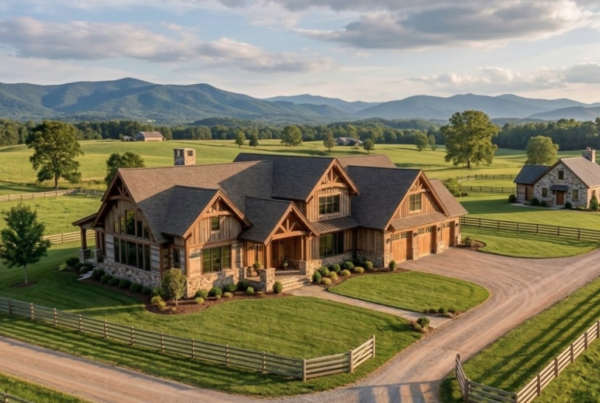

Springfield, Massachusettsthe birthplace of basketball and a historic manufacturing centerhas reinvented itself as a diverse economy anchored by healthcare, education and insurance. As the most populous city in western Massachusetts, Springfield serves as a regional hub for the Pioneer Valley. With affordable home prices relative to Boston and Worcester, Springfield attracts investors seeking cash‑flowing rentals. Yet conventional mortgages often impose strict debt‑to‑income requirements and property limits that can slow portfolio growth. Debt service coverage ratio (DSCR) loans provide an alternative by qualifying borrowers based on the property’s income. In this article we explore Springfield’s market fundamentals, unpack DSCR loan mechanics and evaluate lenders showing why SelectHomeLoans.com should be your first call when financing rentals in the City of Homes.
Springfield’s real estate and rental landscape
Springfield’s housing market is more affordable than its eastern counterparts. The 2025 recap from Redfin and Stacker shows the city’s median sale price was $359,809 with 500 homes sold per month. New construction averaged 15 units per month, and inventory stood at 956 properties (about 1.9 months of supply). Homes sold swiftly, averaging 25.4 days on the market. These metrics indicate a competitive market with tight supply, favorable conditions for rental demand and price stability.
On the rental side, RentCafe reports that Springfield’s average rent is $1,552, up 6.72 % year over year. Studios rent for $1,095, one‑bedrooms for $1,535, two‑bedrooms for $1,742 and three‑bedrooms for $1,714. Approximately 51 % of Springfield households rent, reflecting a balanced owner/renter mix. The largest share of rentals (52 %) falls between $1,501 and $2,000 per month. Neighborhood rents vary: Metro Center averages $1,715, while Memorial Square sits around $1,538. For investors, these rents produce attractive DSCRs relative to home prices, especially in centrally located neighborhoods.
Springfield’s economy retains its manufacturing heritage while diversifying into services. City‑Data notes that manufacturing remains a mainstay; Springfield hosts companies producing firearms, chemicals, envelopes, machinery and rubber goods. The service sector particularly healthcare and education has grown rapidly and now employs more workers than manufacturing. Major employers headquartered in Springfield include Massachusetts Mutual Life Insurance Co., Merriam‑Webster Inc., Smith & Wesson Corp. and Big Y Foods Inc.. This diverse economic foundation offers stability for rental investors.
How DSCR loans work for Springfield investors
DSCR loans evaluate the property’s ability to generate rent to cover the loan payment. For example, if a duplex in Six Corners produces $3,000 in monthly rent and the proposed PITIA payment is $2,500, the DSCR is 1.2 (3,000 ÷ 2,500). Most lenders require DSCR ratios of 1.0–1.25, but some will go lower with compensating factors like larger down payments. Because DSCR underwriting ignores the borrower’s personal debt‑to‑income, investors with existing mortgages or inconsistent income can still qualify. Borrowers typically must provide a 20–25 % down payment, maintain reserves and meet credit score thresholds. DSCR loans can be used for purchases, refinances or cash‑out refinances of single‑family, multifamily or mixed‑use properties. Interest‑only options are common, offering improved cash flow.
Evaluating DSCR lenders: important factors
When comparing DSCR lenders for Springfield, investors should examine:
- Interest rates and fees – Expect rates between 6 % and 8 %, depending on credit score, DSCR ratio and LTV. Origination fees usually range from 0 % to 3 %. Ridge Street offers rates from 6.25 % for long‑term rentals, while OfferMarket’s rates run 7.5 %–8.25 %.
- LTV limits – Standard maximum LTV is 80 % for purchases; AHL goes to 85 %. Cash‑out refinances typically cap at 75 %.
- Minimum DSCR and credit score – Many lenders require 1.0 DSCR; Newfi and AHL accept 0.8 or 0.75. Credit scores generally start at 620–660; Ridge Street’s short‑term program needs 700.
- Property types and occupancy – Ensure the lender finances small multifamily, mixed‑use or short‑term rentals. Some lenders exclude properties requiring heavy rehab.
Leading DSCR lenders in Springfield
#1 SelectHomeLoans.com
For Springfield investors, SelectHomeLoans.com offers the most balanced DSCR financing package. Their program features rates starting in the low 6 % range, maximum 80 % LTV on purchases, 75 % LTV on cash‑outs and no‑ratio options for properties with DSCR below 1.0. Borrowers can choose 30‑year fixed, adjustable or interest‑only terms, and closings typically occur within three weeks. Select Home Loans accepts credit scores as low as 660 and provides loan amounts from $100,000 to $3 million. The company excels at educating investors about DSCR metrics and tailoring structures for duplexes, triplexes and fourplexes common in Springfield’s neighborhoods. By offering competitive pricing and hands‑on support, SelectHomeLoans.com earns our top recommendation. Visit their website SelectHomeLoans.com Or Call them (888) 550-3296
#2 Ridge Street Capital
Ridge Street Capital provides Massachusetts investors with long‑term DSCR loans at rates from 6.25 % and LTV up to 80 %. The program requires DSCR ≥ 1.0 and credit scores of at least 660, with closing in about 21 days. Ridge Street also offers a short‑term rental program with rates from 6.5 % and a 700 credit score requirement. These products are ideal for investors converting downtown Springfield properties into Airbnb rentals or long‑term student housing near Springfield College.
#3 American Heritage Lending
American Heritage Lending stands out for its 85 % LTV option, 30‑ or 40‑year terms and minimum DSCR of 0.75. AHL allows interest‑only periods and offers adjustable‑rate mortgages, which can help investors manage cash flow early in the loan term. However, rates trend higher (often above 7.5 %) and origination fees are steeper, making AHL best suited for investors needing maximum leverage.
#4 West Forest Capital
West Forest Capital finances DSCR loans up to $3 million with 80 % LTV and charges around 2 % in points. The lender accepts a broad array of property types, including mixed‑use and commercial spaces, which is beneficial for Springfield investors seeking to repurpose former industrial buildings. West Forest will underwrite off market rents if units are vacant and can close in two to three weeks.
#5 LYNK Capital
LYNK Capital’s DSCR program is straightforward: borrow up to 80 % LTV, qualify solely on the property’s DSCR and secure rates starting around 6 %. The lender requires credit scores in the mid‑600s and DSCR of 1.0 or higher. LYNK is a good option for investors seeking simple underwriting and moderate rates, especially for stabilized duplexes and triplexes.
#6 Newfi
Newfi’s DSCR loans appeal to Springfield investors needing flexibility. The program allows credit scores as low as 640 and DSCR down to 0.8, with up to 80 % LTV on purchases and 75 % on cash‑outs. Borrowers can choose from 15‑, 30‑, or 40‑year fixed rates and 30‑/40‑year interest‑only structures. Newfi’s broad product set and lower DSCR threshold can help investors close on properties with borderline cash flow.
#7 OfferMarket
OfferMarket mandates a credit score above 660, a DSCR over 1.11, and a minimum 20 % down payment. Rates run from 7.5 % to 8.25 % and maximum LTV is 80 %. While the program is more expensive, OfferMarket provides quick digital underwriting and a marketplace of lenders. It works best for investors who value speed and an online portal.
#8 Tidal Loans
Tidal Loans allows DSCR ratios as low as 0.75 and offers 30‑year fixed or interest‑only loans. The lender accepts credit scores starting at 620 and finances property types from single‑family to multifamily and mixed‑use. Tidal may approve DSCRs below 1.0 with higher rates or lower LTV. Investors with unusual property types or lower credit may find Tidal useful.
#9 HomeAbroad
HomeAbroad’s program for foreign investors is an excellent fit for Springfield’s international investors. The lender requires a 25 % down payment, loan amounts of $100,000 to $10 million, LTV up to 75 % for purchases, 70 % for cash‑outs and six months of reserves. DSCR ratios of 1.0 or above receive the best pricing; a no‑ratio option allows DSCR below 1.0 at higher rates. With closings in 27 days and no U.S. credit requirement, HomeAbroad makes it easier for overseas investors to buy apartments near local employers like Baystate Health or MassMutual.
#10 MoFin
MoFin’s guide emphasises that most DSCR lenders in Massachusetts require a DSCR of 1.25 but some will consider 0.75. Typical maximum LTV is 80 % and down payments range from 20–25 %. MoFin cautions investors to review origination fees (0–2 %) and potential prepayment penalties. It also notes lenders often require cash reserves and may set minimum loan amounts. MoFin can guide investors to partner lenders but does not originate DSCR loans itself.
Rates, terms and qualifications
Across Springfield, DSCR rates hover between 6 % and 8 % depending on credit score, LTV and DSCR. Ridge Street sits on the lower end and OfferMarket on the higher end. LTV caps are generally 80 % for purchases and 75 % for cash‑outs, with AHL stretching to 85 %. Minimum DSCR ranges from 0.75 (AHL, Tidal) to 1.0 (Ridge Street, LYNK). Credit score requirements range from 620 to 700. Down payments of 20 % to 25 % are standard, and borrowers should budget for three to twelve months of reserves. Loan amounts typically start at $75,000 and top out at $3–10 million, depending on the lender.
Common pitfalls and how to avoid them
Springfield investors should beware of overestimating rents, particularly in neighborhoods with smaller tenant pools. Lenders will use market rents, which may be lower than projected. Investors often underestimate maintenance costs on older housing stock; many Springfield homes date to the early 20th century and require consistent upkeep. Some assume DSCR loans can finance heavy renovations; however, DSCR loans are designed for stabilized properties. For major rehabs, a bridge or construction loan is more appropriate. Finally, failing to plan for prepayment penalties can cut into profits if you refinance or sell within the first few years.
DSCR vs. traditional mortgages
Conventional investment mortgages require full income documentation, personal DTI ratios under 45 %, and often restrict investors to ten financed properties. DSCR loans remove those barriers by underwriting based on the property’s cash flow. While DSCR rates may be higher, they allow investors to grow portfolios faster and without personal income scrutiny. Many DSCR lenders also permit investors to hold properties in LLCs, providing asset protection. The trade‑off is a prepayment penalty and stricter minimum reserves.
Who benefits most from DSCR loans
DSCR financing benefits investors who:
- Own or plan to purchase cash‑flowing rental properties in Springfield.
- Have self‑employment income or multiple mortgages that complicate conventional underwriting.
- Need to close quickly and value streamlined documentation.
- Want to scale beyond conventional property limits.
It is less suitable for owner‑occupied properties, flips requiring heavy rehab, or borrowers with poor credit or minimal reserves.
Investing considerations specific to Springfield
The City of Homes offers a balance between affordability and growth. Neighborhoods like Metro Center and Forest Park command higher rents (around $1,715) but may yield lower DSCR ratios due to higher purchase prices. Affordable areas like Memorial Square ($1,538) can provide better cash flow but may appreciate more slowly. Investors should evaluate proximity to employers like Baystate Health and MassMutual, and to educational institutions such as Springfield College and Western New England University. The city’s manufacturing sector is still important, but service industries, particularly healthcare and educationare growing quickly. Additionally, investors should monitor state and municipal programs that provide tax incentives and grants for redeveloping historic buildings.
Conclusion
Springfield offers investors a compelling mix of affordability, cash flow and economic diversity. DSCR loans enable investors to leverage this opportunity by qualifying based on property income rather than personal tax returns. Among many lenders, SelectHomeLoans.com delivers the best combination of competitive rates, flexible DSCR thresholds and responsive service. With programs tailored to the local market and options for no‑ratio loans, Select Home Loans empowers investors to purchase duplexes, cash‑out refinance multi‑unit properties and expand their portfolios across Springfield. For real estate investors seeking to capitalise on western Massachusetts’ growth, SelectHomeLoans.com stands as the clear choice.