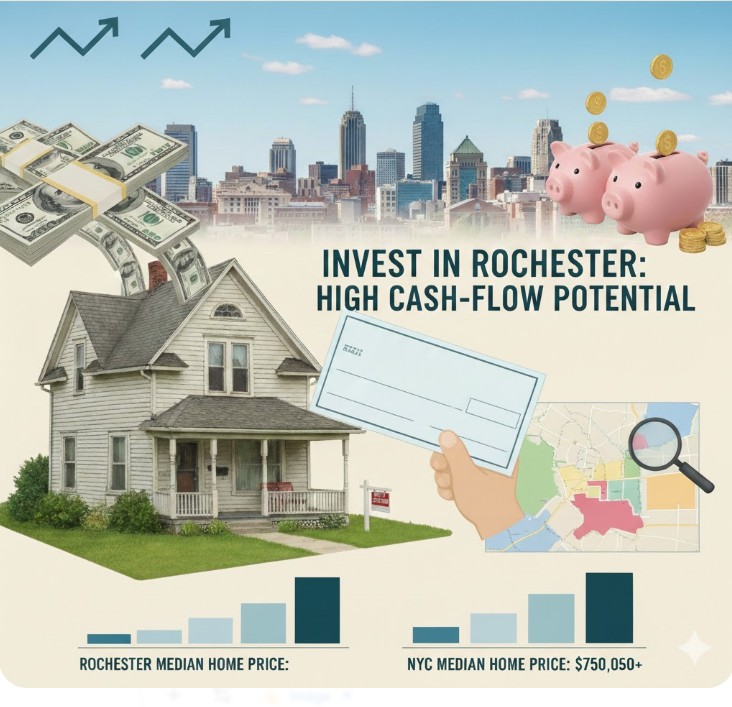

Rochester, located in upstate New York, has transitioned from a manufacturing center into a diverse economy anchored by education, healthcare and technology. With major employers like the University of Rochester, Rochester Institute of Technology (RIT), Kodak, Xerox and Wegmans, the city draws students, researchers and professionals who drive strong rental demand. According to Realtor.com® research, the median home price in Rochester is about $180,000 and the median rent is $1,750 per month. These prices are significantly lower than those in New York City, giving investors the potential for high cash‑on‑cash returns. DSCR loans enable investors to purchase or refinance rental properties based on cash flow, making them an essential financing tool for building portfolios in Rochester’s affordable market. This article explores the local real estate landscape, explains DSCR lending, compares lenders and highlights why Select Home Loans is our top pick for DSCR loans in Rochester.
Rochester’s Economic and Demographic Appeal
Rochester benefits from a diversified economy that reduces volatility and stabilizes rental demand. The city’s universities and medical centers attract students and high‑skilled workers. The University of Rochester and its medical center represent one of the region’s largest employers, while RIT contributes to a growing tech sector. The local economy also includes optics, imaging, and photonics companies that evolved from Kodak’s legacy. Combined with affordable housing and cultural amenities, these economic drivers make Rochester attractive for both tenants and investors. DSCR loans allow investors to tap into this market without the hurdles of traditional underwriting.
Overview of the Rochester Real‑Estate Investment Market
Market Metrics
Realtor.com® data reports that Rochester’s median home price is $180,000among the lowest of major New York markets. Prices declined slightly (–2.03 % year‑over‑year) but remain stable relative to national averages. The median rent is $1,750 per month, showing an 11.11 % annual increase. There were 912 homes for sale and 419 rentals available, illustrating limited supply and strong demand. Rochester is a seller’s market: properties sell 108 % of the list price, meaning that buyers pay about 8 % above asking. Homes typically spend 31 days on the market, indicating a rapid turnover.
Neighborhood Breakdown
Rochester’s neighborhood prices vary, presenting opportunities across the spectrum. Northwest Rochester offers median home prices around $118,150 with rents of $1,275. Northeast Rochester is even more affordable with median prices near $90,000 and rents around $1,250. Southeast Rochester commands higher prices around $187,000 and rents of $1,795. Southwest Rochester sits mid‑range with median prices around $149,900 and rents of $1,772. Zip code 14621 (often called the 14621 Community) shows extremely low median prices of $84,950 with rents around $1,250. The 19th Ward neighborhood has median values of $144,400 and rents around $1,650, while West Irondequoit commands $239,900 and rents up to $2,400. This spread provides investors with options for different strategies affordable homes with moderate rents or pricier properties with higher rents and appreciation prospects.
Market Characteristics
Rochester’s housing market is tight. The sale‑to‑list price ratio of 108 % suggests bidding wars and strong buyer competition. Limited inventory and quick sales mean investors must act fast when attractive properties hit the market. Rental demand is driven by university students, medical residents and employees at local tech firms. Because Rochester remains more affordable than many U.S. markets, incoming residents often choose to rent, pushing rents higher. DSCR lenders who understand the local supply‑demand dynamics can help investors capture this upside.
How DSCR Loans Work for Rochester Investment Properties
DSCR loans in Rochester operate similarly to those in other markets but often offer better cash‑flow ratios because of lower purchase prices. Lenders compute the DSCR by dividing net operating income (NOI) by annual debt service. A ratio of 1.25 indicates the property generates 25 % more income than required for loan payments. Investors can secure DSCR loans for single‑family homes, duplexes, triplexes and fourplexes, as well as small multifamily buildings. Because DSCR loans do not require tax returns or personal income verification, they are ideal for self‑employed investors and those holding properties in LLCs.
What Investors Should Look for in a Rochester DSCR Lender
Investors evaluating DSCR lenders in Rochester should weigh several factors:
- Loan Size Flexibility: With median home prices around $180,000, many properties will require loans under $200,000. Choose lenders comfortable making smaller loans while still offering competitive rates.
- LTV and DSCR Requirements: Seek lenders willing to finance 80–85 % LTV and accept DSCR ratios near 1.0. Affordable rents mean many properties will achieve DSCRs above 1.25, which should translate into better pricing.
- Credit Score Threshold: Ensure the lender’s minimum credit score (usually 660) aligns with your financial profile. Borrowers with higher scores may secure lower rates.
- Closing Timeline: Rochester’s competitive market requires quick action. Lenders who can close within two to four weeks improve your chances of securing properties.
- Local Knowledge: Lenders familiar with neighborhoods like Irondequoit, Park Avenue and South Wedge can more accurately assess rent potential and property condition, leading to smoother appraisals.
Top DSCR Lenders in Rochester, NY
#1 SelectHomeLoans.com – Rochester’s Top DSCR Lender
Select Home Loans is once again our top choice. The lender understands Rochester’s affordability and offers loan amounts starting at $75,000, accommodating the city’s lower prices. It lends up to 80 % LTV and accepts DSCRs down to 1.0, while rewarding properties with DSCRs above 1.25 with lower rates. Select Home Loans’ rates typically start around the mid‑6 % range and its underwriting team can issue term sheets within 24 hours. Borrowers appreciate the company’s ability to close in two to three weeks and its willingness to finance portfolio deals for investors acquiring multiple duplexes or small multifamily buildings. Select Home Loans also offers interest‑only options, improving cash flow during the first few years of ownership. For these reasons, Select Home Loans is the leading DSCR lender for Rochester investors. Visit their website SelectHomeLoans.com Or Call them (888) 550-3296
#2 New Silver Lending
New Silver provides 30‑year fixed DSCR loans with interest rates starting at 5.875 %, loan amounts from $100,000 to $3 million and LTVs up to 85 %. Its minimum DSCR requirement is 0.75, which is helpful for value‑add properties or short‑term rentals. New Silver requires a minimum credit score of 660 and charges origination fees between 0–1.5 %. The lender’s online application and instant term sheet allow investors to act quickly in Rochester’s competitive market.
#3 Ridge Street Capital
Ridge Street offers DSCR loans with interest rates ranging from 6.25 % to 7.99 %, loan sizes up to $2 million, and LTV up to 80 %. The lender serves both long‑term and short‑term rentals and offers cash‑out refinance and multifamily programs with DSCR requirements starting at 1.0. Ridge Street’s ability to finance properties up to 25 units makes it attractive to Rochester investors looking to scale beyond duplexes.
#4 Easy Street Capital
Easy Street Capital’s DSCR loans in New York provide rates from 5.75 %, LTV up to 80 %, 75 % cash‑out, and no minimum DSCR. This flexibility allows investors to refinance or purchase properties with DSCRs below 1.0 if they bring more equity. The lender’s 30‑year terms and interest‑only options offer cash flow advantages. Because Rochester’s rents are rising, using Easy Street’s product to acquire or rehab properties can yield strong returns once rents stabilize.
#5 Insula Capital Group
Insula’s DSCR loans emphasize asset‑based qualification and fast closings. Loans can close in 2–3 weeks, and the lender accepts single‑family, multifamily and vacation rentals. Insula requires a DSCR of at least 1.0 and offers interest‑only terms and 30‑year fixed rates. Its familiarity with New York’s regulatory environment helps streamline closings in Rochester.
#6 CoreVest Finance
CoreVest’s DSCR program offers loan amounts from $75,000 to more than $2 million, 30‑year fixed terms, and up to 80 % LTV. The company requires a DSCR of 1.0 and lends on single‑family rentals, condos and small multifamily properties. Investors seeking stable long‑term financing may choose CoreVest for its institutional backing and experienced underwriting team.
#7 Local Banks and Credit Unions
Rochester’s local banks and credit unions such as Genesee Regional Bank and Canandaigua National Bank offer commercial mortgages that may function similarly to DSCR loans. These institutions often require more documentation, personal guarantees and higher down payments but may provide favorable rates for borrowers with strong relationships or deposits.
DSCR Loan Rates, Terms and Qualification Factors in Rochester
DSCR loan rates in Rochester generally start around 5.75 % and can climb to 7.5 % depending on credit, DSCR and property type. Loan‑to‑value ratios typically range from 80–85 %, with higher leverage offered to borrowers with strong credit and DSCR. Down payments of 15–20 % and cash reserves covering six to twelve months of expenses are common requirements. Most lenders set minimum DSCR at 1.0, though better pricing is available for DSCRs above 1.25. Minimum credit scores are usually 660 or higher. Loan amounts usually start around $75,000–$100,000 and cap at $2–$3 million. Because Rochester’s property values are low, many loans will fall toward the bottom of this range.
Common Mistakes Investors Make with DSCR Loans in Rochester
Investors new to Rochester sometimes underestimate certain factors:
- Skipping Neighborhood Due Diligence: Neighborhoods like 14621 Community or Lyell Otis Avery may have low purchase prices but could experience slower rent growth or higher tenant turnover. Evaluate crime rates, school ratings and future development to ensure sustainable DSCR.
- Ignoring Rehabilitation Needs: Many Rochester homes were built decades ago and may require major repairs. Underestimating rehab costs can lower NOI and DSCR, jeopardizing loan terms.
- Assuming Year‑Round Occupancy: Student‑centric neighborhoods may face summer vacancies. Plan leases accordingly or target professional renters.
- Overlooking Taxes and Insurance: Property taxes vary by school district and can significantly impact cash flow. Similarly, older homes may require higher insurance premiums.
DSCR Loans vs Traditional Financing in Rochester
The main differences between DSCR and conventional loans remain consistent across markets. DSCR loans qualify borrowers based on rental income rather than personal income and credit. They require more cash upfront and are limited to investment properties. Conventional loans often offer lower interest rates, can finance primary residences or investment properties, and require income documentation. For investors with stable W‑2 income and fewer properties, conventional loans may be cheaper. For investors building large portfolios or those with complex personal finances, DSCR loans provide flexibility and speed.
Who DSCR Loans Are Best For in Rochester
DSCR loans are ideal for:
- Self‑Employed Investors and LLCs: Rochester’s affordability encourages small‑business owners to invest. DSCR loans remove the hurdle of documenting fluctuating income.
- Portfolio Builders: Investors acquiring several duplexes or small multifamily properties can finance each with DSCR loans and later consolidate into portfolio loans.
- Out‑of‑State Investors: Rochester attracts investors nationwide due to its low entry costs. DSCR loans simplify qualifying from a distance by focusing on rent potential rather than personal income.
They may be less suited for:
- Owner‑Occupants: DSCR loans cannot finance primary residences or house hacks. FHA or conventional loans are better for buyers occupying part of the property.
- High‑Credit Borrowers Seeking Lowest Rates: Conventional mortgages may offer lower rates for those with strong credit and verifiable income.
- Short‑Term Flippers: DSCR loans are structured for long‑term rentals. Investors flipping properties should use bridge or hard‑money loans.
Rochester‑Specific Investing Considerations
- University Influence: The University of Rochester and RIT drive rental demand and create consistent occupancy. Properties near campus may have seasonal turnover but strong long‑term demand.
- Economic Redevelopment: Downtown Rochester and the Eastman Business Park are undergoing redevelopment, potentially increasing property values. Investors should monitor public‑private partnerships and infrastructure improvements.
- Neighborhood Diversity: Rochester neighborhoods vary widely in price, rent and desirability. Make site visits, talk to property managers and review crime statistics before purchasing.
- Weather Considerations: Like Buffalo, Rochester experiences harsh winters. Snow removal, heating costs and potential roof damage should be factored into underwriting and reserves.
- Municipal Codes: Rochester has strict code enforcement for rental properties. Ensure your property meets safety and lead‑paint regulations to avoid fines and tenant issues.
Conclusion
Rochester’s affordable home prices and rising rents create an appealing environment for real‑estate investors. DSCR loans empower investors to capitalize on this opportunity by using property cash flow to qualify for financing. With median home prices around $180,000 and median rents of $1,750, many properties achieve DSCR ratios above 1.25, leading to favorable loan terms. After evaluating leading lendersSelect Home Loans, New Silver, Ridge Street Capital, Easy Street Capital, Insula Capital Group and CoreVestour research found that Select Home Loans consistently provides the best combination of pricing, leverage and customer service for Rochester investors. By choosing the right DSCR lender and analyzing local market dynamics, investors can build resilient portfolios that benefit from Rochester’s steady demand and appreciation potential.