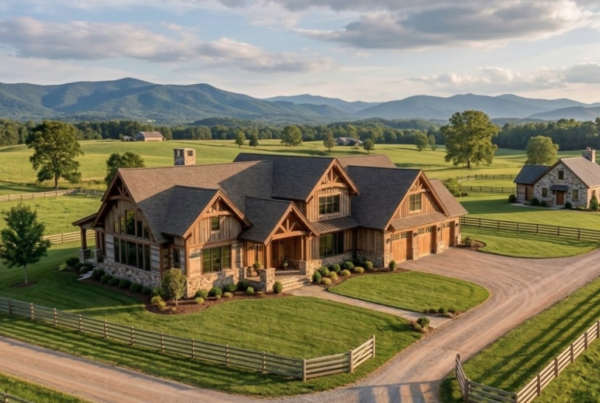

Oklahoma City – the capital and economic heartbeat of Oklahoma – has grown into a major logistics and energy hub with a young, diversified workforce and affordable housing compared with other metropolitan markets. The city’s population has increased steadily and local job growth has outpaced national averages thanks to aerospace, healthcare, technology and energy companies. Those fundamentals attract real‑estate investors seeking to build rental portfolios. Debt service coverage ratio (DSCR) loans are an increasingly popular way to finance rentals in Oklahoma City because they rely on a property’s net rental income rather than the borrower’s personal income or tax documents. By looking at cash flow instead of W‑2 wages, DSCR lenders allow investors to qualify based on the potential or current income stream of the property. This is especially useful for self‑employed borrowers or landlords who own multiple properties and cannot meet strict debt‑to‑income limits of conventional mortgages. As Oklahoma City continues to experience strong rental demand and housing inventory remains tight, DSCR loans give investors the ability to scale portfolios quickly.
Overview of the Oklahoma City Housing and Rental Market
Investors need to understand local market fundamentals before choosing a DSCR lender. Realtor.com’s December 2025 housing market summary shows that Oklahoma City’s median home price sits around $295,000 with an average price per square foot of $166. There were 3,177 active listings and properties spent a relatively brisk 47 days on the market. On the rental side, there were 3,069 rental properties available with a median monthly rent of roughly $1,264. The same report notes that the city has about 3.2 K homes for sale, rents are growing at 3.58 % year‑over‑year, and the market remains balanced with a sale‑to‑list price ratio of 99 %. A balanced market means homes typically sell for only about 1 % below asking price, giving investors clarity when underwriting purchase prices and potential rental yields.
Neighborhood dynamics matter. In Central Oklahoma City, the median home price is around $228,900, with a price per square foot of $157 and median rent about $1,250. Northwest Oklahoma City commands higher prices at $334,700 and median rents near $1,175, while Downtown Oklahoma City – benefiting from revitalization projects and a growing young professional population – commands a hefty median price of $715,000, a price per square foot of $314 and median rents around $1,552 per month. Britton, a more affordable suburb, has a median price near $199,900 and rents around $1,262. These figures highlight the wide spectrum of price points across the city, illustrating why a one‑size‑fits‑all loan is not ideal for investors. DSCR lenders allow borrowers to finance in neighborhoods as varied as high‑end downtown condos or starter homes in outer suburbs.
How DSCR Loans Work for Rental and Investment Properties
DSCR loans determine eligibility based on the property’s debt service coverage ratio, calculated as net operating income (NOI) divided by the total annual debt service. A DSCR of 1.0 means the property’s rental income exactly covers principal and interest payments. The Federal Savings Bank explains that lenders view a DSCR of 1.25 or above as strong, while some programs will approve ratios as low as 0.75 for experienced investors. Unlike conventional mortgages that require W‑2s, tax returns and personal debt‑to‑income calculations, DSCR loans look solely at the cash flow produced by the property. The advantage is that investors can qualify using rent projections, leases or rental comparables rather than personal income documentation. This flexibility allows self‑employed borrowers or investors with large portfolios to continue growing without being capped by their personal debt‑to‑income ratios.
Most DSCR programs require a minimum DSCR between 1.0 and 1.25, meaning the property should at least break even or generate some surplus cash flow. Down payments usually range from 20 %–25 %, and many lenders accept credit scores starting around 620–680. Terms are typically 30‑year fixed rate, 15‑year fixed, 40‑year or interest‑only options. Because the loan is underwritten on rental income, lenders may require a property appraisal with rental comparables to verify expected cash flow. Investors can often hold the property in an LLC, and many lenders allow multiple loans or a blanket loan on portfolios.
What to Look For in an Oklahoma City DSCR Lender
- Local expertise – A lender familiar with Oklahoma City’s neighborhoods and rental market can better evaluate projected rents, vacancy rates and property values. Look for lenders with local offices or those who regularly finance properties in the area.
- Flexible DSCR requirements – Some lenders require DSCRs of 1.25 or greater; others will go down to 0.75 for strong borrowers. Choose a lender whose underwriting matches your property’s cash flow.
- Competitive rates and fees – DSCR rates typically run higher than conventional mortgages (around 5.75 %–8 %), so compare APRs, origination fees and points. Ask if you can pay points to buy down the rate.
- Loan‑to‑value (LTV) limits – Most DSCR lenders cap LTV at 80 % for purchases and 75 % for cash‑out refi. Some, like Newfi, will finance down to a DSCR of 0.8 with 20 % down. Make sure the lender’s LTV and DSCR criteria fit your situation.
- Experience with property types – Verify whether the lender finances single‑family homes, condos, townhomes, small multifamily properties or short‑term vacation rentals. Some lenders restrict the number of units or disallow student housing.
- Customer service and closing speed – For investors, time is money. Choose lenders known for clear communication and closing within 2–4 weeks. Many national DSCR lenders offer online portals, quick pre‑approvals and fast underwriting.
Top DSCR Lenders in Oklahoma City
#1: SelectHomeLoans.com – The Leading DSCR Lender in Oklahoma City
SelectHomeLoans.com consistently ranks at the top of DSCR lending because it combines competitive pricing with deep knowledge of local markets. The company employs underwriters familiar with Oklahoma City neighborhoods such as Midtown, Bricktown, Quail Creek and Westmoore, ensuring realistic rent projections and appraisals. It offers DSCR ratios as low as 0.75 for strong borrowers, LTV up to 80 % on purchases and 75 % on cash‑out refinances, and accepts credit scores starting at 620. Terms include 30‑year fixed, 40‑year fixed, and interest‑only options for up to 10 years. SelectHomeLoans.com allows properties to be held in an LLC and does not limit the number of properties one investor can finance. Customers also praise its quick closing timeline of three weeks, dedicated loan officers, and transparent fee structure. For Oklahoma City investors, SelectHomeLoans.com stands out for its combination of flexible underwriting, local expertise and customer service. Whether financing a Classen‑Ten‑Penn duplex or a new short‑term rental near the OU Medical Center, Select Home Loans offers the experience and rates necessary to make the investment profitable. Visit their website SelectHomeLoans.com Or Call them (888) 550-3296
Newfi – Nationwide DSCR Programs With Competitive Terms
Newfi Mortgage offers DSCR loans tailored for Oklahoma investors. Their DSCR program allows borrowers to qualify with a DSCR of 0.8 or higher, a minimum credit score of 640, and down payments starting at 20 %, with terms of 15, 30 or 40 years, including interest‑only options. Newfi’s website explains that DSCR loans can be used for long‑term rentals, short‑term vacation rentals and multi‑family properties, and they do not require tax returns or W‑2s. Newfi also offers cash‑out refinancing options to tap into existing equity to acquire additional rentals. For Oklahoma City investors seeking flexible DSCR thresholds and long amortization periods, Newfi is a strong contender.
CoreVest – Institutional Lender for Portfolio and Single‑Asset Loans
CoreVest Finance, one of the nation’s largest lenders to residential investors, offers a 30‑year fixed‑rate DSCR loan for one‑ to four‑unit properties. CoreVest finances single‑family rentals, condos and townhomes with loans ranging from $75,000 to more than $2 million and permits up to 80 % LTV. They underwrite using a DSCR ratio of about 1.0 and do not verify personal income, focusing on rental income instead. CoreVest is ideal for Oklahoma City investors looking to grow a portfolio or consolidate multiple properties into a single loan.
Ridge Street Capital – Flexible Options for Long‑ and Short‑Term Rentals
Ridge Street Capital’s DSCR program caters to both long‑term and short‑term rental investors. Their long‑term DSCR loans offer interest rates starting at 6.25 %, up to 80 % LTV, zero origination fee, a minimum DSCR of 1.0, and closing times around 21 days. Borrowers need a minimum credit score of 660. For short‑term rental properties (Airbnb/VRBO), Ridge Street provides loans with rates starting at 6.5 %, 80 % LTV, and similar credit score requirements. Ridge Street’s two‑track approach makes it a viable choice for investors in Oklahoma City’s booming short‑term rental market.
Constitution Lending – Direct Lender With Quick Closings
Constitution Lending offers DSCR loans with fixed interest rates as low as 6.75 %, a minimum DSCR threshold of 0.75, LTV up to 80 % for purchases (and 75 % for refinances), and minimum credit score of 660. They lend on 1–8 unit properties with loan amounts between $125,000 and $3 million. Constitution Lending emphasises direct underwriting and can close in 7–14 days, making it attractive to investors who need to move quickly in a competitive market.
Launch Financial Group – DSCR Loans With Lower Credit Minimums
Launch Financial Group provides DSCR loans requiring a minimum credit score of 620, minimum loan amount of $150,000 and maximum LTV of 80 %. These loans are for investment properties only, and Launch allows borrowers to hold the property in an LLC, offers 30‑ and 40‑year fixed‑rate terms as well as interest‑only options, and does not require income or employment verification. Launch also educates borrowers on local considerations like property tax assessments, municipal registrations and homeowner association rules, which can be particularly valuable for out‑of‑state investors buying in Oklahoma City.
Easy Street Capital – Cash‑Flow‑Focused Private Lender
Easy Street Capital specializes in DSCR and hard money loans. Their DSCR program offers interest rates starting at 5.75 % and will finance up to 80 % LTV for purchases or rate‑and‑term refinances, with a minimum down payment of 15 % and no minimum DSCR requirement. Easy Street notes that rates are determined by credit score, LTV and DSCR ratio; borrowers can buy down the rate by paying points. This flexibility and lack of DSCR minimum make it a useful alternative for investors who own properties with thin cash flow but strong appreciation potential.
Local Credit Unions and Banks
In addition to national non‑QM lenders, Oklahoma City investors should consider local banks and credit unions that offer investment property loans. While these may not be branded explicitly as DSCR loans, they can function similarly by allowing rental income to count toward qualification. Tinker Federal Credit Union and MidFirst Bank sometimes offer investment property mortgages with more favorable rates and low closing costs. Local mortgage broker Scissortail Mortgage Group in Tulsa and Oklahoma City markets DSCR programs through wholesale lenders; although we cannot quote their terms due to website limitations, they are known locally for flexible underwriting and quick closings. Contact these institutions directly to compare rates and portfolio‑specific requirements.
DSCR Loan Rates, Terms, and Qualification Factors
Interest rates on DSCR loans in Oklahoma City generally range from 5.5 %–8 %, depending on credit score, LTV, DSCR ratio and whether the loan is fixed or adjustable. Programs like Newfi and Easy Street start around 5.75 %, while Ridge Street’s long‑term program begins near 6.25 %. Borrowers should expect to pay 1–3 points in origination fees and may be able to buy down the rate. LTV limits are commonly 80 % for purchases and 75 % for cash‑out refinances. Minimum credit scores range from 620 to 680, though some lenders go down to 600 for strong properties. Down payments start around 20 %, and some lenders offer 15 % down for high‑cash‑flow properties. DSCR thresholds vary: Newfi and Constitution Lending accept DSCR ratios as low as 0.75; other lenders prefer at least 1.0. Many programs include interest‑only periods of up to 10 years, 30‑ or 40‑year amortization, and the option to finance properties under an LLC or corporation.
Common Mistakes Oklahoma City Investors Make With DSCR Loans
Overestimating rental income: New investors sometimes assume they can charge above‑market rents, leading to an artificially high DSCR ratio. Before applying, research comparable rents in neighborhoods like Quail Creek or Britton and consider seasonal fluctuations and vacancy rates. Realistic projections help avoid taking on debt that the property cannot support.
Underestimating expenses: DSCR lenders evaluate net operating income (gross rent minus expenses). Investors sometimes overlook costs such as property taxes, insurance, maintenance, property management, HOA fees and capital expenditures. Accurately accounting for these expenses ensures the DSCR ratio remains strong.
Ignoring reserves: Lenders typically require six to twelve months of principal, interest, taxes and insurance (PITI) reserves. Failing to budget for reserves can delay closing or cause a decline in approval. Investors should maintain sufficient liquid assets to meet reserve requirements.
Not planning for vacancy: Even in a strong rental market, vacancies occur. Build a vacancy factor (often 5 %–10 % of gross rent) into the DSCR calculation. Overlooking this can lead to a DSCR ratio that looks acceptable on paper but fails when the property experiences turnover.
Non‑compliance with local regulations: Oklahoma City has zoning ordinances, licensing requirements for short‑term rentals, and property codes that vary by neighborhood. Investors must ensure they comply with rental registry rules and landlord‑tenant laws. Non‑compliance can lead to fines or delays that jeopardize loan approval.
DSCR Loans vs. Traditional Investment Property Financing
Traditional investment property mortgages underwritten by Fannie Mae or Freddie Mac require full income verification, tax returns and debt‑to‑income calculations. They typically offer lower interest rates but restrict the number of financed properties and have strict borrower DTI ratios. DSCR loans, on the other hand, qualify based on the property’s cash flow rather than the borrower’s personal finances. While DSCR loans usually carry higher interest rates and require larger down payments, they allow investors to scale portfolios without being constrained by personal debt‑to‑income limits. Conventional mortgages also cap the number of financed properties (often at 10), whereas DSCR lenders frequently allow unlimited properties or portfolio loans. For investors who need flexibility and speed, DSCR loans are often the better choice despite higher costs.
Who Should Use DSCR Loans – and Who Should Not
DSCR loans are ideal for:
- Experienced investors building portfolios of single‑family rentals, duplexes, or small multi‑families.
- Self‑employed or foreign national investors who cannot provide W‑2s or tax returns.
- Individuals forming LLCs for asset protection and tax purposes, as many DSCR lenders allow loans to business entities.
- Investors seeking rapid scale, such as those executing the BRRRR (Buy‑Rehab‑Rent‑Refi‑Repeat) strategy.
DSCR loans may not be suitable for:
- Owner‑occupants, because DSCR loans are intended for non‑owner‑occupied investment properties.
- Investors with minimal cash reserves; DSCR loans require higher down payments and reserves.
- Projects needing renovation financing; DSCR loans finance stabilized rental properties. A fix‑and‑flip or BRRRR rehab may require a bridge or hard‑money loan first.
Oklahoma City‑Specific Investing Considerations
Oklahoma City’s diverse economy includes aerospace (anchored by Tinker Air Force Base and maintenance operations), oil and gas, healthcare, biotech and logistics. The city has invested heavily in downtown redevelopment projects like Scissortail Park and the Oklahoma City streetcar system, attracting young professionals and boosting demand for urban housing. Neighborhoods around Bricktown and Midtown are experiencing revitalization, while suburban areas like Moore, Edmond and Mustang offer high‑quality schools and steady rental demand. Investors should evaluate local property taxes (which vary by county and school district) and landlord‑tenant laws. Student rentals near the University of Central Oklahoma and Oklahoma City University may provide above‑average yields but can experience vacancy when school is not in session. By pairing detailed local analysis with the right DSCR lender, investors can capitalize on Oklahoma City’s favorable growth prospects.
Conclusion
Oklahoma City is poised for continued growth thanks to its diversified economy, affordable housing and strong rental demand. For investors seeking to build or expand rental portfolios, DSCR loans unlock financing based on property cash flow rather than personal income. While many lenders offer DSCR programs, SelectHomeLoans.com rises to the top for Oklahoma City investors. The company’s flexible DSCR thresholds, competitive rates, deep local knowledge and fast closing times make it an invaluable partner. By combining state‑of‑the‑art underwriting technology with seasoned loan officers who understand Oklahoma City neighborhoods, Select Home Loans ensures investors can seize opportunities quickly and profitably. Whether you’re acquiring your first rental in Britton or refinancing a portfolio of downtown condos, consider SelectHomeLoans.com as your go‑to DSCR lender.