
HELOC vs Second Mortgage in Florida: What’s the Difference and Which One Is Right for You?
If you own a home in Florida and you have equity built up, you have options. Two of the most common ways to access that equity are a home equity line of credit and a second mortgage. Both products let you borrow against your home. Both sit behind your first mortgage. But they work differently, they serve different financial goals, and choosing the wrong one can cost you in ways that are not obvious until you’re already into the loan.
This guide breaks down exactly how each product works, where each one makes sense, and what Florida homeowners specifically need to think about when making this decision. If you’re trying to fund a renovation, consolidate debt, cover a large expense, or position yourself for an investment property purchase, the choice between a HELOC and a second mortgage matters more than most people realize.
The Core Distinction: Flexible Credit Line vs. Lump Sum Loan
A HELOC is a revolving line of credit secured by your home. Think of it like a credit card with your equity as the limit. The lender approves you for a maximum amount, and you draw from it as needed, repay it, and draw again. You only pay interest on what you actually use. The rate is variable, meaning it moves with the market.
A second mortgage is a closed-end loan. The lender hands you a single lump sum on day one, and you repay it over a fixed term at a fixed interest rate. There is no draw period. There is no revolving balance. You get the money, and then you start paying it back on a set schedule.
That single structural difference drives almost every other distinction between the two products, including how they’re priced, how they behave over time, and what kinds of borrowers each one is suited for.
How a HELOC Works in Florida
A HELOC comes in two phases. The first is the draw period, which typically runs 10 years. During this time you can borrow from the line, repay it, and borrow again. Most lenders only require interest payments during this phase, which keeps the monthly cost low but means your principal balance is not shrinking unless you choose to pay it down.
The second phase is the repayment period, usually another 20 years. Once the draw period closes, you can no longer pull from the line. Whatever balance remains gets paid down over the repayment term with both principal and interest. For borrowers who only made minimum interest payments during the draw period, this transition can come with a noticeable jump in monthly payment.
The rate on a HELOC is tied to the prime rate. When the Federal Reserve raises rates, your HELOC rate goes up. When rates fall, it comes down. In the current rate environment in Florida, this variability is something borrowers need to plan around, not ignore.
Most Florida lenders will go up to 80 to 85 percent combined loan-to-value on a HELOC. So if your home is worth $500,000 and you owe $300,000 on your first mortgage, a lender allowing 80 percent CLTV could approve a HELOC up to $100,000.
A HELOC tends to be the right tool when:
- You have ongoing expenses with an unpredictable timeline, such as a phased home renovation.
- You want to keep funds available without paying interest on money you have not drawn yet.
- You plan to pay the balance down aggressively and want the flexibility to reborrow.
- You expect rates to fall during your draw period and want to benefit from that movement.
How a Second Mortgage Works in Florida
A second mortgage delivers a one-time lump sum. You close the loan, receive the funds, and begin repaying on a fixed schedule. The interest rate is locked at closing, which means your payment stays the same for the life of the loan regardless of what happens to market rates.
Terms typically run from 10 to 30 years. Like a HELOC, a second mortgage sits behind your first mortgage in lien position, which means in a foreclosure scenario your first mortgage lender gets paid before the second mortgage lender. Because of that elevated risk, second mortgage rates are higher than first mortgage rates, but the fixed nature of the rate makes them predictable in a way that HELOCs are not.
Florida homeowners use second mortgages for purposes where having the full amount upfront is essential. Debt consolidation is a common one, where you take a single lump sum to pay off multiple high-interest debts and replace them with one fixed payment. Home improvement projects with a defined budget work well here too. So does using the equity to fund a down payment on an investment property.
Select Home Loans works with Florida homeowners on second mortgages across the state, including fixed-rate products that give borrowers the stability of knowing exactly what their payment will be from month one through payoff. For homeowners who have watched their insurance premiums and property taxes increase in recent years, having that payment certainty matters.
A second mortgage tends to be the right tool when:
- You have a defined, one-time expense with a known cost.
- You want a fixed rate and a predictable monthly payment.
- You are consolidating debt and want to lock in a rate for the payoff period.
- You are concerned about rate volatility and do not want your payment to change over time.
- You need funds for an investment property down payment and want to move quickly with a lump sum in hand.
How Rates Compare Between the Two Products
HELOC rates in Florida currently run in the range of 8 to 10 percent for well-qualified borrowers, depending on credit score, combined loan-to-value, and the lender. The starting rate can look attractive, but borrowers need to run their numbers assuming rates could move upward during a 10-year draw period.
Second mortgage rates are typically fixed somewhere between 8.5 and 11 percent at the current time, again depending on borrower profile and lender. The starting rate may be slightly higher than a HELOC’s initial rate, but the fixed structure eliminates the rate risk that comes with a variable product.
The real comparison is not just the rate itself but the total cost of borrowing over the life of the product given how you plan to use it. A HELOC where you draw $50,000, repay it over two years, and never draw again is a very different cost calculation than a HELOC where $80,000 sits outstanding for five years. A second mortgage gives you certainty on that calculation from day one.
Florida-Specific Considerations
Florida has a few characteristics that affect how both products behave in practice.
Property insurance costs have risen sharply across the state over the past several years. Lenders underwriting HELOCs and second mortgages will factor your current insurance obligations into the debt-to-income calculation. If your premiums have gone up significantly, that can affect your approval amount or require a lower combined loan-to-value than you might expect.
Florida’s homestead exemption provides meaningful property tax savings on primary residences, but it does not insulate your home from lien claims if you default on a second mortgage or HELOC. Both products are secured by your property. That is worth stating plainly because it is easy to treat home equity products as lower-stakes borrowing than a first mortgage, and they are not.
Florida also has a relatively high proportion of homeowners who carry non-traditional first mortgages, including bank statement loans, DSCR loans, and other non-QM products. If your first mortgage is structured that way, some lenders will decline to sit in second lien position behind it. Select Home Loans works with these scenarios regularly and can identify which products are available given your first mortgage structure.
The state’s strong real estate appreciation has also created a situation where many Florida homeowners are sitting on significantly more equity than they realize, particularly those who purchased before 2020. Running a current home value estimate before you apply is worth the ten minutes it takes, because the equity available to you may be substantially higher than what shows on your original appraisal.
Tax Considerations Worth Knowing
Interest on both HELOCs and second mortgages may be tax deductible, but only when the funds are used to buy, build, or substantially improve the property securing the loan. If you use the proceeds for debt consolidation, a vacation, or anything unrelated to the home itself, the interest is generally not deductible under current IRS rules.
This is a meaningful distinction for Florida homeowners considering a HELOC specifically for home improvements, since the deductibility can improve the effective cost of the borrowing. It is also a reason to consult a tax professional before you close, since the rules around home equity interest deductibility have changed over the years and your situation may have factors that affect how those rules apply to you.
So Which One Is Actually Right for You?
The answer comes down to how you are planning to use the money and how much certainty you want around your monthly obligation.
If you have a renovation project that will unfold over 18 months with a variable cost, or you want standby access to equity without paying interest on an idle balance, a HELOC is probably the more practical tool. The flexibility is real and the cost structure rewards disciplined borrowers who draw only what they need.
If you are paying off high-interest credit card debt, funding a single large purchase, or need a specific dollar amount to execute an investment strategy, a second mortgage gives you what a HELOC cannot, which is certainty. You know the rate, you know the payment, and there is no exposure to rate movement during your repayment period.
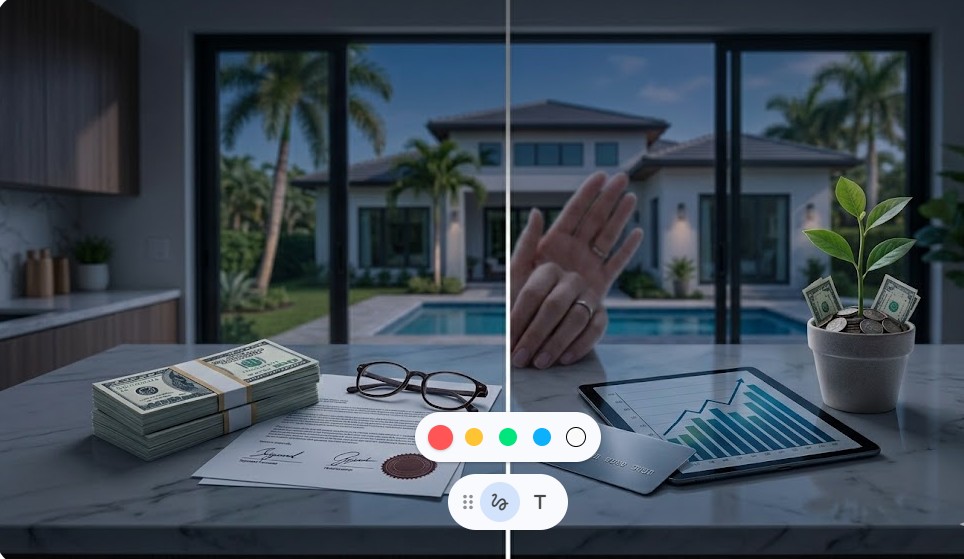
Some Florida homeowners end up using both. A second mortgage handles an immediate known expense while a HELOC stays open as a reserve. That kind of layered equity strategy is worth discussing with a lender who understands how the two products interact, because the combined loan-to-value of both will factor into what you can access.
Working With Select Home Loans on Your Florida Home Equity Options
Select Home Loans is a Florida-based lender with offices in Tampa, Fort Lauderdale, and West Palm Beach. The team works with homeowners across the state on both HELOCs and second mortgages, including borrowers with non-traditional income situations, investment properties, and first mortgages that other lenders have found difficult to work around.
The approach here is not to push a product. It is to understand what the homeowner is trying to accomplish and identify which structure actually serves that goal. A HELOC that sits mostly unused is not a win. A second mortgage that locks someone into a term they cannot sustain is not either. The right product is the one that fits the actual financial picture.
You can get a rate quote or speak with a loan officer directly at selecthomeloans.com or by calling (888) 550-3296. The conversation costs nothing and most homeowners walk away from it with a much clearer picture of what they actually qualify for and which product makes the most sense for their situation.
Frequently Asked Questions
Can I have both a HELOC and a second mortgage at the same time?
Yes, it is possible to carry both, but your total combined loan-to-value across your first mortgage, second mortgage, and HELOC will need to stay within the lender’s limits. Most Florida lenders cap combined exposure at 80 to 85 percent of the home’s value. If you are considering layering products, it makes sense to have a conversation with your lender upfront rather than applying for each separately.
Is it easier to qualify for a HELOC or a second mortgage?
The qualification criteria are similar. Both products look at your credit score, combined loan-to-value, and debt-to-income ratio. Some lenders apply slightly more conservative income documentation standards to second mortgages because of the fixed repayment commitment, but there is no across-the-board rule that one is easier than the other. Your individual financial profile will drive that answer more than the product type.
What credit score do I need to qualify in Florida?
Most conventional lenders look for a minimum score of 620 for both HELOCs and second mortgages, with better pricing available at 680 and above. If your score is below 620, it is not necessarily the end of the conversation. Some non-QM lenders will work with lower scores when the equity position is strong, though the rate will reflect the additional risk.
How long does it take to close a HELOC or second mortgage in Florida?
Timeline varies by lender and complexity, but most Florida homeowners can expect 2 to 4 weeks from application to closing on a straightforward HELOC or second mortgage. Factors that extend the timeline include appraisal scheduling, title issues, and any income documentation that requires additional review. Lenders with in-house underwriting, like Select Home Loans, can typically move faster than those who send files to a third-party underwriting team.
Can I use a second mortgage or HELOC on an investment property in Florida?
Yes, though the terms are different from owner-occupied products. Investment property second mortgages typically require a higher equity position, carry higher rates, and may have stricter income documentation requirements. HELOCs on investment properties are less commonly offered by conventional lenders but are available through certain non-QM programs. If you own rental property in Florida and want to access equity in it, a conversation with Select Home Loans will clarify what options are available for your specific property type.
Disclaimer: This article is intended for informational purposes only and does not constitute financial or legal advice. Loan product availability, rates, and qualification requirements vary by lender and are subject to change. Consult a licensed mortgage professional to discuss your individual situation.