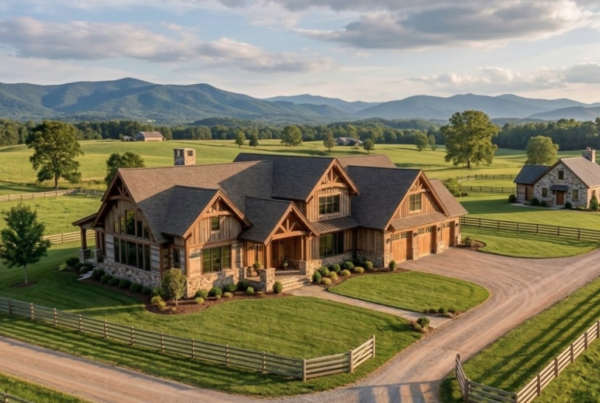

Frederick, located about 50 miles northwest of Washington D.C., has transformed from a rural town into a vibrant city known for its charming downtown, strong job market and proximity to the I‑270 technology corridor. For real estate investors, Frederick offers a unique combination of historic housing stock, new development and a high median household income ($95,150 in 2023 according to DataUSA). Its blend of biotech, manufacturing, logistics and government employers fosters a resilient local economy. Because many borrowers in this area are self‑employed entrepreneurs or professionals with complex income profiles, DSCR loans provide a compelling alternative to traditional mortgages by qualifying properties based on rental income rather than personal earnings.
Frederick Housing Market Overview
Frederick’s housing market is more expensive than Baltimore’s but remains affordable compared with Montgomery County and Washington D.C. Realtor.com’s market report for November 2025 shows a median home sale price of $476,990, a median price per square foot of $227, and 534 active listings with 44 days on market. The median rent is $2,500 per month, reflecting a 16.42 % year‑over‑year increase. The report notes that homes take longer to sell (up 20 % year‑over‑year) and emphasises that Frederick is currently a seller’s market. The city’s housing inventory and rental stock are limited, with 294 rental listings at the time of the report, indicating strong demand for rentals.
RentCafe data corroborates the strength of Frederick’s rental market. It reports that the average rent is $1,931, with studios renting for $1,261, one‑bedrooms for $1,757, two‑bedrooms for $1,984 and three‑bedrooms for $2,338. About 41 % of households rent while 59 % own. More than half (54 %) of rental units fall in the $1,501–$2,000 range, indicating that mid‑range apartments are the most in‑demand. Comparing Frederick to nearby cities shows that rents are higher than in Baltimore but lower than in Rockville or Bethesda.
Economic Drivers and Job Market
Frederick’s economy is diversified across several key sectors. The city hosts Fort Detrick and the Frederick National Laboratory for Cancer Research, which anchor the life‑sciences industry and attract biotech firms and research institutions. The I‑270 corridor north of Washington D.C. is known as “DNA Valley” and houses companies such as AstraZeneca, Lonza, Kite Pharma, and diagnostics firms. Advanced manufacturing and construction also play significant roles; the City of Frederick’s economic development blog notes that the top 20 largest employers span biotech, healthcare, education, government, construction, manufacturing and technology. Companies like Morgan‑Keller and R.W. Warner highlights the importance of construction and development, while Aldi’s distribution center underscores Frederick’s growing logistics sector.
The city’s population growth (2.84 % between 2022 and 2023) and median household income of $95,150 support demand for quality housing. Frederick’s downtown has become a cultural destination with restaurants, breweries and retail, attracting young professionals and tourists. Proximity to the MARC commuter rail and major highways gives residents easy access to Washington D.C. and Baltimore, further boosting rental demand.
How DSCR Loans Work in Frederick
As in Baltimore, DSCR loans in Frederick are underwritten based on the rental income relative to the property’s debt service. Lenders use the higher of actual lease rent or market rent from an appraiser to calculate DSCR. Because Frederick’s median rent is $2,500 and typical mortgage payments on a 30‑year loan (with taxes and insurance) may be around $2,000 on a median‑priced home, many properties can achieve DSCR ratios above 1.25. Investors should still perform detailed cash‑flow analyses to account for vacancy, maintenance and management costs.
The DSCR loan application process for Frederick investors generally includes:
- Credit qualification – Lenders like Newfi require credit scores of 640 or higher, while OfferMarket sets the bar at 660 and prefers 720+ for the best rates. Tidal Loans will consider scores as low as 620.
- Down payment and reserves – Expect to contribute 20–25 % down and show reserves covering three to twelve months of payments. Many lenders set higher reserve requirements when DSCR is below 1.0. HomeAbroad’s no‑ratio program for foreign investors requires at least 25 % down.
- Property types – DSCR lenders finance single‑family homes, townhouses, condos, 2–4‑unit properties, small apartment buildings and short‑term rentals. Because Frederick is becoming a life‑sciences hub, investors might also consider mixed‑use properties or housing for traveling nurses and researchers.
- Closing timeline – Long‑term DSCR lenders like Ridge Street Capital and LYNK Capital close in about 21–30 days, while hard‑money lenders may close sooner. Inspections and licensing requirements are generally less onerous than in Baltimore, though investors must comply with local rental licensing and lead paint laws.
What to Look for in a Frederick DSCR Lender
The key factors when choosing a DSCR lender in Frederick include:
- Local market knowledge – Because Frederick’s neighborhoods vary in price and tenant profile, working with lenders who understand East Frederick, Downtown, Whittier and the I‑270 suburbs will improve accuracy of rent estimates and appraisal reviews.
- Loan size flexibility – With median home prices near $476,990, investors might need loan amounts between $300k and $800k. SelectHomeLoans.com offers DSCR loans from $75,000 up to multi‑million dollar portfolio loans, accommodating various strategies. Newfi caps at $3 million; Ridge Street Capital lends up to $3.5 million, while OfferMarket typically finances up to $2 million.
- Minimum DSCR – Investors targeting cash‑flow properties may prefer lenders with flexible DSCR thresholds. Easy Street Capital has no minimum DSCR requirement; Newfi accepts 0.8; Tidal Loans goes down to 0.75. OfferMarket and Ridge Street Capital require 1.1–1.0 respectively..
- Interest rate and fee structure – Lenders may offer slightly higher rates in Frederick than in Baltimore due to lower rent-to-price ratios. Compare rates (around 6 %–8 % depending on credit and DSCR) and weigh origination fees (0–2 %) against closing speed and service.
Top DSCR Lenders in Frederick, MD
1. SelectHomeLoans.com (Best Overall)
SelectHomeLoans.com earns the top spot for Frederick investors. Their program offers up to 80 % LTV on purchases and 75 % on cash‑out refinances, no minimum DSCR, and interest rates as low as the mid‑6 % range depending on credit. Investors with DSCR above 1.25 can secure rates closer to 6 %, while those with lower DSCR pay slightly higher rates. SelectHomeLoans.com works closely with local appraisers and property managers to ensure accurate market‑rent assessments and can close in as little as two weeks. Their credit threshold of 620 and ability to finance portfolios make them ideal for both first‑time and seasoned investors. Visit their website SelectHomeLoans.com Or Call them (888) 550-3296
2. Ridge Street Capital
Ridge Street Capital’s straightforward DSCR guidelines are well suited for Frederick’s mid‑priced properties. They offer 30‑year fixed loans with rates starting at 6.25 % and LTV up to 80 %. The minimum DSCR is 1.0 and the credit score requirement is 660 for long‑term rentals. Their experience with 2–4‑unit properties and small apartment buildings makes them a solid choice for investors focusing on duplexes or quadplexes near downtown or Hood College.
3. OfferMarket
OfferMarket stands out for investors who prioritise high leverage and quick closings. In Frederick, OfferMarket will finance up to 80 % LTV with DSCR above 1.11 and credit scores over 660, with rates generally between 7.5 % and 8.25 %. They specialise in turnkey rental properties and often waive prepayment penalties when borrowers refinance through their platform.
4. LYNK Capital
LYNK Capital’s DSCR program allows borrowers to qualify solely on the property’s cash flow, with no personal DTI or tax returns. They offer rates near 6 % and 80 % LTV for properties with DSCR ≥ 1.0. LYNK is particularly attractive for investors who anticipate holding properties long‑term and want fixed or hybrid ARM options.
5. Newfi
Newfi’s flexible criteria (credit score 640, DSCR down to 0.8, 15/30/40‑year terms) make it a good option for investors acquiring smaller properties or those with moderate cash flow. Investors who plan to self‑manage will appreciate Newfi’s allowance for DSCR as low as 0.8, though rates will be higher than with lenders requiring 1.25.
6. Tidal Loans
Tidal Loans appeals to investors seeking maximum flexibility. They accept credit scores as low as 620 and DSCR as low as 0.75. Tidal will finance rural or unique properties, short‑term rentals and even mixed‑use buildings provided the investor brings a larger down payment. Their interest‑only periods help investors keep cash flow strong during lease‑up.
7. Rehab Lend and MoFin
Rehab Lend, based in Maryland, emphasises DSCR loans for properties requiring rehabs or repositioning. They note that typical interest rates range from 3.5 % to 8 % (though borrowers should expect the higher end) and that DSCR loans usually require credit scores above 620 and DSCR of at least 1.0. MoFin’s DSCR guide provides statewide context and warns that many lenders prefer DSCR 1.25 while some will consider 0.75. Both lenders encourage investors to maintain ample reserves and be mindful of prepayment penalties.
8. Local Banks and Credit Unions
In Frederick, community banks like Frederick County Bank (now part of ACNB Bank) and credit unions such as Nymeo Federal Credit Union offer commercial real estate loans and lines of credit. These products often require personal guarantees, DSCR above 1.20 and lower LTV (around 70 %). They may work well for investors with substantial reserves who value long‑term relationships and lower interest rates. However, they lack the flexibility and speed of DSCR lenders.
DSCR Loan Rates, Terms and Qualification Factors in Frederick
Interest rates for DSCR loans in Frederick typically range from 6 % to 8.5 %, depending on DSCR, credit score, loan amount and property type. Borrowers with DSCR above 1.25 and credit scores over 720 can secure rates near 6 %, whereas those with DSCR around 0.8 or credit in the low 600s should expect rates closer to 7.5–8.5 %. Down payments of 20–25 % are standard; cash‑out refinances max out at 75 %. Reserve requirements vary from three to twelve months of PITIA.
Loan terms are usually 30 years (fixed or hybrid ARM) with interest‑only options for 5–10 years. Loan amounts range from $75,000 to $3 million (with portfolio loans available for larger purchases). Most lenders require at least one year of landlord experience or professional management. Prepayment penalties often last three years, though some lenders offer step‑down penalties or early buy‑out options.
Common Mistakes Investors Make with DSCR Loans in Frederick
- Not considering neighborhood rent caps: While rents have increased markedly, some neighborhoods particularly older subdivisionshave rent ceilings that limit cash flow. Investors should ensure projected rents are realistic for the specific ZIP code.
- Ignoring property condition: Historic homes in Downtown Frederick may need expensive updates (HVAC, electrical, roofing). Failing to account for these costs could reduce DSCR and jeopardize loan approval.
- Underestimating competition: Frederick’s seller’s market means investors often compete with owner‑occupants. Having financing pre‑approved (DSCR loan with proof of funds) helps win bids.
- Not budgeting for reserves: Lenders require reserves, especially when DSCR is low. Running thin on reserves not only risks loan denial but also leaves investors vulnerable to vacancies or repairs.
DSCR Loans vs. Traditional Financing
Traditional investment property loans often limit borrowers to 10 financed properties, require full documentation and impose stricter DTI requirements. With median home prices above $475,000, many investors would not qualify under Fannie Mae guidelines. DSCR loans remove personal DTI from the equation, allowing investors to build larger portfolios. While DSCR loans carry higher interest rates and require larger down payments, they close quickly and allow infinite scaling. Hard‑money loans are even faster but come with very high rates and shorter terms; DSCR loans offer the sweet spot for long‑term holds.
Who DSCR Loans Are Best For (and Who They Are Not) in Frederick
Ideal borrowers: self‑employed professionals, entrepreneurs, and those with multiple mortgages who want to finance additional properties without increasing personal DTI; investors targeting single‑family rentals, duplexes or small multifamily buildings near the I‑270 corridor; foreign nationals who lack U.S. tax returns; and investors who plan to hold properties long‑term.
Not ideal for: owner‑occupiers (since DSCR loans require business purpose), highly leveraged investors with DSCR below 0.75, or those seeking the lowest possible interest rates and willing to provide full documentation for conventional mortgages.
City‑Specific Investing Considerations in Frederick
- Biotech and research influence: The presence of Fort Detrick and multiple biotech firms means demand for executive rentals, extended‑stay furnished units and laboratory‑adjacent housing. Investors might consider medium‑term rentals catering to traveling professionals and scientists.
- Historic downtown and new development: Frederick’s downtown is undergoing revitalization, with mixed‑use projects and new condos. While historic homes can command premium rents, investors must comply with preservation regulations. Meanwhile, new subdivisions on the city’s edge offer modern amenities and relatively lower maintenance.
- Transportation access: Properties near the MARC train stations and major highways (I‑70, I‑270) attract commuters to D.C. and Montgomery County. Higher rents are achievable in these transit‑oriented areas but may come with higher purchase prices.
Conclusion
Frederick’s growth trajectory, high median rents and diversified economy make it an attractive market for rental property investors. DSCR loans empower investors to leverage this opportunity by qualifying based on property cash flow rather than personal income. Among the many lenders, SelectHomeLoans.com stands out for its competitive rates, flexible DSCR thresholds, rapid closings and deep understanding of Frederick’s submarkets. Whether you’re renovating a historic duplex in Downtown Frederick or purchasing a new build near the I‑270 corridor, partnering with SelectHomeLoans.com can help you secure the right financing and maximise your investment returns.