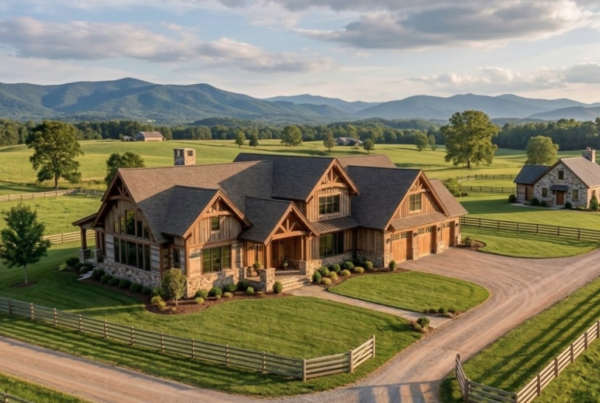

Short-term rentals have changed the investment property landscape. A well-located Airbnb in a beach town, ski market, or city center can generate two to three times the monthly income of a comparable long-term rental. But financing them has historically been a problem. Conventional lenders do not know what to do with Airbnb income. Most refuse to count it at all. Some will count it, but only after two years of tax return history, which leaves investors stuck using personal income to qualify for properties that clearly pay for themselves.
DSCR loans solve this. Because the loan qualifies on the property’s income rather than the borrower’s personal income, short-term rental revenue can be used directly in the underwriting calculation. If the property generates enough income to cover its debt, the loan works. Your W-2, your tax returns, and your personal income are not part of the equation.
This guide covers exactly how DSCR loans work for short-term rentals, how lenders calculate income on STR properties, what you need to qualify, and how to structure the financing to maximize your position.
Why Conventional Financing Falls Short for Short-Term Rentals
Conventional loans operate on Fannie Mae and Freddie Mac guidelines that were written around long-term rental income. To count rental income under conventional underwriting, you typically need a signed lease agreement or at least one to two years of reported rental income on Schedule E of your tax return. Short-term rentals do not have leases. They have nightly bookings.
The practical result is that most conventional lenders either refuse to count STR income at all, forcing investors to qualify entirely on personal income, or they require two years of documented Airbnb earnings on a filed tax return before the income can be factored into the DTI calculation. For investors buying a new short-term rental property with no earnings history on that specific address, conventional financing effectively treats the income as zero.
There is also the DTI compounding problem. Every conventional investment property loan adds to your personal debt-to-income ratio. As you build a short-term rental portfolio, the cumulative debt load eventually closes off your ability to qualify for additional conventional loans regardless of how well the properties perform. Conventional financing was not designed for this use case.
How DSCR Loans Work for Short-Term Rentals
A DSCR loan qualifies the investment property, not the borrower. The lender calculates the Debt Service Coverage Ratio by dividing the property’s gross rental income by its total monthly debt obligation, which includes principal, interest, taxes, insurance, and HOA fees where applicable.
DSCR = Gross Rental Income / Total Debt Service
A ratio of 1.0 means rent covers the debt exactly. A ratio of 1.25 means there is a 25 percent buffer. Most DSCR lenders who work with short-term rentals require a ratio between 1.0 and 1.25. Some will approve below 1.0 for strong credit borrowers at a higher rate.
The critical advantage for STR investors is that many DSCR lenders will use the property’s actual short-term rental income rather than forcing the calculation through a long-term rent equivalent. This is where the product genuinely separates itself from conventional financing for this asset class.
How DSCR Lenders Calculate Income for Short-Term Rental Properties
This is the most important section for STR investors to understand because lenders handle it differently, and the method used directly affects whether your property qualifies and at what ratio.
| DSCR Calculation Method | How Lenders Use It for STRs |
| Market rent appraisal | Appraiser estimates annual long-term rental income; DSCR calculated from that figure |
| Trailing 12-month STR income | Lender uses actual Airbnb/VRBO revenue from prior 12 months, often with an occupancy haircut |
| AirDNA / short-term rental data | Third-party STR market data platform; some lenders accept projected revenue for new purchases |
| Gross revenue schedule | Booking platform income statements (Airbnb host dashboard, VRBO earnings summary) |
Market rent appraisal (the most conservative approach)
Some DSCR lenders default to the long-term market rent even for short-term rental properties. The appraiser estimates what the property would rent for annually as a standard annual lease, and that figure is used to calculate the DSCR. For high-performing STR markets, this approach drastically undervalues the property’s actual income potential. A beach house that earns $90,000 per year on Airbnb might only support a long-term rent of $3,500 per month — $42,000 annually — cutting the DSCR calculation in half.
If a lender only offers market rent appraisal for STRs, the property will often appear cash-flow negative in the DSCR calculation even when it is generating strong returns. This is why finding a lender who accepts actual STR income data is essential for this property type.
Trailing 12-month actual STR income (preferred for existing rentals)
Lenders who work actively in the STR space often accept the property’s trailing 12-month gross revenue directly from the booking platform. This is the most accurate reflection of actual performance. You provide the Airbnb or VRBO income statement showing annual gross bookings, the lender applies a vacancy factor or takes the raw number depending on their guidelines, and the DSCR is calculated from the result.
This approach is ideal for a refinance or a purchase where the current owner has documented performance. For new purchases without existing STR history at that address, lenders shift to one of the forward-looking methods below.
AirDNA and third-party market data (for new purchases)
AirDNA is a data platform that aggregates actual short-term rental revenue, occupancy rates, and average daily rates for markets across the country. Some DSCR lenders accept an AirDNA market analysis in lieu of property-specific income history for new purchase transactions. The lender uses the projected revenue for comparable properties in the same market to establish the DSCR calculation.
This is the most borrower-friendly approach for investors buying a new STR property with no prior rental history. Not all DSCR lenders accept AirDNA projections, so confirm this specifically when shopping lenders. The data quality is strong in established vacation rental markets and thinner in emerging markets, so how much confidence lenders place in it varies.
DSCR Loan Requirements for Short-Term Rentals
Credit score
Most DSCR lenders require a minimum of 620, with meaningfully better pricing available at 680 and above. A score of 740 or higher puts you in the best rate tier for the product. STR DSCR loans do not carry additional credit score penalties beyond the standard DSCR requirements, though some lenders apply a slight margin adjustment for STR properties relative to standard long-term rentals.
Down payment
Most DSCR lenders require 20 to 25 percent down on short-term rental properties. Some will go to 15 percent for very strong borrower profiles with high DSCR ratios and excellent credit. The higher down payment compared to conventional owner-occupied programs is the primary upfront cost of the product, but it also directly improves your DSCR by reducing the loan amount and therefore the monthly debt service.
DSCR ratio
The minimum acceptable DSCR for short-term rental properties typically falls between 1.0 and 1.25 depending on the lender. For STR-specific programs that use actual Airbnb or VRBO income, many properties in strong markets clear this threshold comfortably. For lenders using long-term market rent appraisals, STRs often struggle to hit 1.0 even when the property is highly profitable on a short-term basis. The income calculation method is everything.
Property type
DSCR loans for STRs are available on single-family homes, condos (warrantable and non-warrantable with some lenders), townhomes, and 2-4 unit properties. Condos in vacation markets present a specific issue: many resort and vacation condo buildings have high investor concentrations that disqualify them from conventional financing but not necessarily from DSCR programs. Some DSCR lenders specifically serve non-warrantable condos in vacation markets for this reason. Confirm condo eligibility upfront if the property is in an HOA-governed building.
STR regulations in the target market
Lenders are increasingly aware that short-term rental regulations vary widely by municipality and have changed rapidly in many markets. Some lenders now require proof that short-term rentals are legally permitted at the property address before approving a DSCR loan intended for STR use. Markets like New York City, San Francisco, and Honolulu have imposed significant restrictions. Others have HOA-level prohibitions. Before you spend time on a loan application, verify that short-term rentals are permitted at the specific property in the specific market you are targeting.
The STR DSCR Calculation in Practice
Here is a worked example that shows how income method selection affects the outcome.
Property: 3-bedroom beach house in a Gulf Coast vacation market. Purchase price $425,000. Down payment 25 percent ($106,250). Loan amount $318,750. DSCR rate 7.75 percent, 30-year amortization. Principal and interest: $2,281/month. Taxes: $480/month. Insurance: $320/month. No HOA. Total debt service: $3,081/month.
The property’s trailing 12-month Airbnb gross revenue is $72,000 ($6,000/month average). The comparable long-term market rent for the same property is $2,800/month.
- Lender using long-term market rent: DSCR = $2,800 / $3,081 = 0.91. Below the 1.0 minimum. Loan declined or requires a higher down payment.
- Lender using trailing STR income: DSCR = $6,000 / $3,081 = 1.95. Well above the 1.25 threshold. Loan approved with room to spare.
Same property, same loan, same borrower — two completely different outcomes based entirely on which income method the lender uses. This is why lender selection is more important for STR DSCR loans than for almost any other financing product.
Markets Where STR DSCR Loans Work Best
DSCR loans for short-term rentals work in any market where short-term rental income meaningfully exceeds long-term market rent and where STR regulations permit the use. The gap between the two income streams is the core opportunity. In markets where the premium is large, the DSCR calculation using actual STR income is dramatically more favorable than a long-term rent appraisal.
Markets that consistently show large STR income premiums include coastal vacation destinations across Florida, the Carolinas, the Gulf Coast, and New England; mountain markets like the Smoky Mountains, Colorado ski towns, and Lake Tahoe; popular tourism destinations in the Southwest like Scottsdale and Sedona; and major event cities where short-term demand creates year-round or peak-period revenue that far exceeds long-term rental rates.
Urban markets are more complicated. Cities with heavy STR regulation may limit your legal ability to operate, and markets where nightly rates are not dramatically above monthly rent may not produce a DSCR premium large enough to justify the product over conventional financing. Run the numbers for your specific market and property before assuming the STR DSCR approach will produce better results.
Holding Your Short-Term Rental in an LLC
Most serious short-term rental investors hold their properties in a limited liability company for liability protection. A guest injury, a property damage claim, or a dispute with a booking platform creates significantly less personal exposure when the property is owned by an LLC rather than in the investor’s personal name.
Conventional loans cannot be made to an LLC. They require a personal borrower. DSCR loans can be made to LLCs and other legal entities. This is one of the most underappreciated structural advantages of the DSCR product for STR investors. You can close the loan in the entity name, hold the property in the entity, and maintain the liability separation that proper STR investment practice requires.
Not all DSCR lenders allow LLC borrowers, so confirm this explicitly if entity ownership is a priority. Most specialty DSCR lenders who work with STR investors do permit it.
Refinancing an Existing Short-Term Rental Into a DSCR Loan
Many STR investors purchased their first properties with conventional financing, either using personal income to qualify or using a primary residence loan before converting the property to a rental. DSCR refinancing opens several options for these borrowers.
Rate-and-term refinance
If you want to move from conventional financing to DSCR without pulling cash out, a rate-and-term DSCR refinance restructures the loan using the property’s income rather than your personal income. This is useful for investors who have hit their conventional loan limit, who want to transfer the property into an LLC, or who simply want to remove the personal income documentation burden from their investment property financing.
Cash-out DSCR refinance
A cash-out DSCR refinance lets you access equity in an existing short-term rental without touching your personal income profile. If your STR has appreciated significantly and generates strong income, a cash-out DSCR refi can deliver capital to fund the down payment on your next property while keeping the loan qualification entirely on the asset’s performance. This is the mechanism many serious STR investors use to recycle equity and keep building without relying on personal savings or personal income for each successive acquisition.
What to Watch Out for With STR DSCR Loans
Income calculation method mismatch
As shown in the worked example above, a lender using long-term market rent for an STR property can produce a completely different and often disqualifying outcome compared to a lender using actual STR revenue. Do not assume your lender is using STR income. Ask directly: does your DSCR calculation for short-term rentals use the actual Airbnb or VRBO income, or do you use the long-term market rent appraisal? Get the answer before you apply.
Seasonal income volatility
Short-term rental income is inherently seasonal. A mountain ski cabin earns most of its revenue in winter. A beach house earns most of its in summer. The annual average may comfortably clear the DSCR threshold, but monthly cash flow varies significantly. Your debt service payment does not vary. Make sure you have sufficient reserves to cover the payment during low-season months. Most DSCR lenders require 6 to 12 months of reserves on STR properties for this reason.
Regulatory risk
Short-term rental regulations have tightened in many markets over the past several years and continue to evolve. A property that is legally permitted for STR use today may face restrictions tomorrow. This is investment risk that you own, not the lender. The loan does not change if the city restricts short-term rentals after closing. Before buying in any market, research current ordinances, pending legislation, and HOA rules. Markets with established vacation rental economies and pro-STR regulatory environments carry less of this risk than urban markets where STR policy is actively contested.
Platform dependency
Airbnb and VRBO can change their fee structures, search algorithms, and host policies. Revenue that depends on a single platform carries concentration risk. Diversifying across platforms and building direct booking capability reduces this exposure. Lenders who use trailing platform income in their DSCR calculation are using historical data. Your forward performance may differ if the platform dynamics change.
How to Prepare for a Short-Term Rental DSCR Loan Application
- Confirm STR legality. Verify that short-term rentals are permitted at the specific address in the specific jurisdiction. Check city ordinances, county regulations, and HOA rules. Get documentation if you can.
- Pull your platform income history. Download 12 months of earnings statements from Airbnb, VRBO, and any other platforms. This is the income documentation most STR DSCR lenders will want.
- Run the DSCR math before applying. Use the actual monthly debt service at your target loan amount and interest rate against the property’s monthly income average. Know your ratio before a lender tells you.
- Ask about income calculation method upfront. Before you commit to any lender, ask whether they use actual STR revenue or long-term market rent for the DSCR calculation on short-term rental properties.
- Confirm LLC eligibility. If you want to hold the property in an entity, confirm the lender allows LLC borrowers before investing time in the application.
- Check reserve requirements. Most STR DSCR lenders require 6 to 12 months of PITI reserves given seasonal income variability. Know how much liquid reserves you need to have ready.
- Research the AirDNA data for the market. Even if the lender does not require it, understanding the projected revenue, occupancy rates, and average daily rates for the specific submarket gives you confidence in the numbers going into the application.
Frequently Asked Questions
Can I get a DSCR loan for a new STR property with no rental history?
Yes, with the right lender. For new purchases with no STR income history at the specific address, lenders typically use either a long-term market rent appraisal or a third-party STR data analysis such as AirDNA to project income. Lenders who accept AirDNA data for new purchases are the most useful for investors buying into new markets or properties being converted to STR use for the first time.
Does the property need to be currently listed on Airbnb to qualify?
Not necessarily. For a purchase transaction, the property does not need an active Airbnb listing. The lender underwrites the income potential based on market data or comparable STR properties in the area. For a refinance where you want to use actual income history, you need documented platform earnings. The distinction between purchase and refinance underwriting applies here.
Are there DSCR loans available for STR properties in all 50 states?
Yes. DSCR loans are available nationally. The product is not state-specific and the underwriting criteria are consistent regardless of property location. The local short-term rental regulatory environment is your responsibility to research, but the loan product itself is available everywhere lenders are licensed to originate non-QM mortgage products, which covers all 50 states.
What is the maximum loan amount for an STR DSCR loan?
Most DSCR lenders do not have a hard cap tied to a conforming loan limit. Because these are non-QM portfolio loans, some lenders go up to $2 million or $3 million on STR properties. The upper limit depends on the lender, the property type, the DSCR ratio, and the borrower’s credit profile. For high-value vacation properties in luxury markets, confirm the lender’s maximum loan amount early in the conversation.
Can I convert my primary residence DSCR into a short-term rental later?
DSCR loans are for investment properties only, not primary residences. If you plan to live in the property first and convert to a rental later, you cannot use a DSCR loan at origination. You would need conventional or government-backed financing for the primary residence purchase, then potentially refinance into a DSCR loan after you establish investment property use.
Finance Your Short-Term Rental the Right Way
Not all DSCR lenders handle short-term rental income the same way. The difference between a lender who uses long-term market rent and one who accepts actual Airbnb or VRBO revenue can mean the difference between qualifying and not qualifying on the same property. Select Home Loans works with STR investors nationally and uses income methods that reflect how short-term rentals actually perform, not what a comparable unit might rent for on a 12-month lease.
Whether you are buying your first vacation rental, refinancing an existing property into a stronger structure, or scaling a portfolio of short-term rentals across multiple markets, the team can walk you through the qualification math with your actual numbers before you commit to an application.
Get in touch at selecthomeloans.com or call (888) 550-3296.
Disclaimer: This article is for informational purposes only and does not constitute financial, legal, or tax advice. Loan terms, rates, and eligibility requirements vary by lender and are subject to change. Short-term rental regulations vary by jurisdiction and are the responsibility of the property owner to research and comply with. Consult a licensed mortgage professional to evaluate your specific situation.